Japan Heritage is a designation by the Agency for Cultural Affairs that recognizes stories telling the history and traditions of Japan through the unique historical charm and characteristics of a region.
In May 2019, Takehara City was added as a constituent municipality of the Japan Heritage site “A Space of Different Dimensions Woven by the Dreams of Men Who Braved the Rough Seas: Kitamaebune Ports of Call and Shipowner Settlements.”
The relationship between Kitamaebune and Takehara
Kitamaebune were merchant ships that traveled between Osaka and Hokkaido via the Sea of Japan from the mid-Edo period to the late 1890s, carrying large amounts of cargo. They also called at Takehara and Tadanoumi. It is known that they primarily purchased salt in Takehara and traded various goods collected from the surrounding areas in Tadanoumi. Salt from Takehara was transported as far as Hokkaido.
Kitamaebune trade at Takehara Port
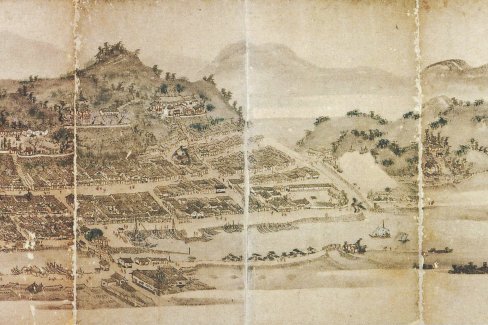
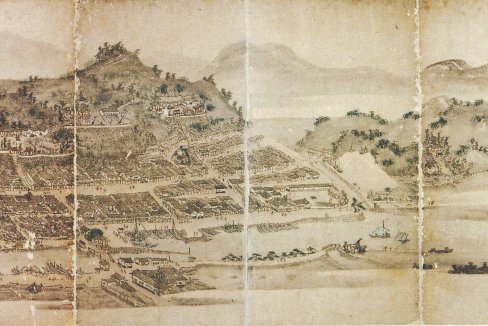
The folding screen on the left depicts Takehara Shimoichi (the area around the current Preservation District for Groups of Traditional Buildings) around 1800. On the west side of Takehara Shimoichi (the bottom of the screen), the Honkawa River flows into the Seto Inland Sea (the right side of the screen). It is said that medium and small ships could enter the Honkawa River at high tide, but large ships like the Kitamaebune anchored at Yokoshima (near Myojin, Takehara-cho). Goods such as salt purchased in Takehara were then transported and loaded onto the ships using smaller cargo boats called uwanibune. Tsumura Soan, a literary figure of the mid-Edo period, wrote in his essay collection “Tankai”: “All ships on the northern route visit Kotohira-gu Shrine in Sanuki Province. Afterward, it is common practice to stop at Takehara in Aki Province to buy salt and sell it in the northern provinces.”
Five constituent cultural properties related to Kitamaebune
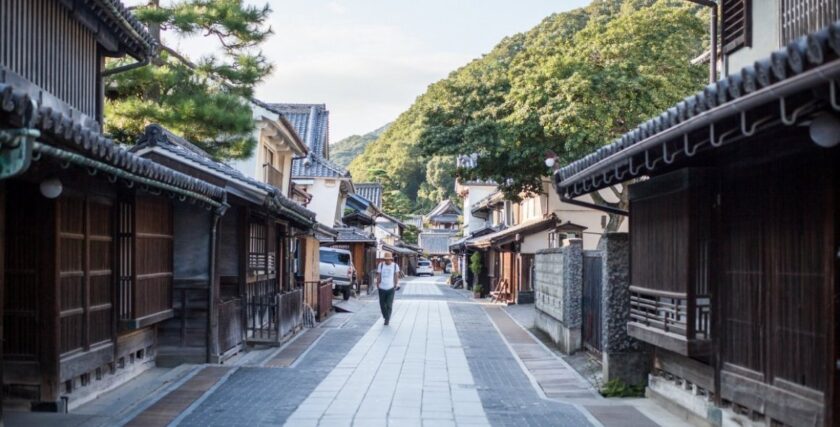
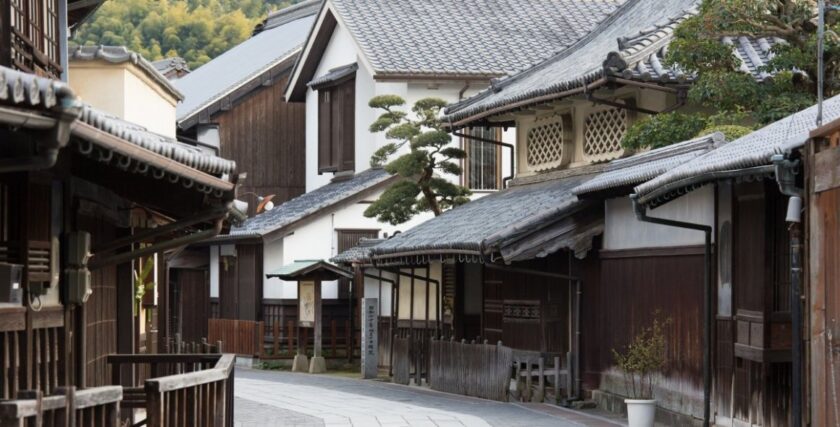
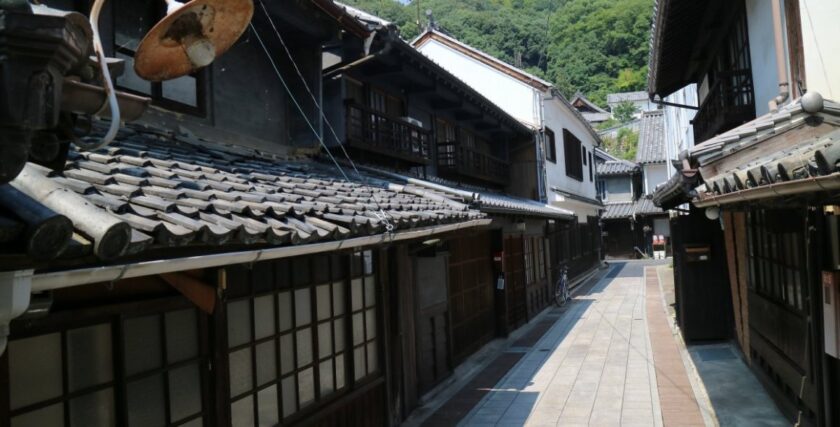
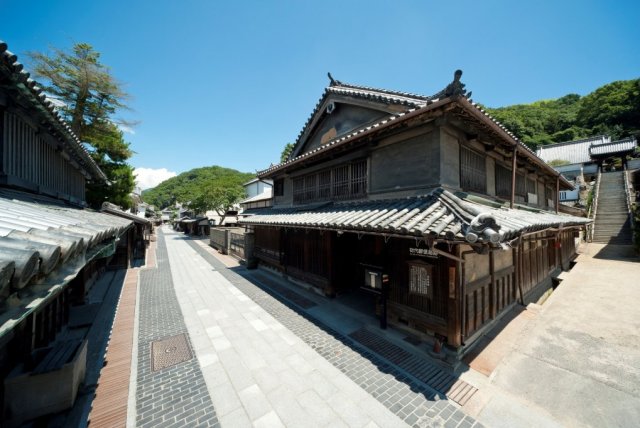
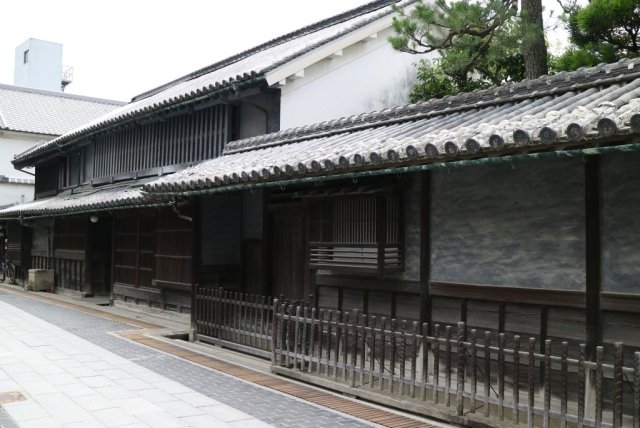
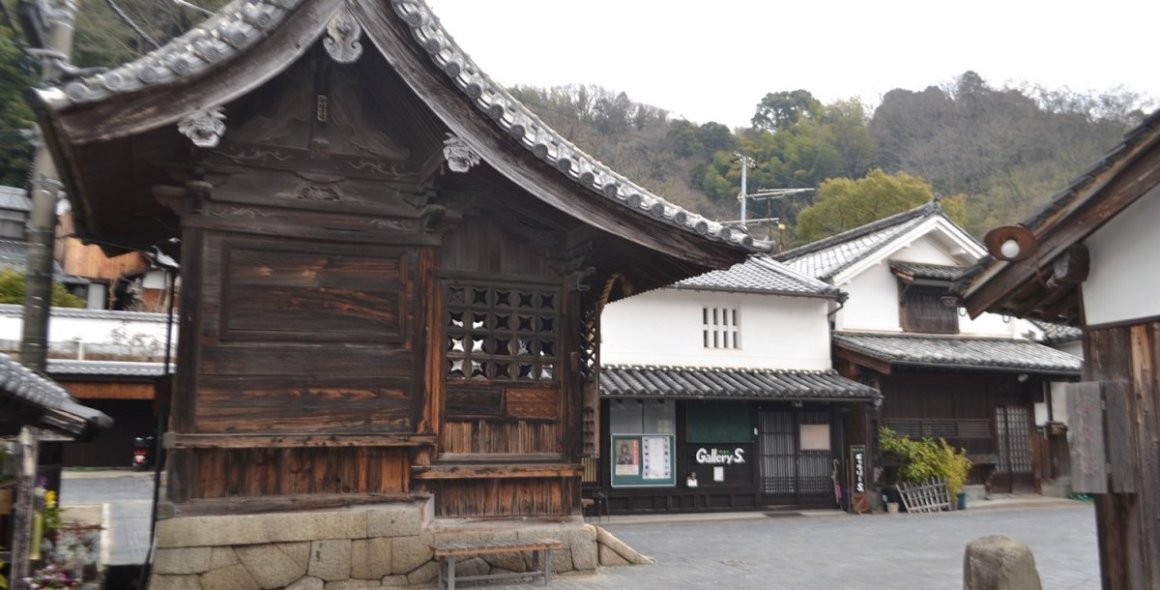
Takehara City Takehara District Preservation District for Groups of Traditional Buildings
Former Yoshii Family Residence
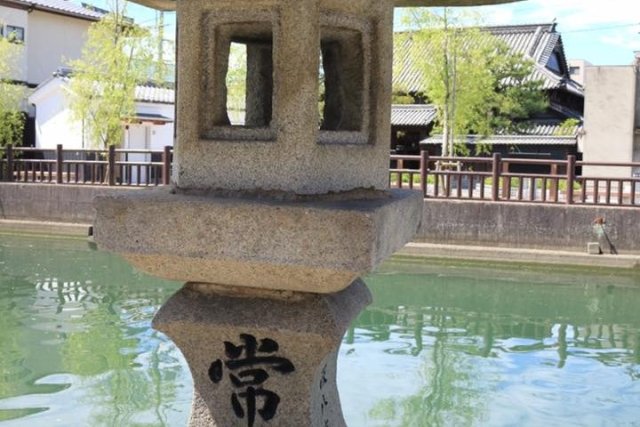
Group of Night Lanterns (Joyato)
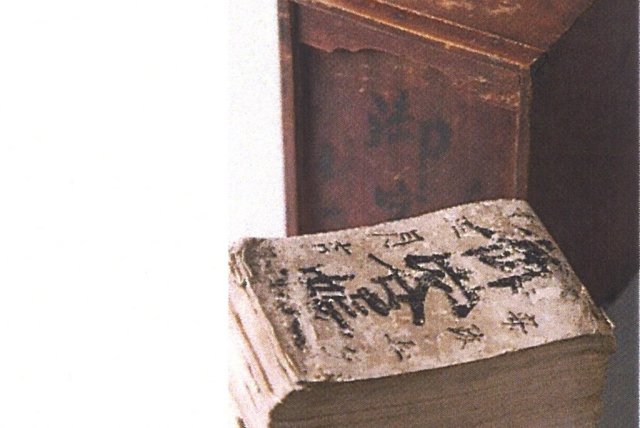
Takehara Shoin Municipal Library Document Collection
Takehara Painted Folding Screen (Color on Paper)
The five constituent cultural properties of Takehara City related to the Kitamaebune are: the “Takehara City Takehara District Preservation District for Groups of Traditional Buildings,” which retains the atmosphere of the Edo period when it flourished through salt purchases by Kitamaebune merchants; the “Former Yoshii Family Residence,” the home of Takehara’s leading salt wholesaler where records of Kitamaebune sailors staying remain; the “Group of Night Lanterns,” which served as landmarks for Kitamaebune entering the port; the “Takehara Shoin Municipal Library Document Collection,” which contains trade records with Kitamaebune merchants and salt sales volumes; and the “Takehara Painted Folding Screen (Color on Paper),” which depicts the townscape of Takehara around 1800 when it prospered from the salt industry.
Related events
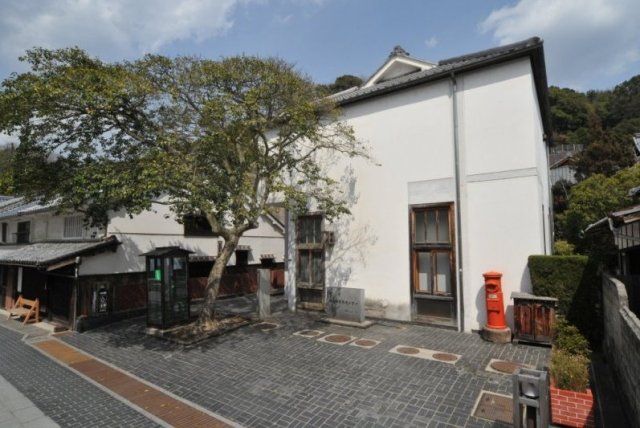
Townscape Preservation Center
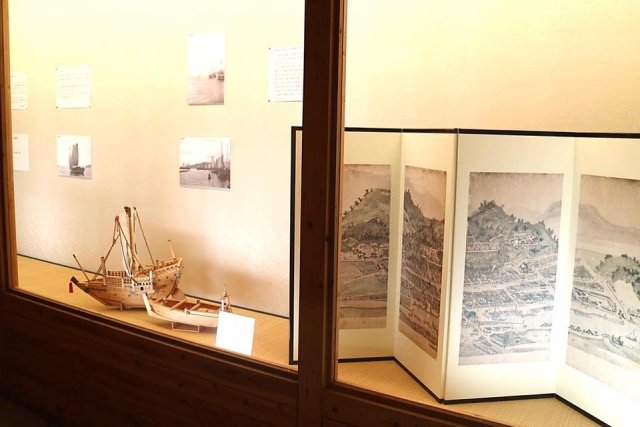
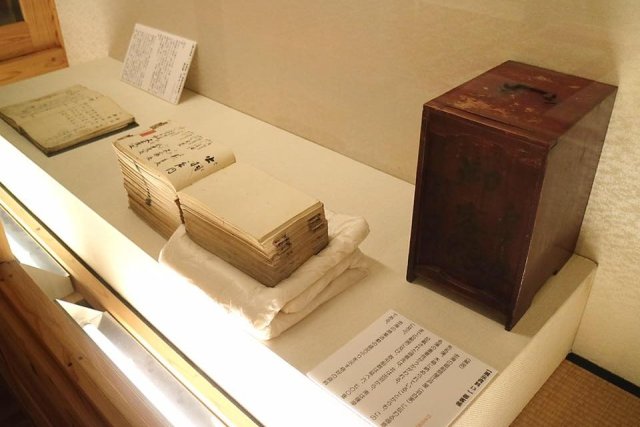
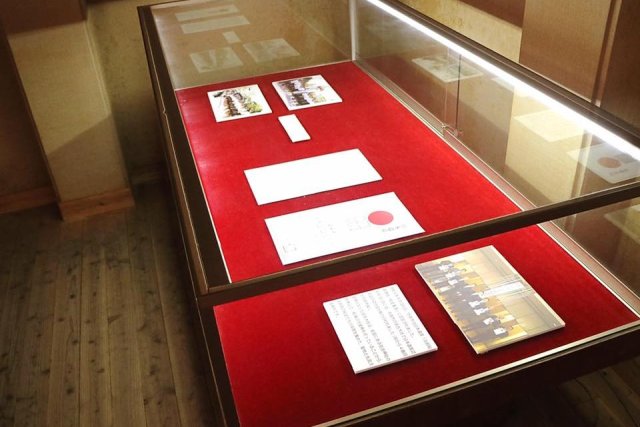
A special exhibition titled “Kitamaebune and Takehara” is currently being held at the Preservation District Center from Saturday, June 22, until March 2020. Replicas of the folding screens and ancient documents, which are cultural properties related to Japan Heritage, are on display, so please stop by. (Admission is free)