
Perfect for hot summer days! Chilled sweets!
Irresistible in summer! Chilled sweets!
Category:
-
Dining

A traditional local dish passed down in Takehara
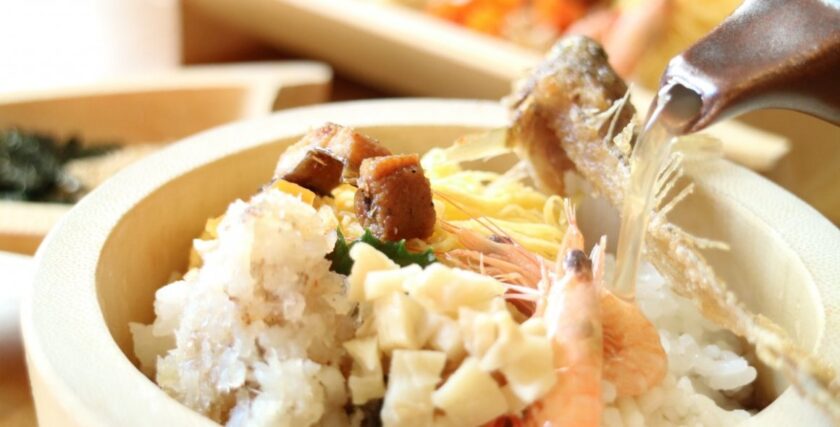
The traditional Takehara local dish “Gyohan.”
Born from Takehara’s history and culture, it’s said to be a “phantom local specialty” you can only eat here in Takehara.
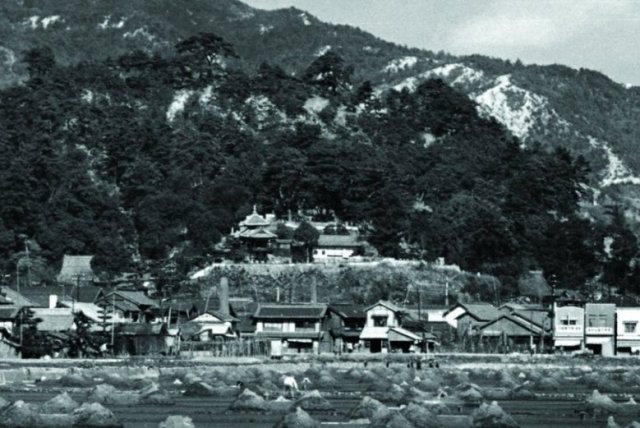
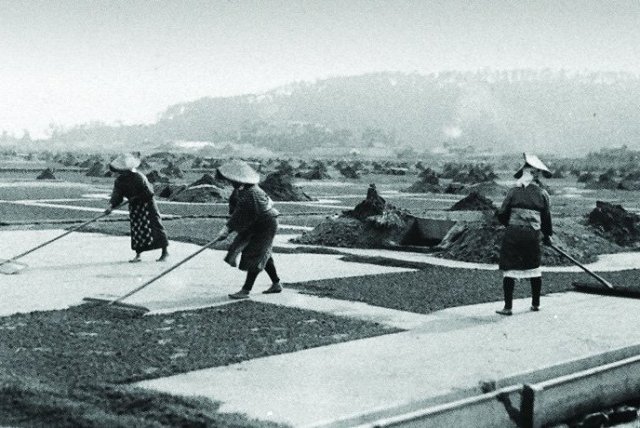
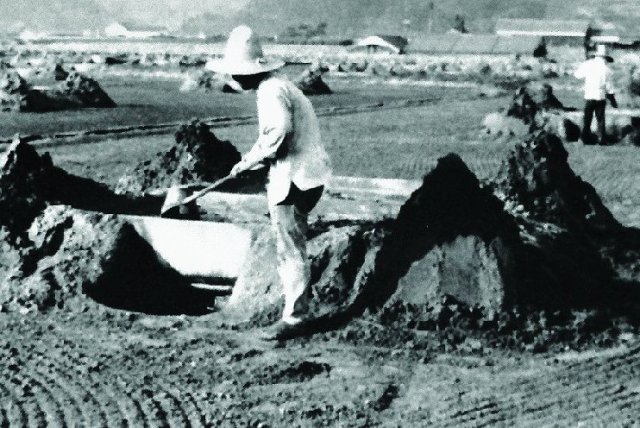
Much of what is now central Takehara City was shallow sea until the medieval period.
In the Edo period, land reclamation progressed and salt fields were developed, producing high-quality salt. From 1650 to 1970 (Showa 45), Takehara prospered for more than 320 years as a “town of salt.”

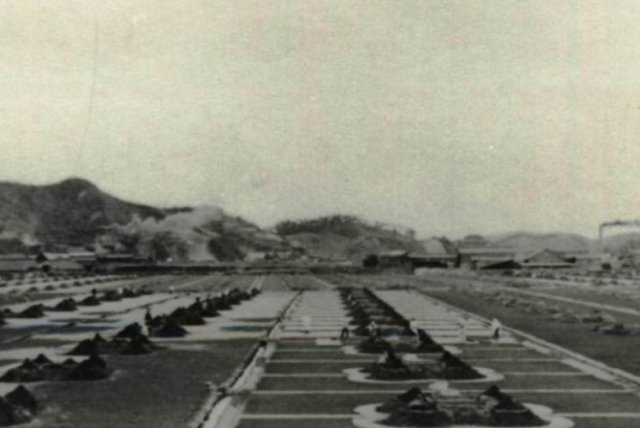
Owners of the salt fields were called “Hamadanna,” and backed by the enormous wealth generated by the salt fields, they helped establish a rich culture in Takehara.
The dish those Hamadanna loved to serve for hospitality and ceremonial occasions was “Gyohan.”
Salt fields were abolished as a national policy in 1960, and opportunities to see Gyohan gradually declined, but it remains a Takehara-only local dish still passed down among merchant families in the Historic Preservation District.
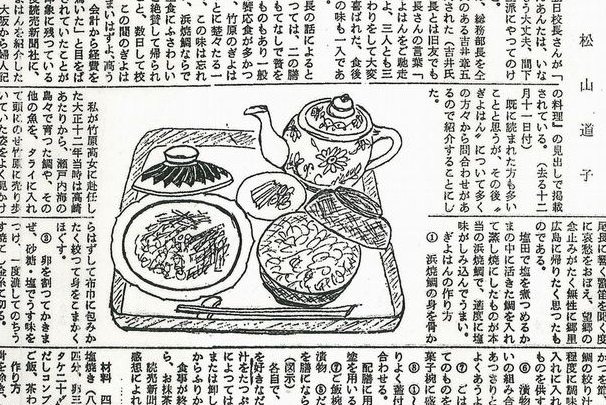
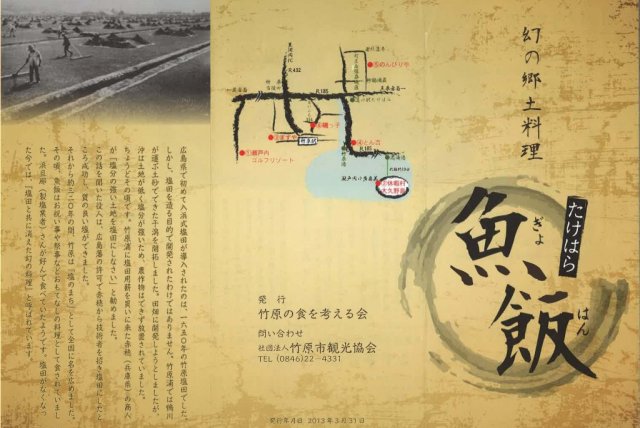
The spark for the recreation came from an old back issue of the Geinan Shimbun.
In the January 1, 1979 issue of the Geinan Shimbun, there was an article introducing Gyohan written by a teacher from the Takehara High School home economics department.
Then, in 2008, the “Takehara Food Study Group” recreated it so that restaurants could serve Gyohan as well.
Enjoy Gyohan, a Takehara local dish born from Takehara’s history.
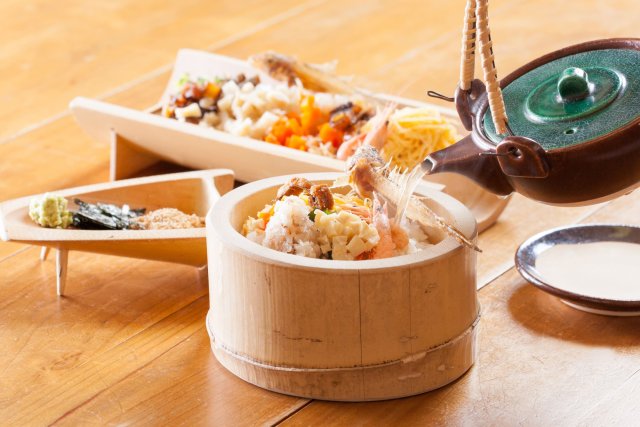
Ingredients, serving ware, and prices vary by restaurant.
Why not compare Gyohan from different places?
Gyohan is made with fresh ingredients and seasonal local produce, as chefs reflect on Takehara’s history and prepare it with care and time.
Because it takes time to prepare, please be sure to book in advance.
See participating restaurants here >
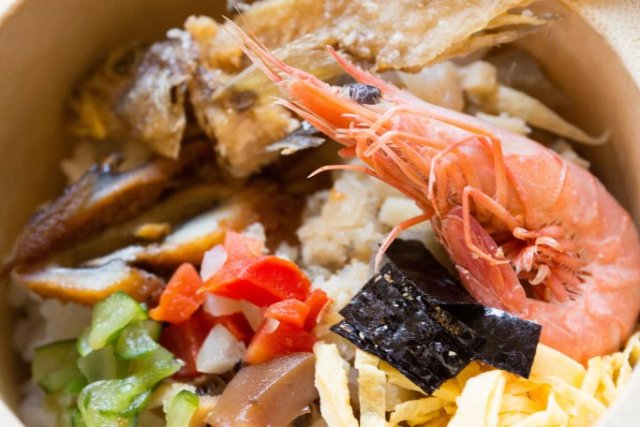
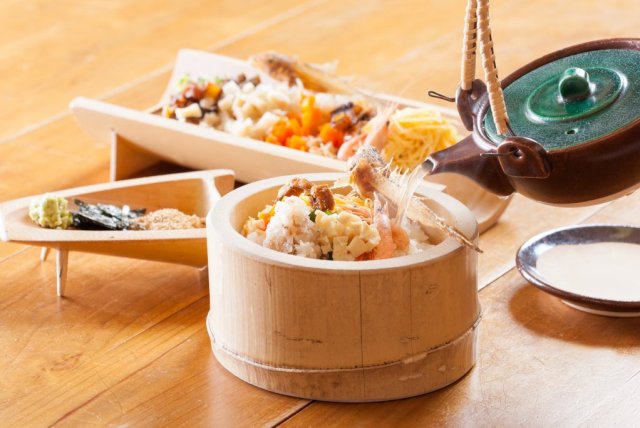
■ What is Gyohan?
It’s a dish where grilled white fish is flaked and arranged on top of rice along with ingredients added for beautiful color, then eaten by pouring dashi broth over it.
■ Ingredients and features of Gyohan (example)
White fish… Sea bream, flounder, and similar fish are used.
Colorful toppings… Local seasonal ingredients such as shredded egg omelet, mitsuba, shiitake mushrooms, shrimp, nori, and bamboo shoots are used.
Rice… White rice, or lightly seasoned mixed rice.
Dashi broth… Dashi made from the white fish bones is seasoned lightly—like clear soup—with light soy sauce, mirin, sake, and salt.

On March 3, 2022, it was certified in the Agency for Cultural Affairs’ “100-Year Food” program under “Traditional 100-Year Food Category – Local dishes that have continued since the Edo period –”!
○ 100-Year Food Certification Criteria
Food cultures that meet all of the following criteria ① through ③ are certified as “100-Year Foods.”
① Regional food culture that has been nurtured through creativity and ingenuity while making use of local characteristics within the region’s climate, history, and customs
(Food culture with stories rooted in the region, not uniform ingredients or processed foods found nationwide)
② Food culture that has been passed down and consumed across generations within the region
(Food culture that exists today, having been inherited over two or more generations within the regional community, not simply a dish by one person or one restaurant)
③ Food culture for which there exists an organization that declares its commitment to preserving it as a source of regional pride for over 100 years
Irresistible in summer! Chilled sweets!
Dining
Why not head out with delicious takeout lunch?
Dining
Scenery


