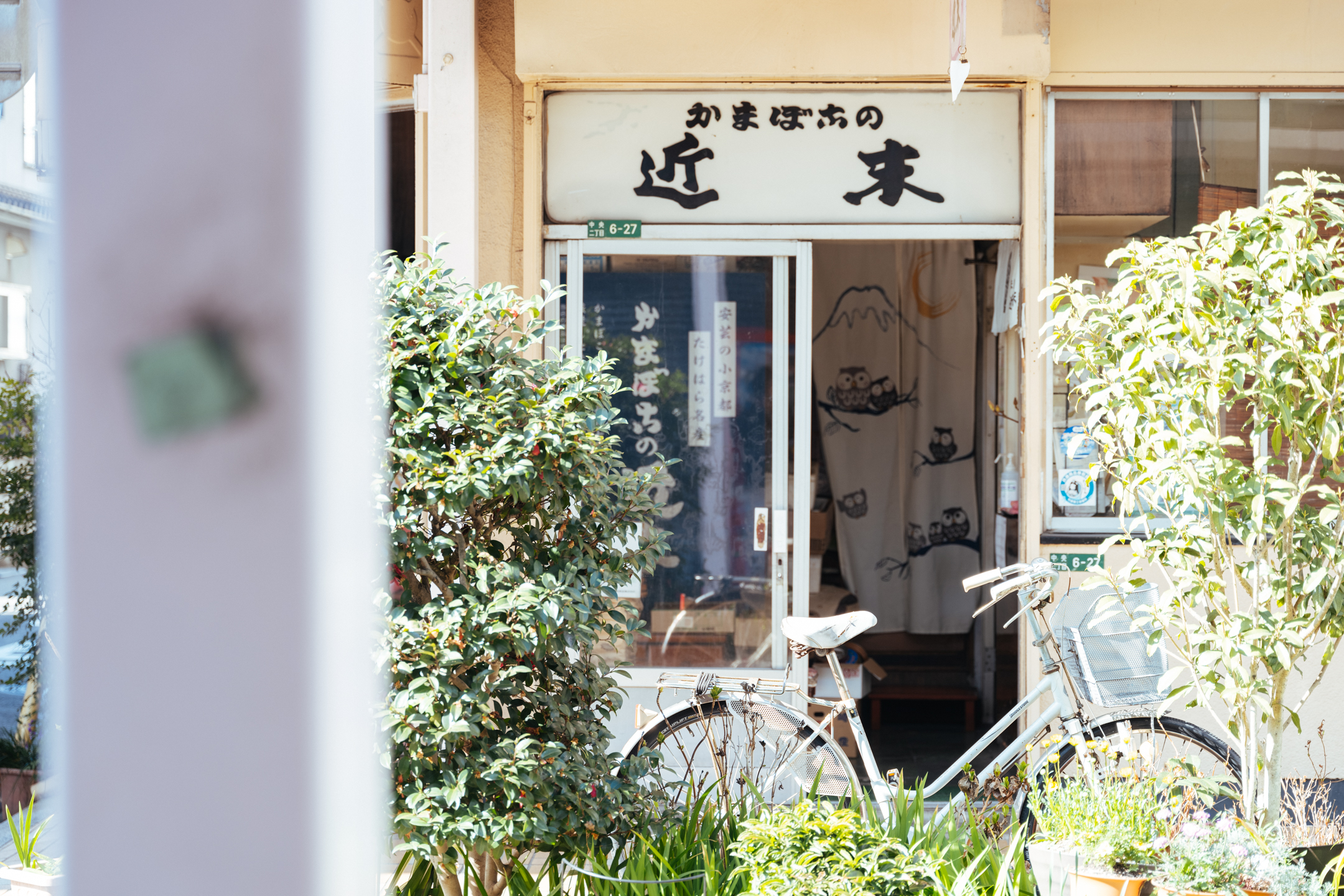
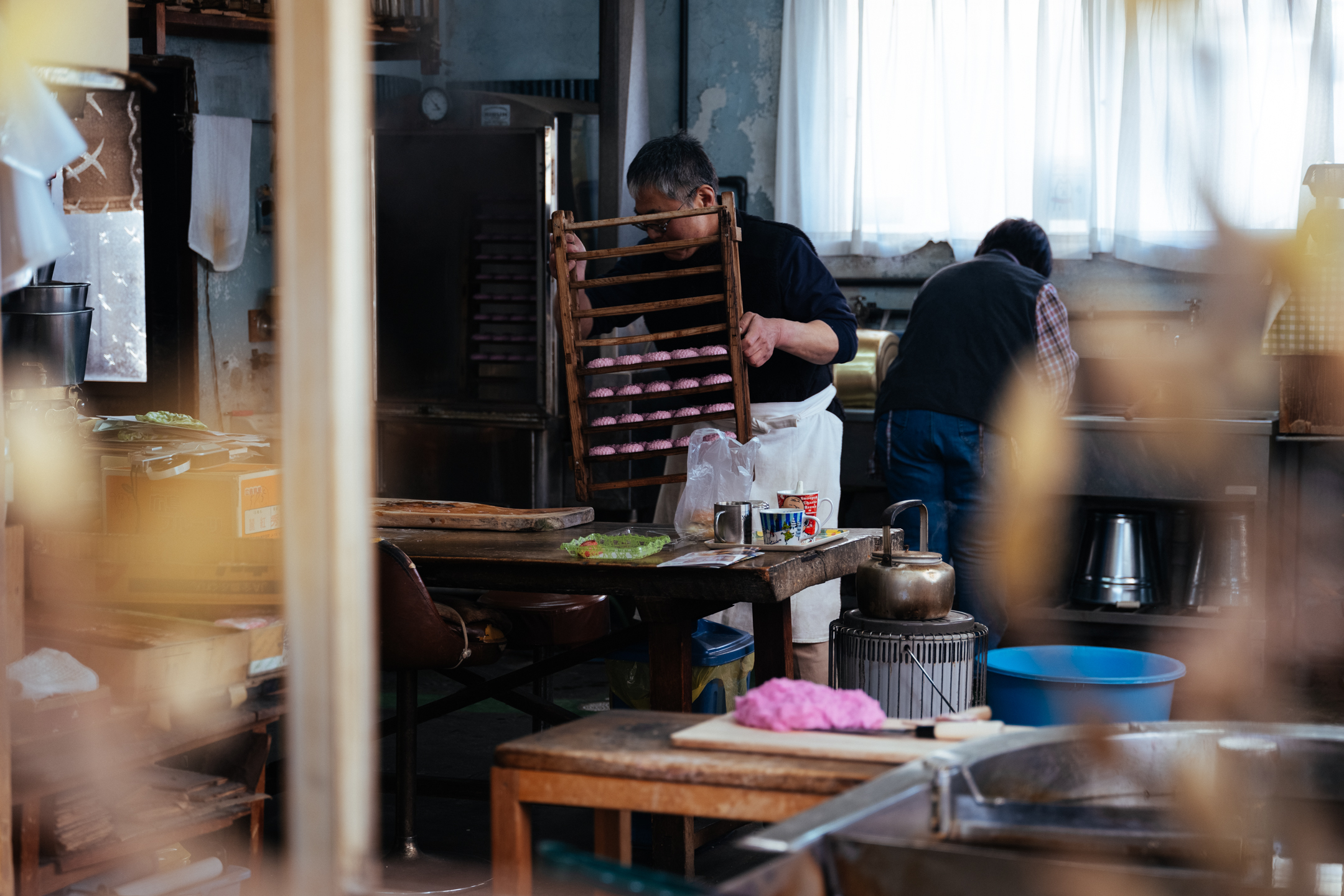
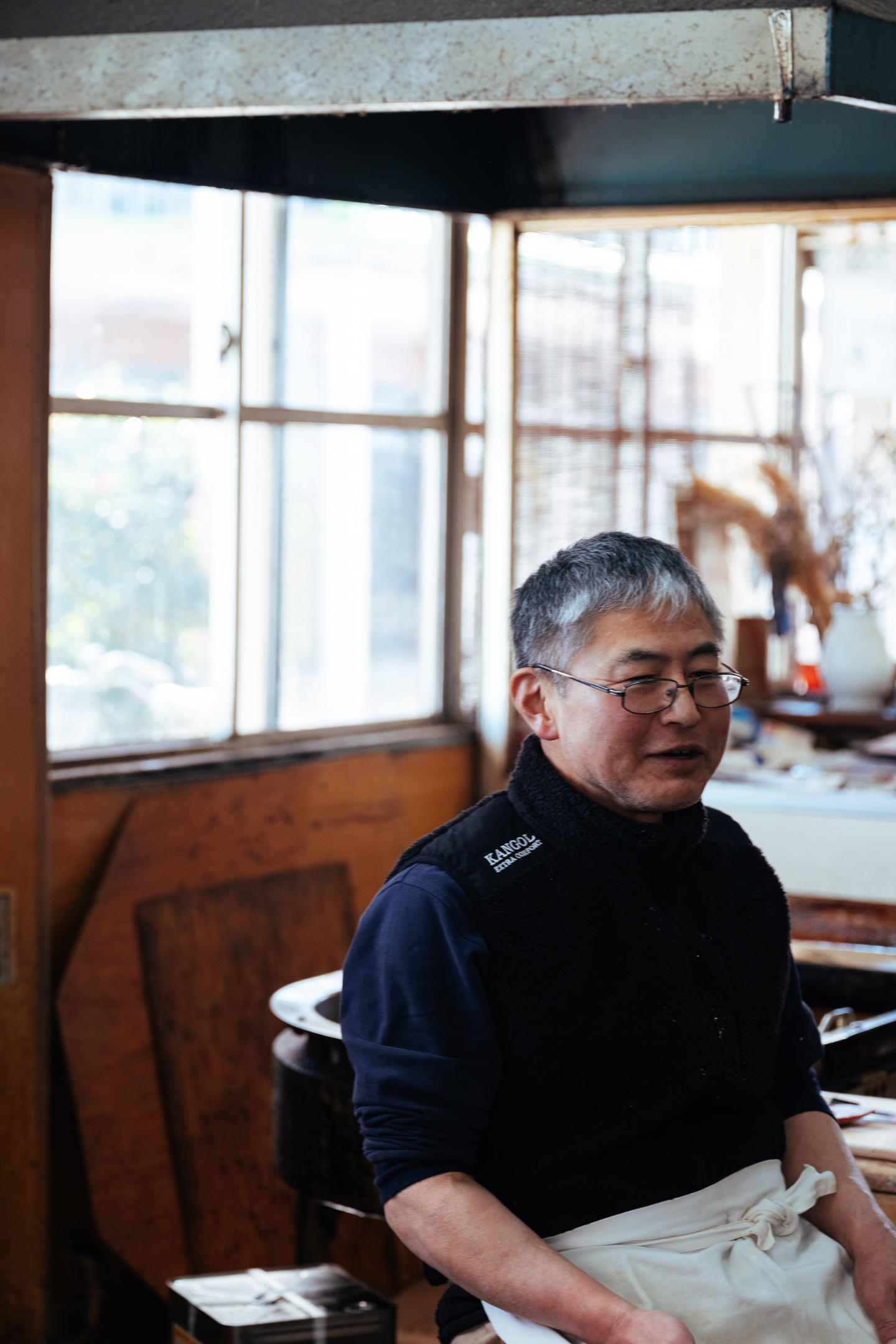
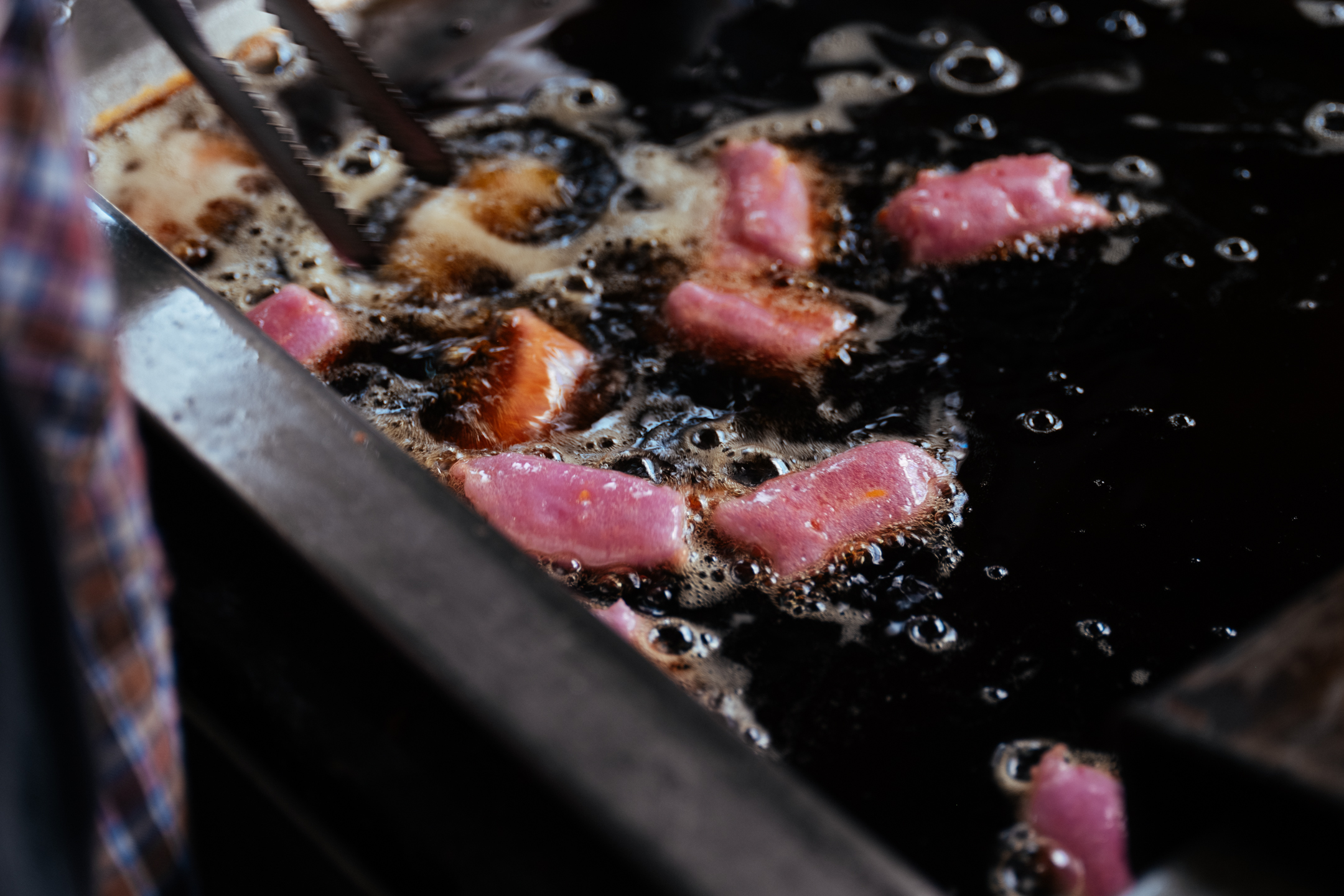
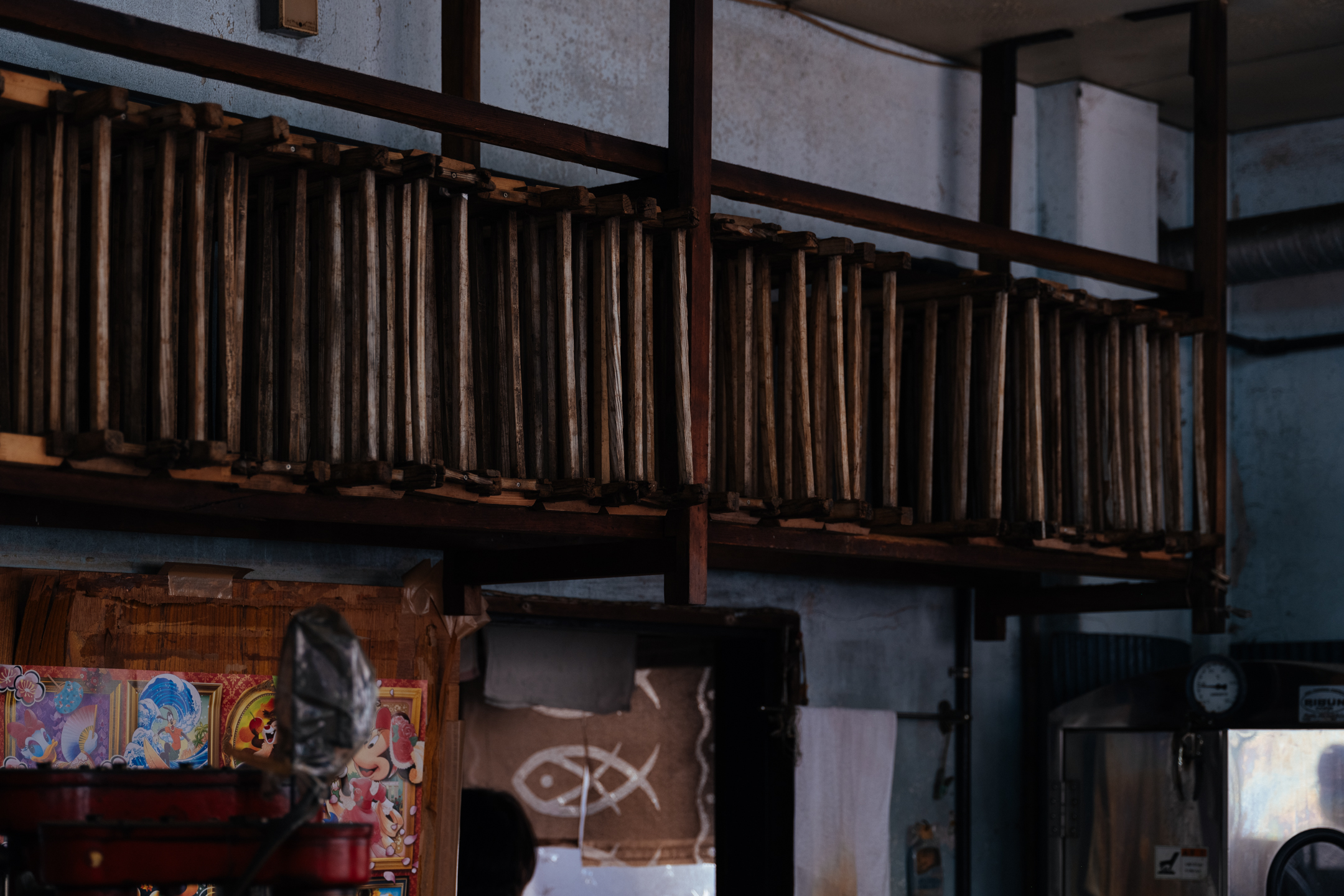
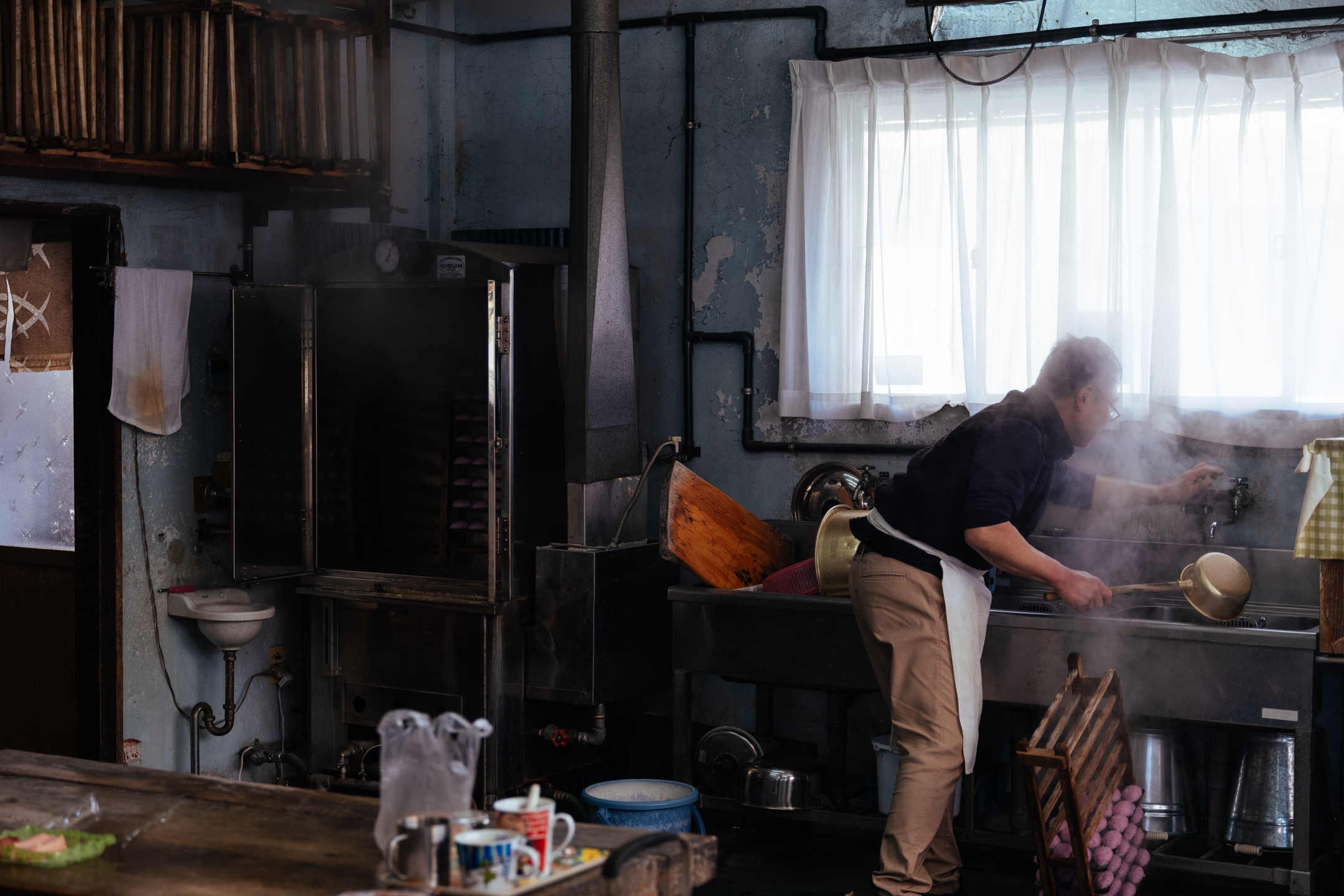
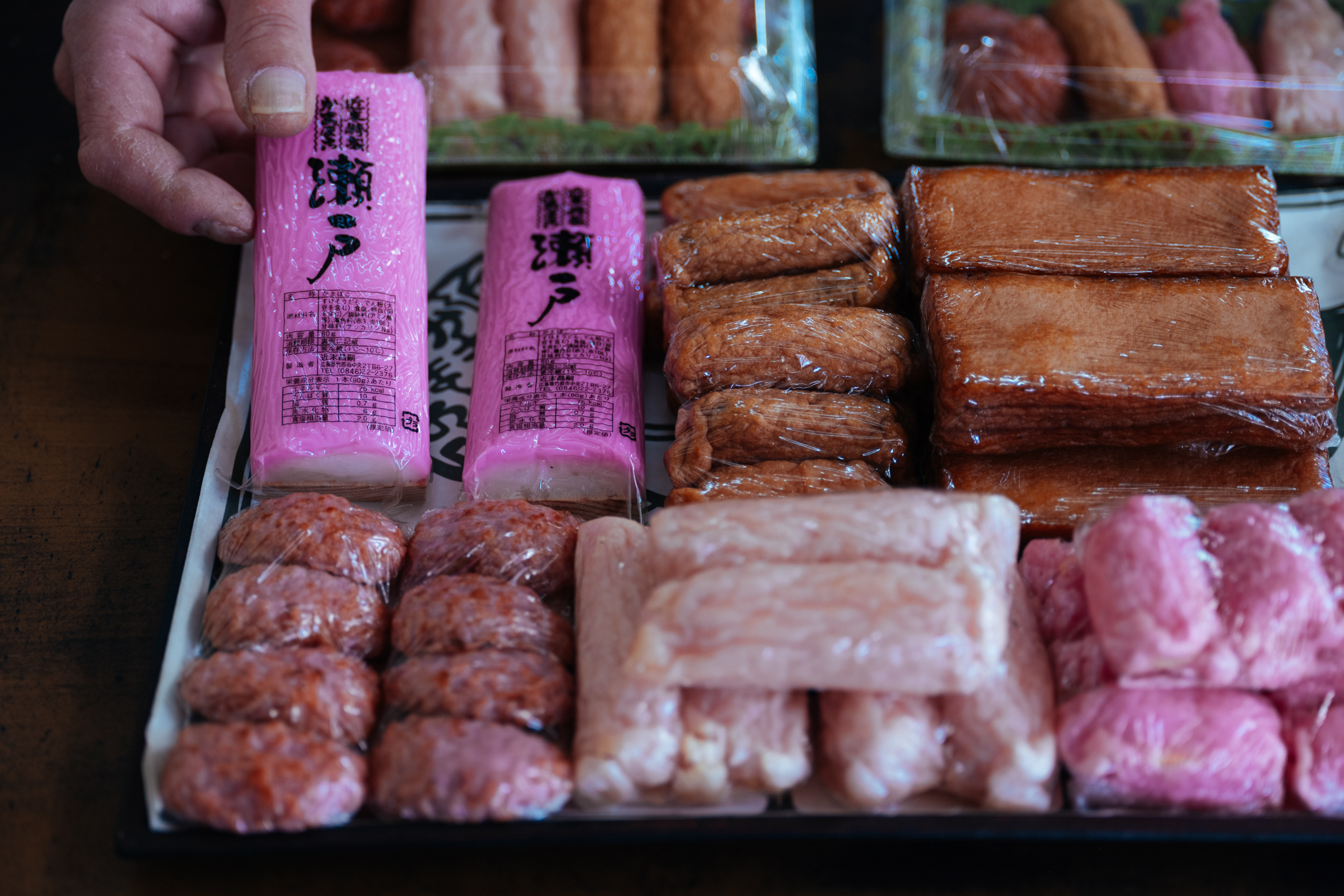
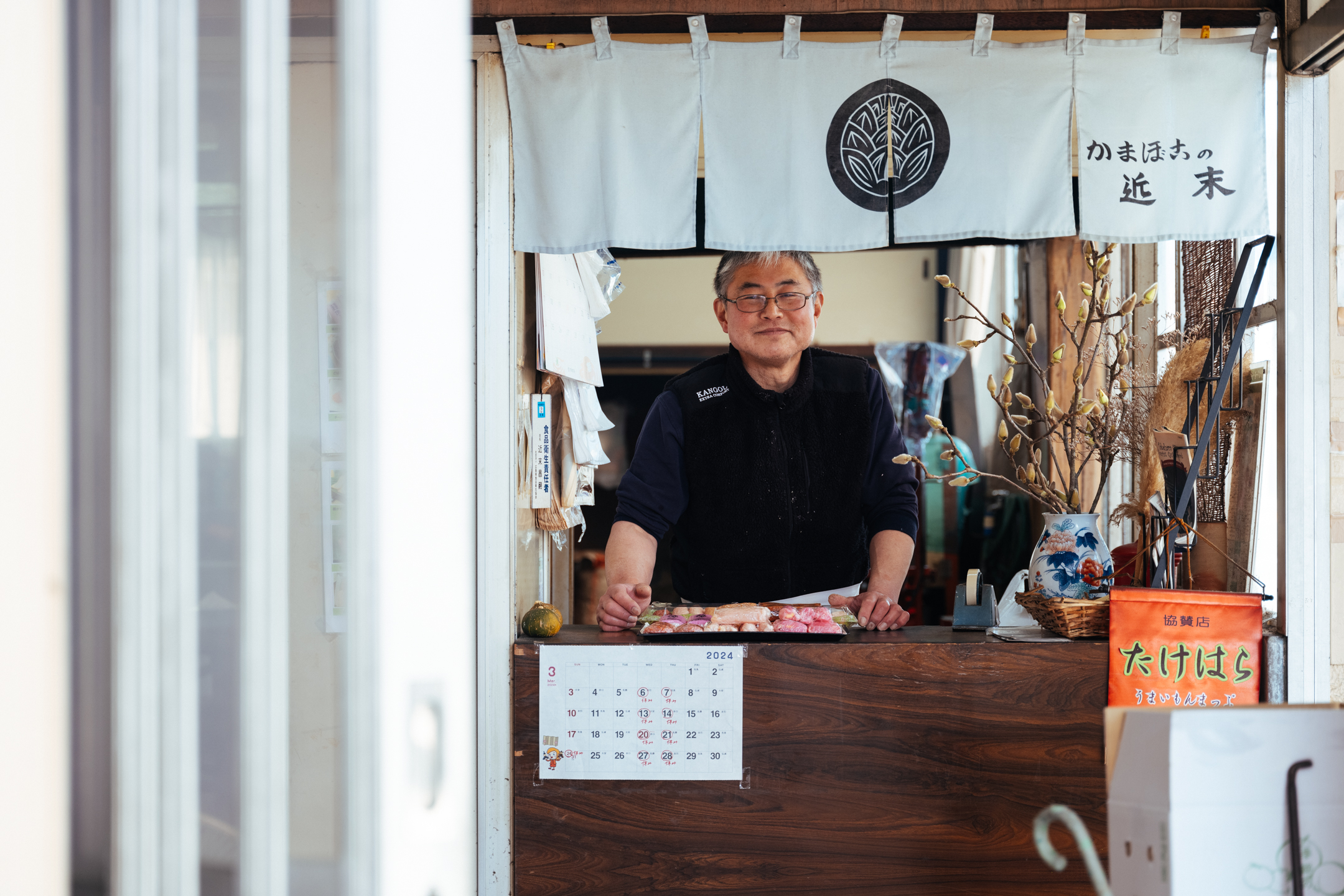
“Do you have any hiraten yet?” “I’m about to fry some now, so just wait a moment~” This familiar local exchange warms the heart. The fish cakes from “Kamaboko no Chikasue,” located on Takehara’s shopping street “Aifuru-dori,” are essential to local dining tables. Established in 1932, the shop is now run by third-generation owner Masatsugu Chikasue, who continues to use the same traditional methods. Without using preservatives, Alaska pollock is ground into surimi using a large stone mortar, then mixed with salt, seasonings, and starch in different proportions for each type of fish cake. Preparation begins early in the morning, and around 10 AM you might encounter them fresh and piping hot. When that happens, don’t hesitate to speak up. This is the only moment you can buy them “fresh off the fryer.” Fish cakes just fried in plenty of rapeseed oil are plump and tender. Take a bite while they’re still hot, and happiness fills your mouth. What’s being fried depends on the time—it’s a delightful surprise. Strolling through town with fresh tempura in hand is quite charming.
Inherited skills performed with rhythm, ingrained in the body
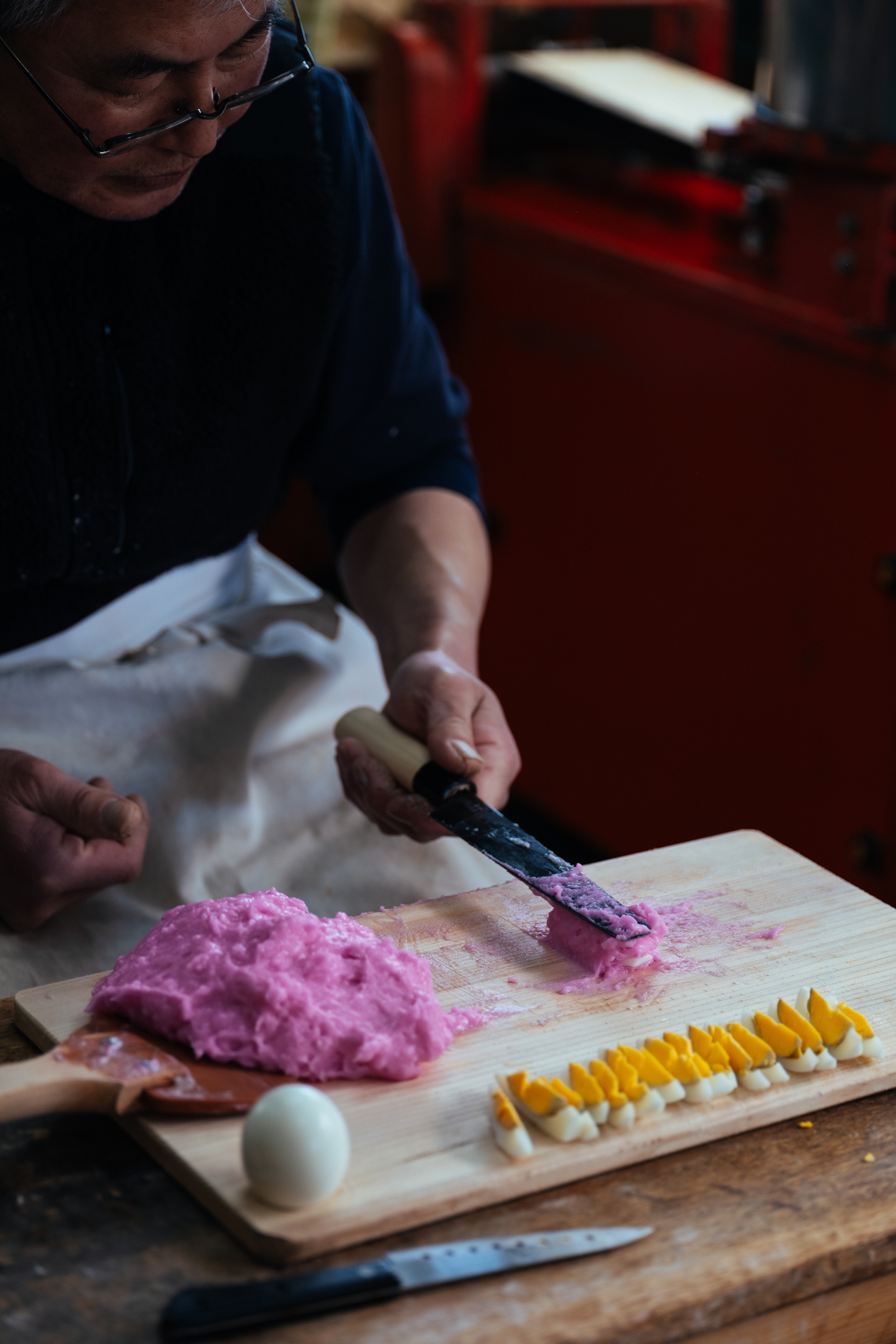
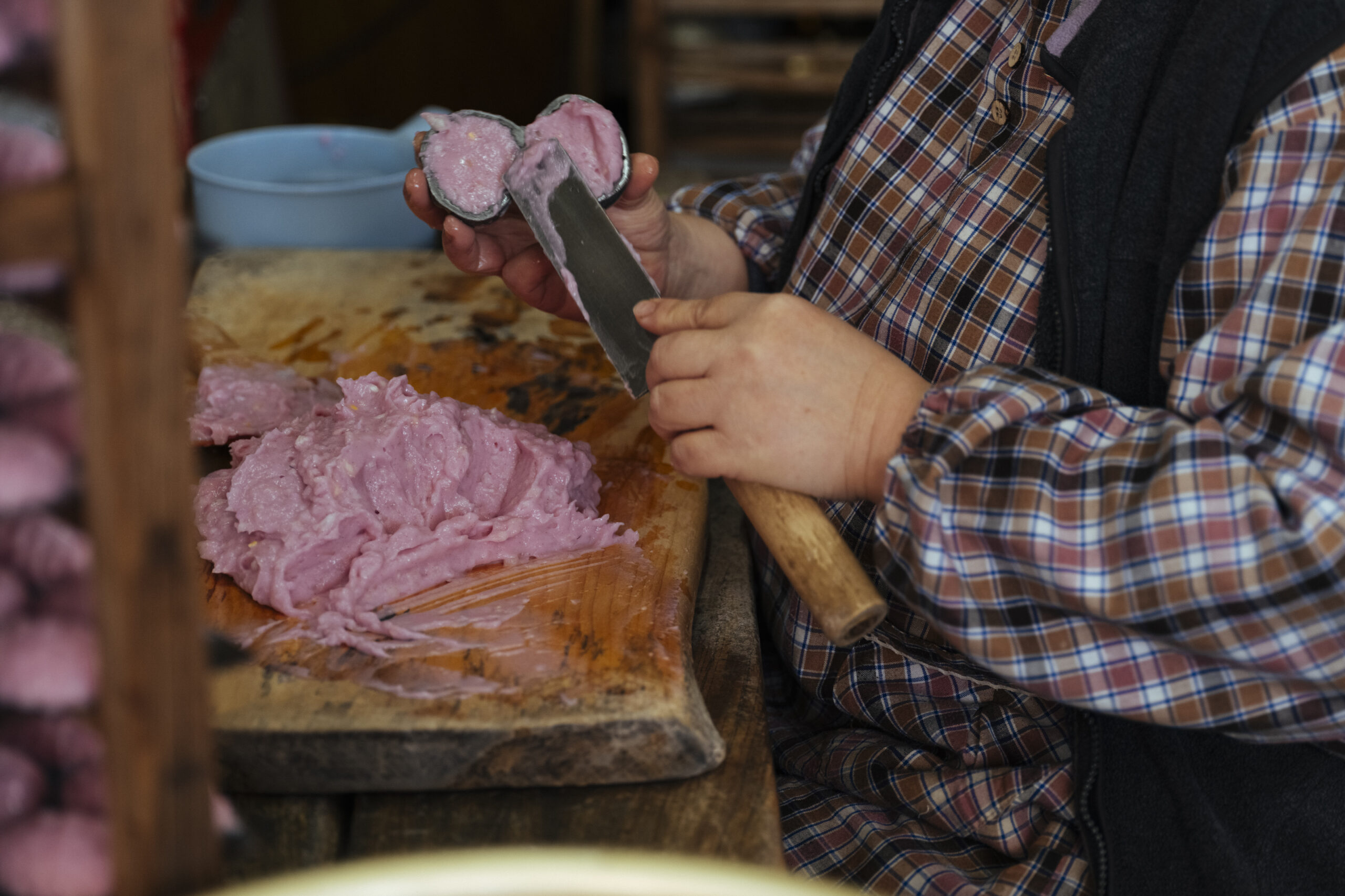
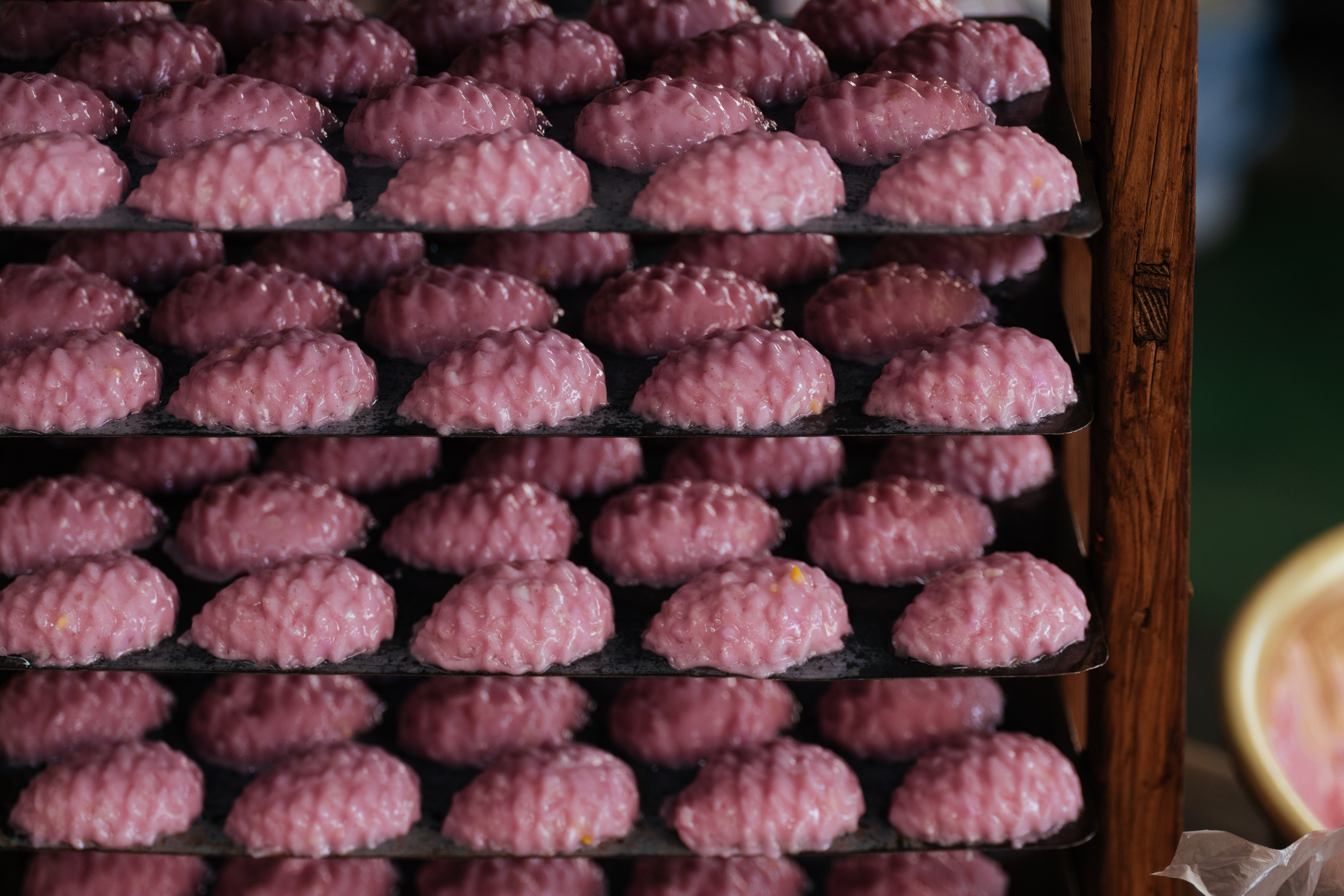
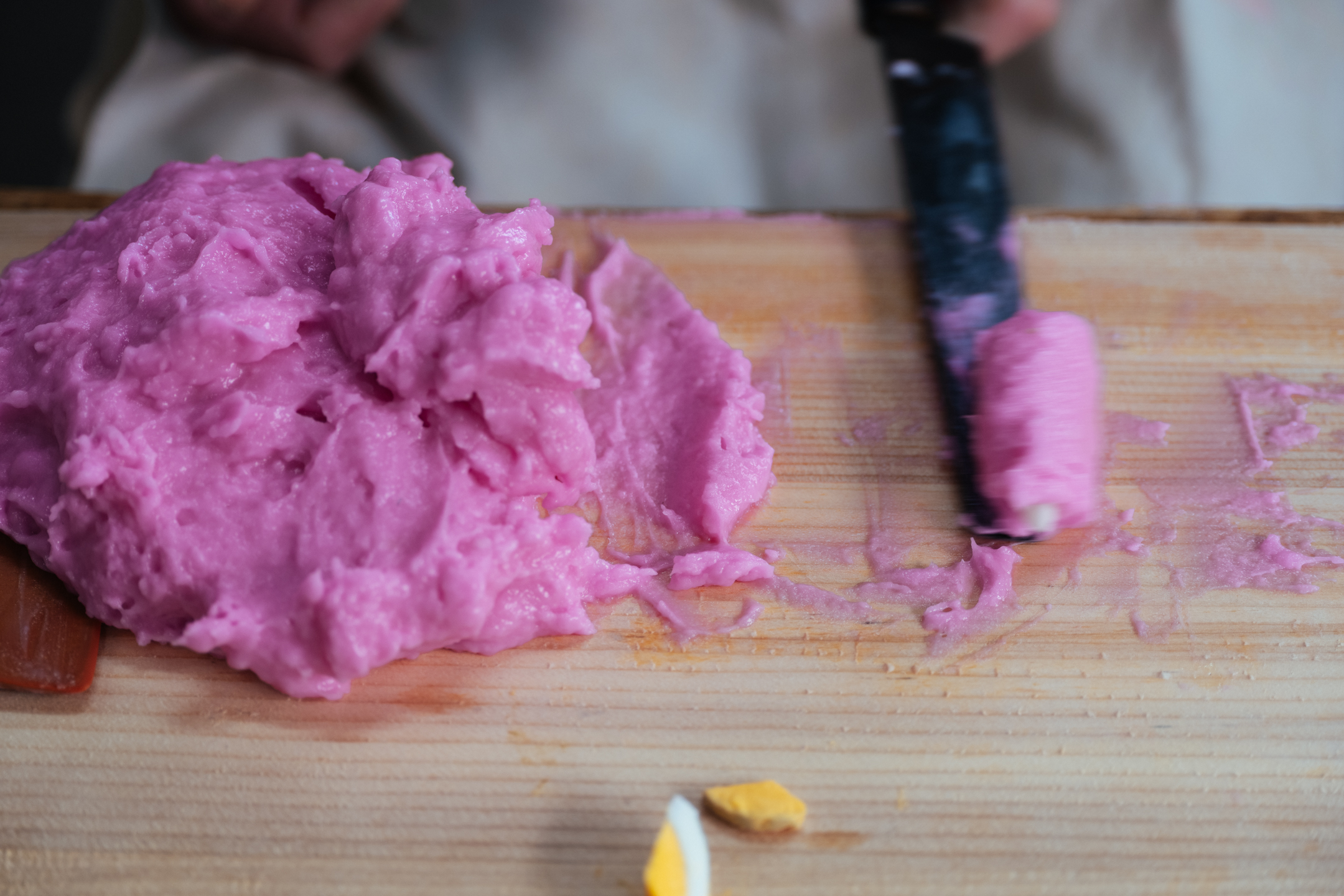
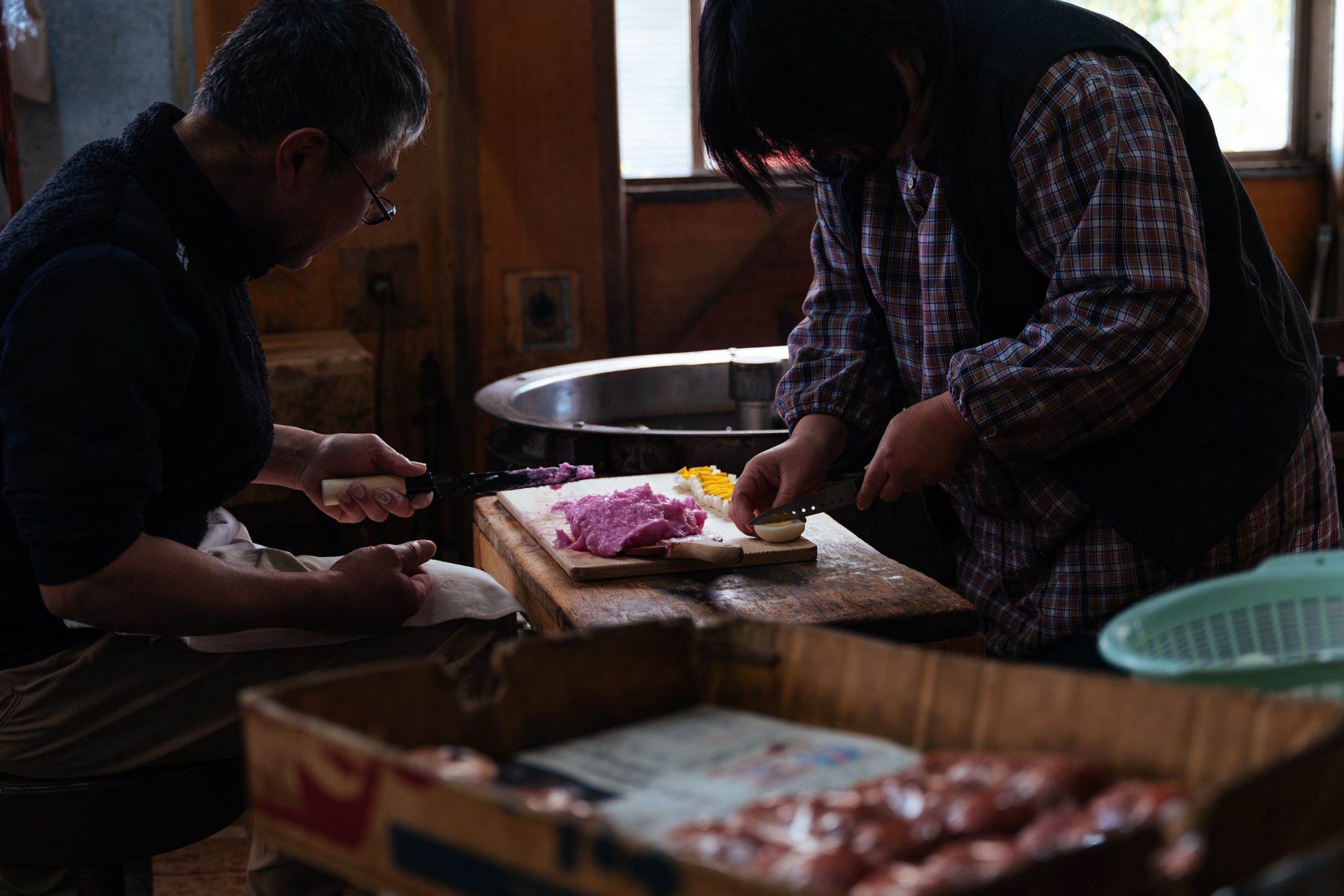
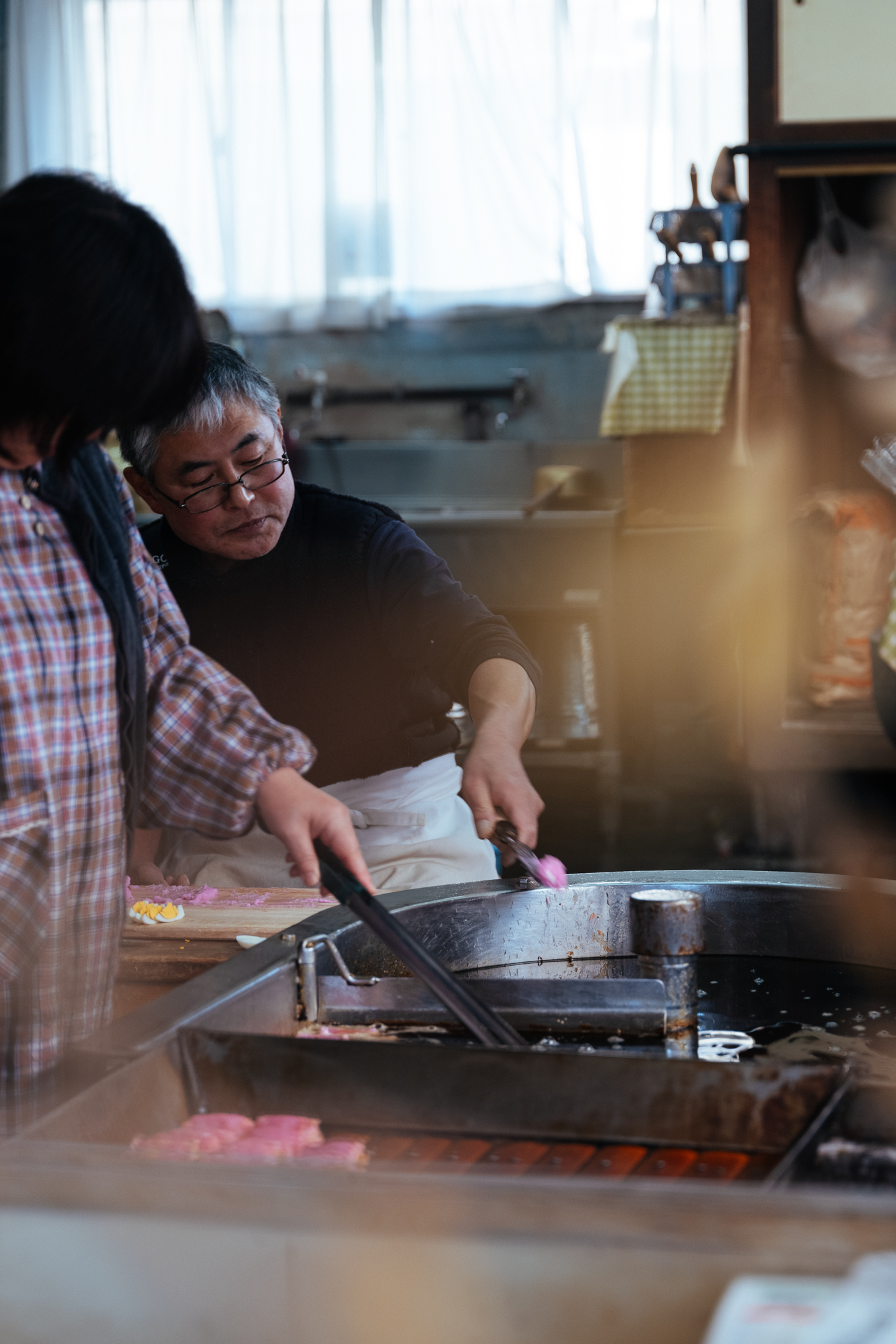
On this day, they were making “tamago-ten” (egg tempura). Cut boiled eggs are wrapped in vivid pink surimi. Masatsugu’s skillful hands work with impressive efficiency. Without using a scale, he spreads a consistent amount onto the cutting board, wraps the eggs, and drops them into the oil in a continuous rhythm. His body moves to a memorized beat as he fries one after another. The fish cakes dancing and bubbling in the oil are lifted out at just the right moment by his wife, Yoshimi. The taste of fish cakes differs between freshly fried and after some time has passed. “Our children prefer them after they’ve sat for a while and the texture has firmed up, rather than fresh from the fryer,” says Yoshimi. Comparing them side by side, it makes sense. Freshly fried ones are soft and fluffy, while those that have rested have a satisfying texture and develop more flavor with each bite. Both are appealing.
Chikasue’s fish cakes supporting local dining tables
“I’m putting these in udon today,” a customer visiting the shop shared how they’d be eating them. Many customers add them to simmered dishes or oden because they produce such good broth. In addition to the “tamago-ten” mentioned earlier, Chikasue offers products perfect for pairing with drinks, including the square tempura “hiraten” that’s standard in this region, “gobo-ten” (burdock tempura), and “cheese-ten” (cheese tempura). Among these, the “matsukasa-ten” seasoned with onion and pepper is a nostalgic flavor that Yoshimi has loved since childhood, eating them as snacks with one in each hand. They package them in sets of two or three pieces, or in packs containing several varieties, and distribute them to local supermarkets and roadside stations.
“Times have changed, and I’m keenly aware of the limits of handmade production,” says Masatsugu. For now, he’s not considering a successor, so it’s unclear how long this “traditional taste” will remain available. However, it’s certain that regular customers keep coming back—not only locals, but also visitors for tourism or work who say “It was so delicious, I was asked to buy more” or “I heard about it from a colleague and came to try it.” The people who grew up with Chikasue’s kamaboko will surely continue to support this taste for years to come.