A brewery walking alongside the town of Takehara for 300 years
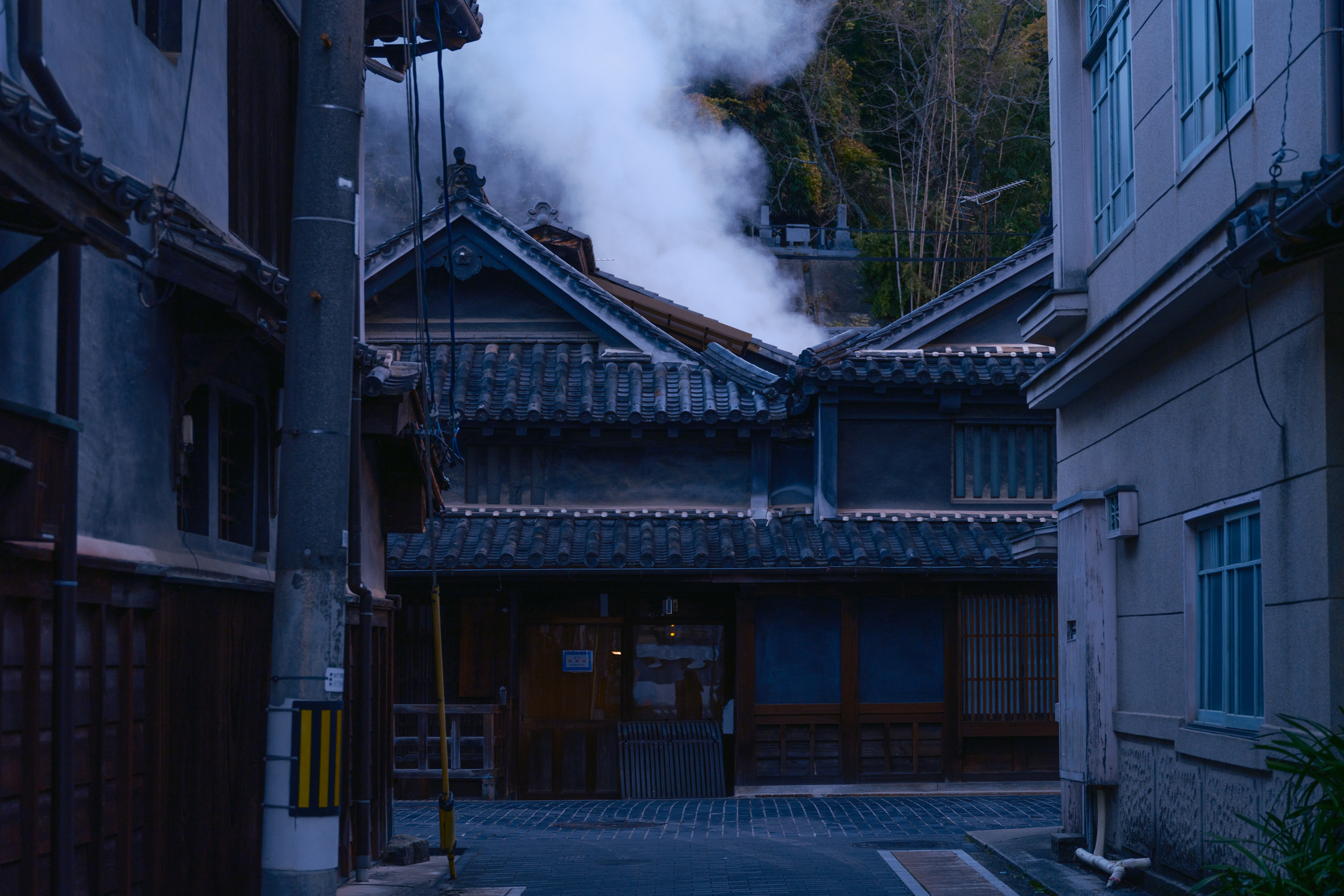
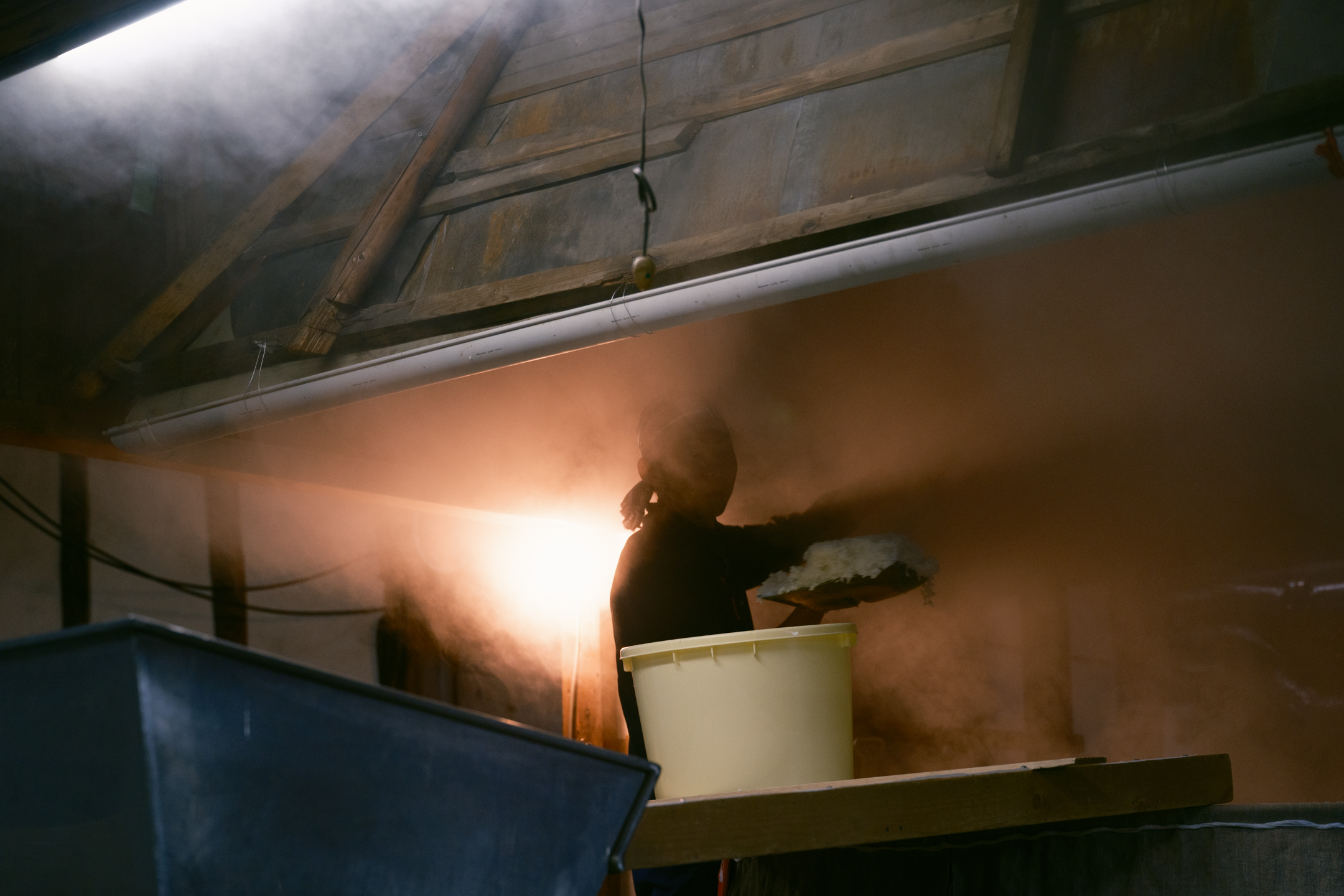
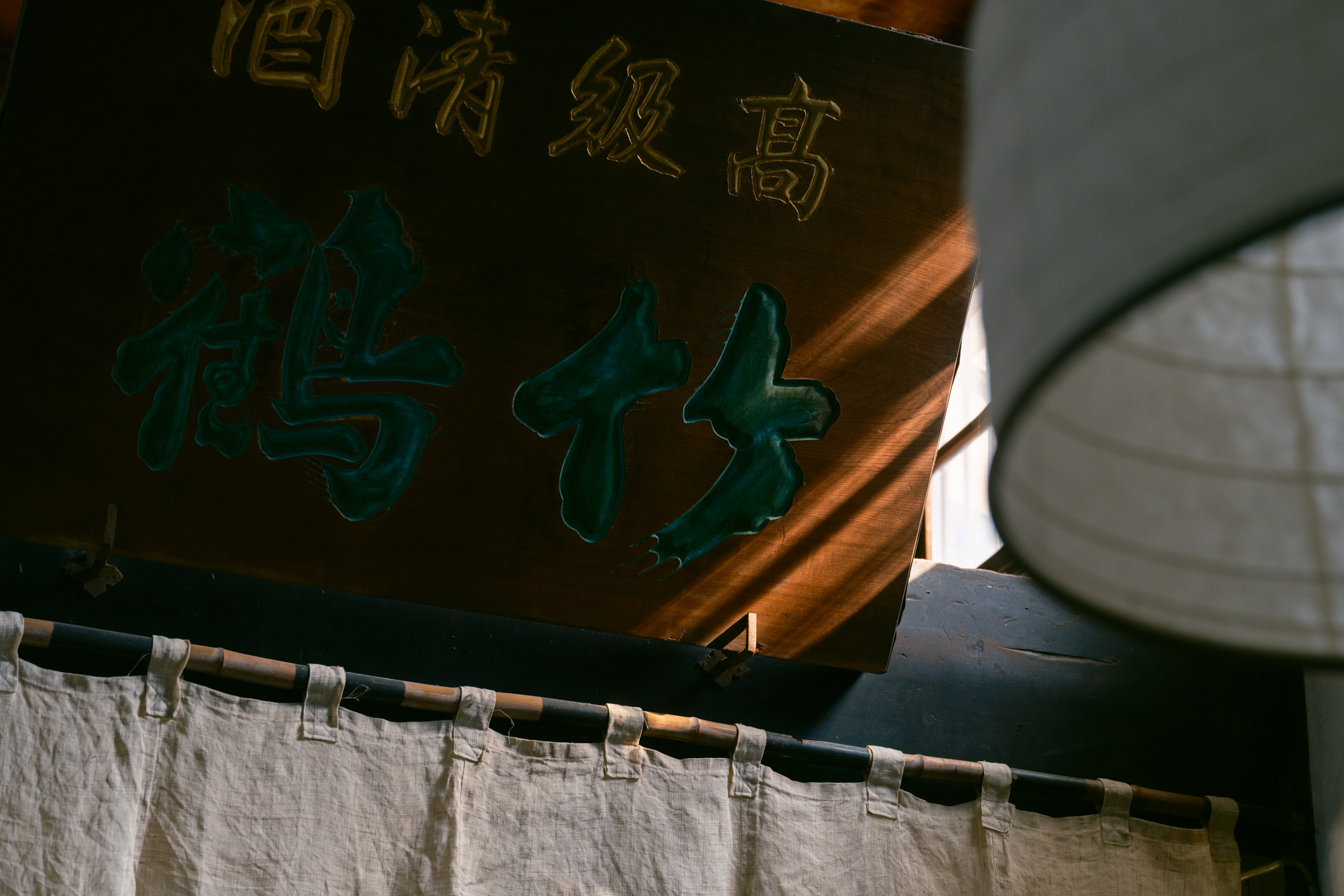
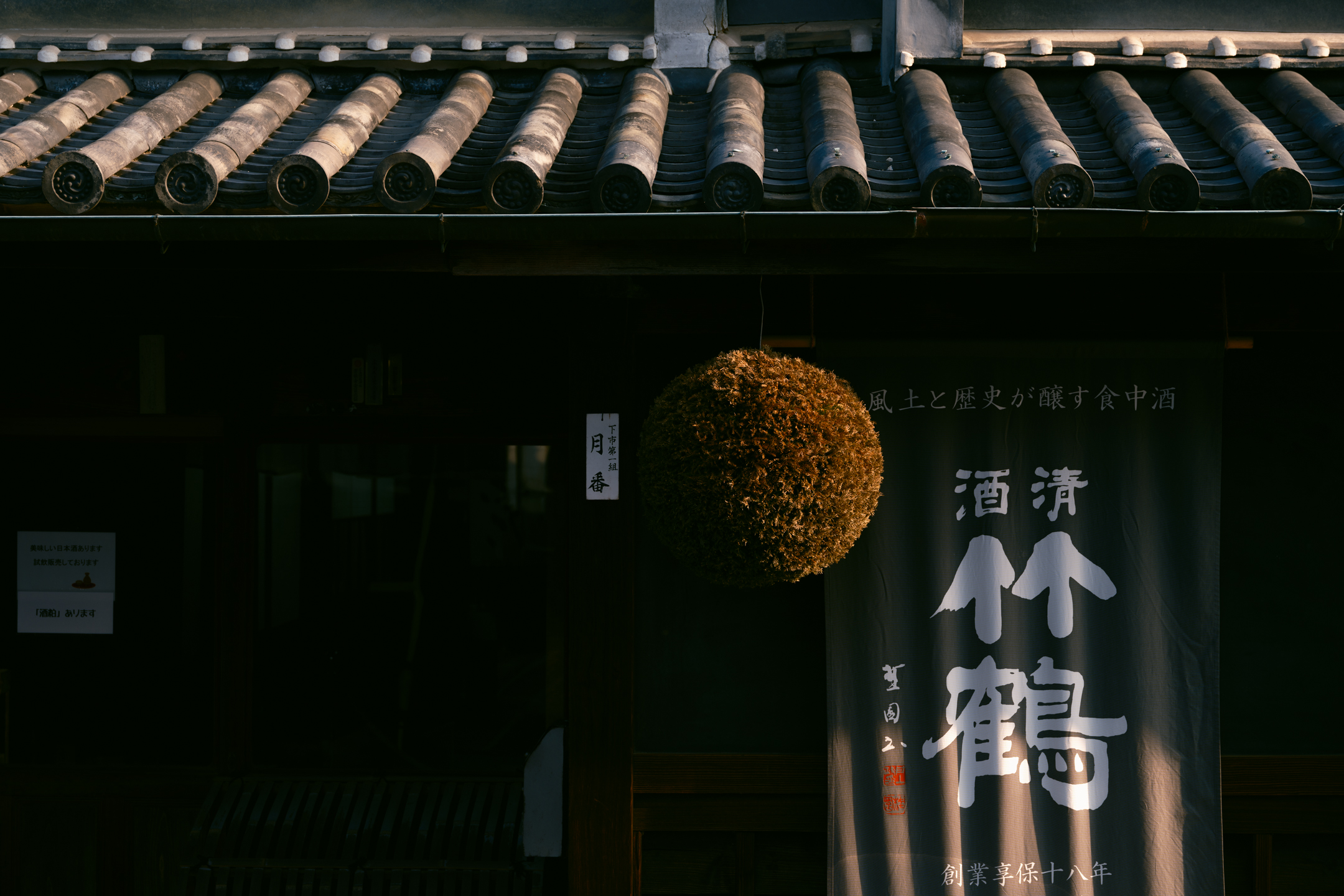
In a corner of Takehara’s old town, there is a brewery that begins its work in silence before the sun even rises. This is Taketsuru Shuzo, a long-established brewery founded in 1733. From deep within the steaming brewery, you can catch a faint sense of people at work. The air inside is filled with the subtly sweet aroma of rice. When people hear the name “Taketsuru,” many think of Masataka Taketsuru, the father of Japanese whisky, and this is exactly where his family roots lie. With its long history, Taketsuru Shuzo has been crafting sake that reflects the local character of Takehara for nearly 300 years.
Taketsuru Shuzo is characterized by brewing based on traditional methods. In 2004, they revived “Kimoto-zukuri,” a technique established during the Edo period, intentionally choosing a path that requires more time and effort. In modern sake brewing, mechanized, speed-oriented methods are common for the sake of efficiency. However, because Kimoto-zukuri relies on the power of nature, it takes more than twice the time and labor. The reason they go to such lengths is solely to achieve their goal: brewing sake that truly enhances the flavor of food.
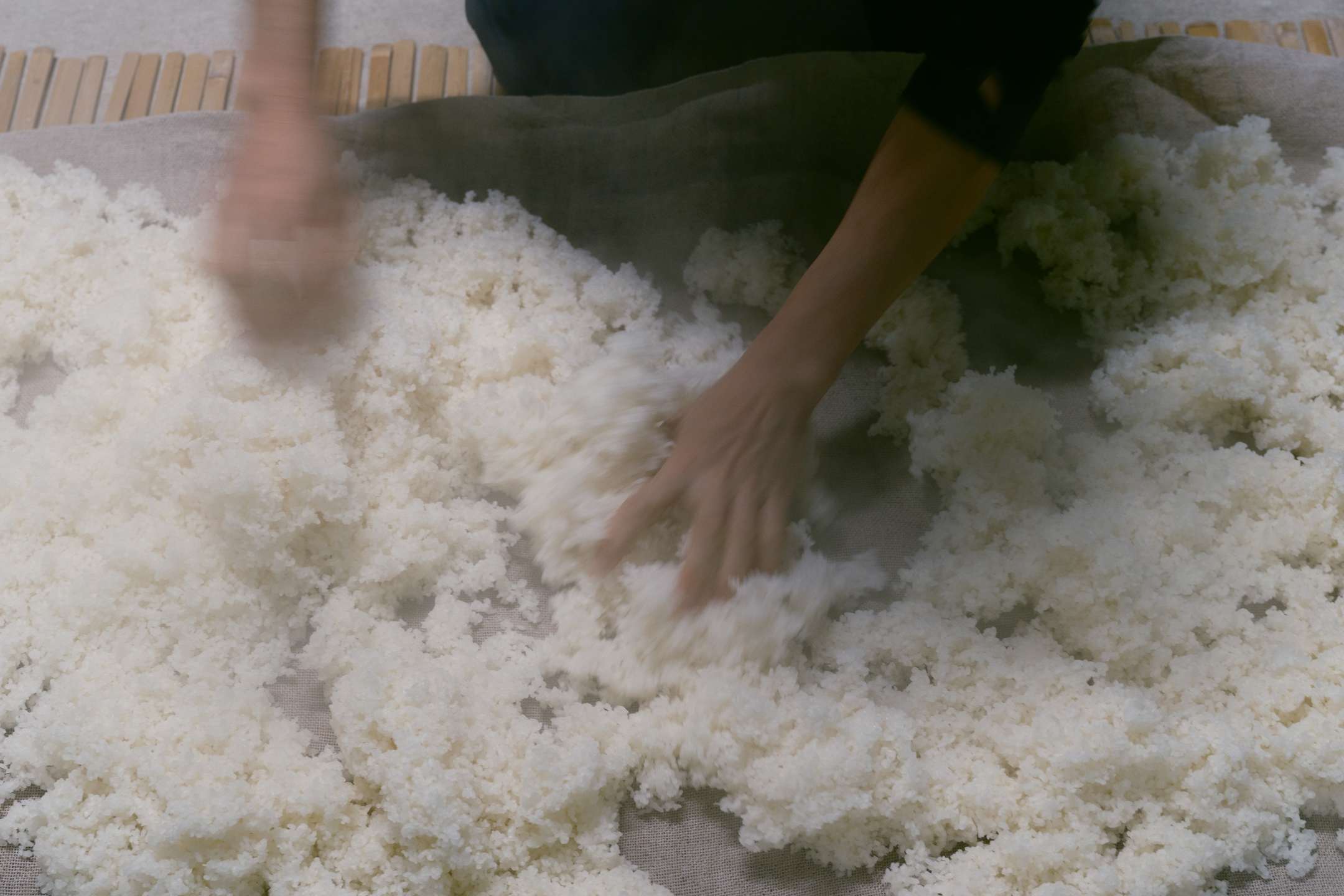
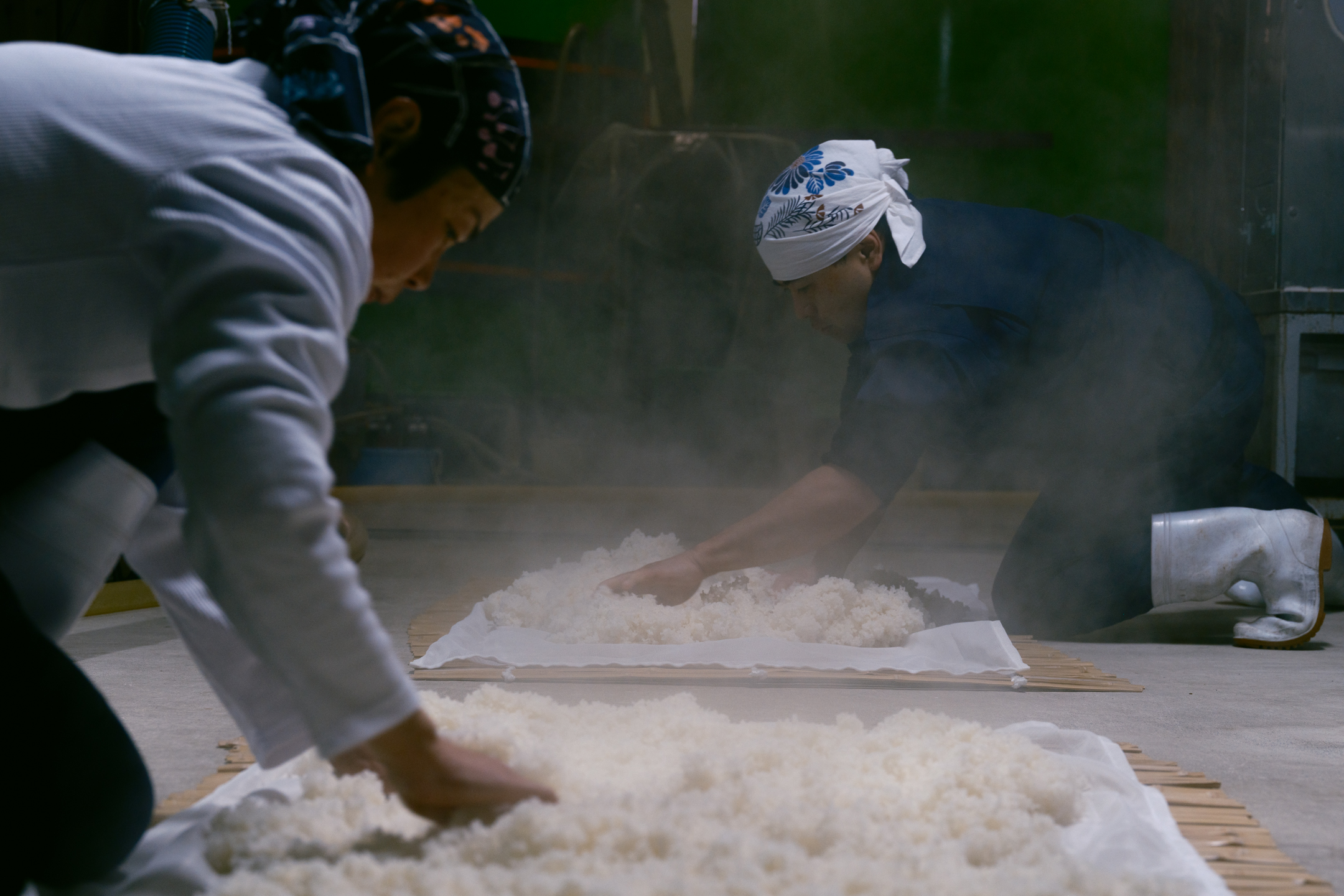
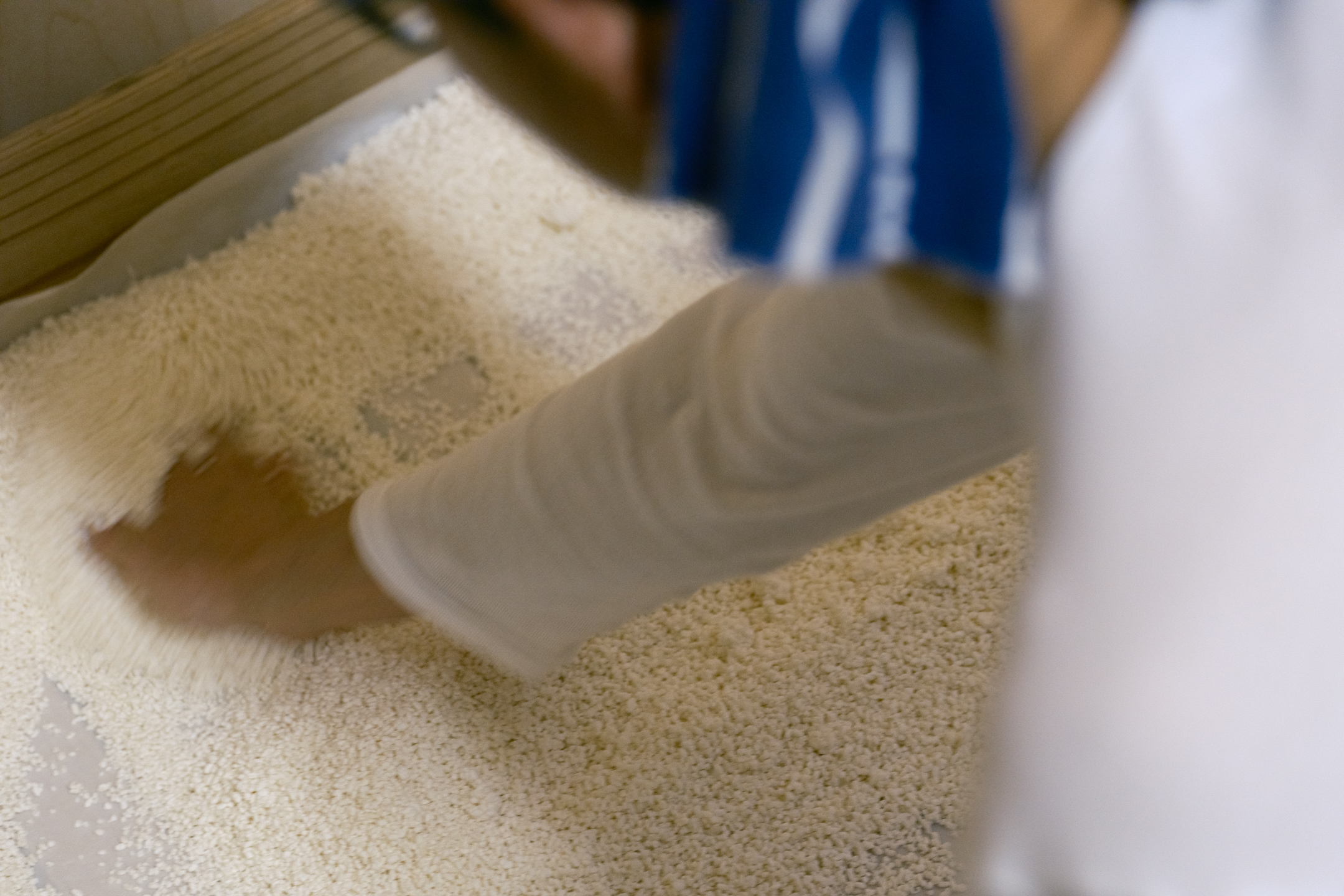
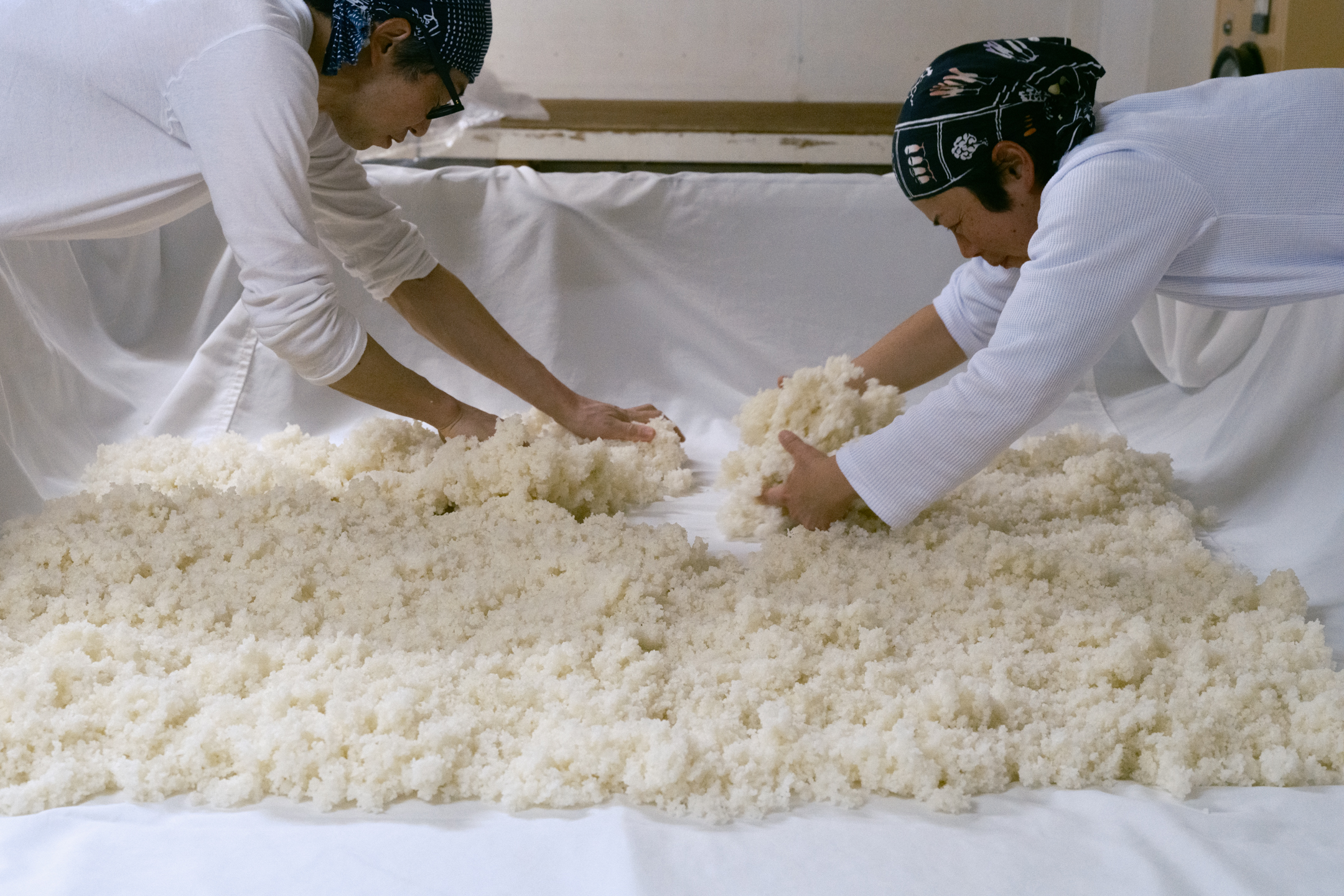
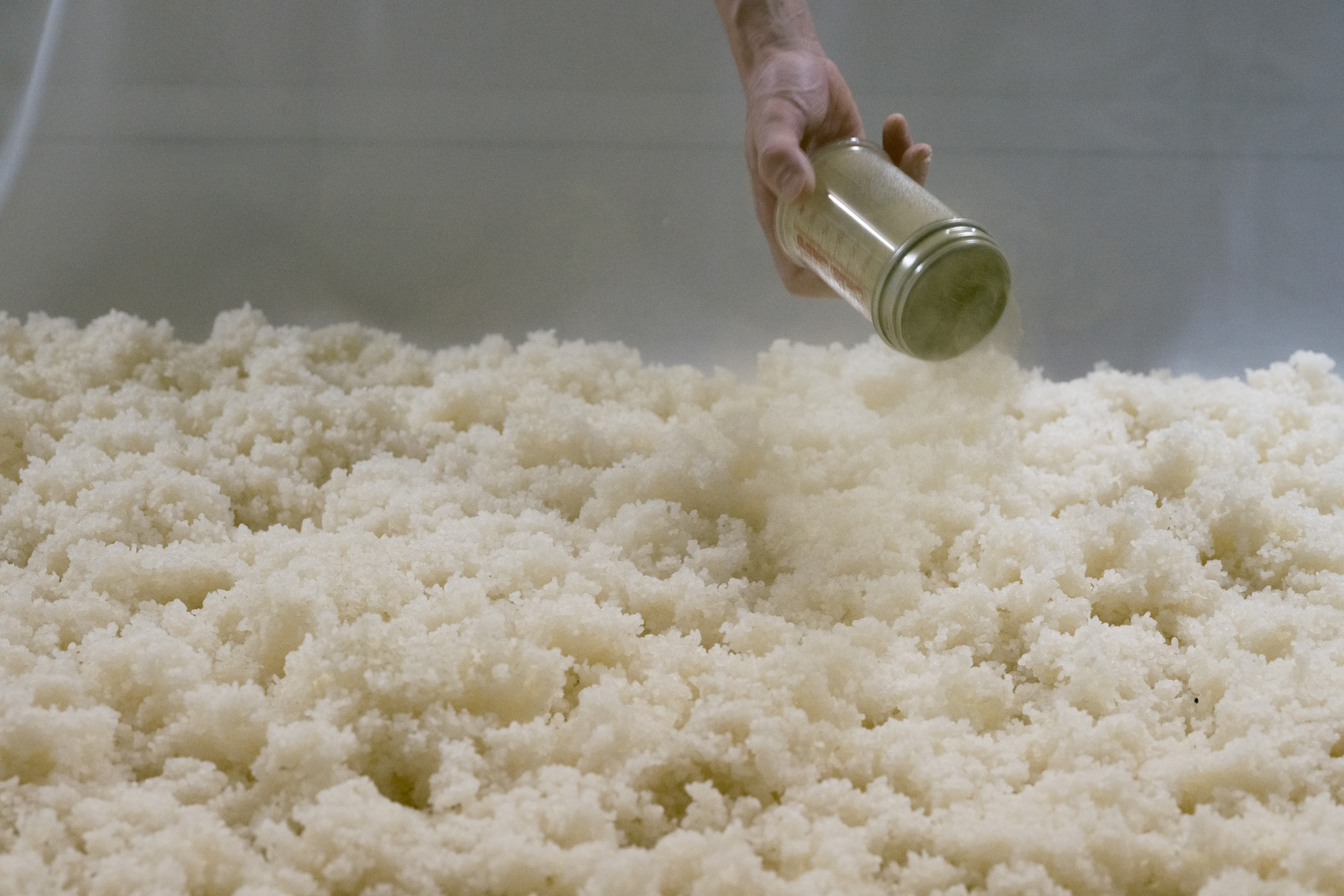
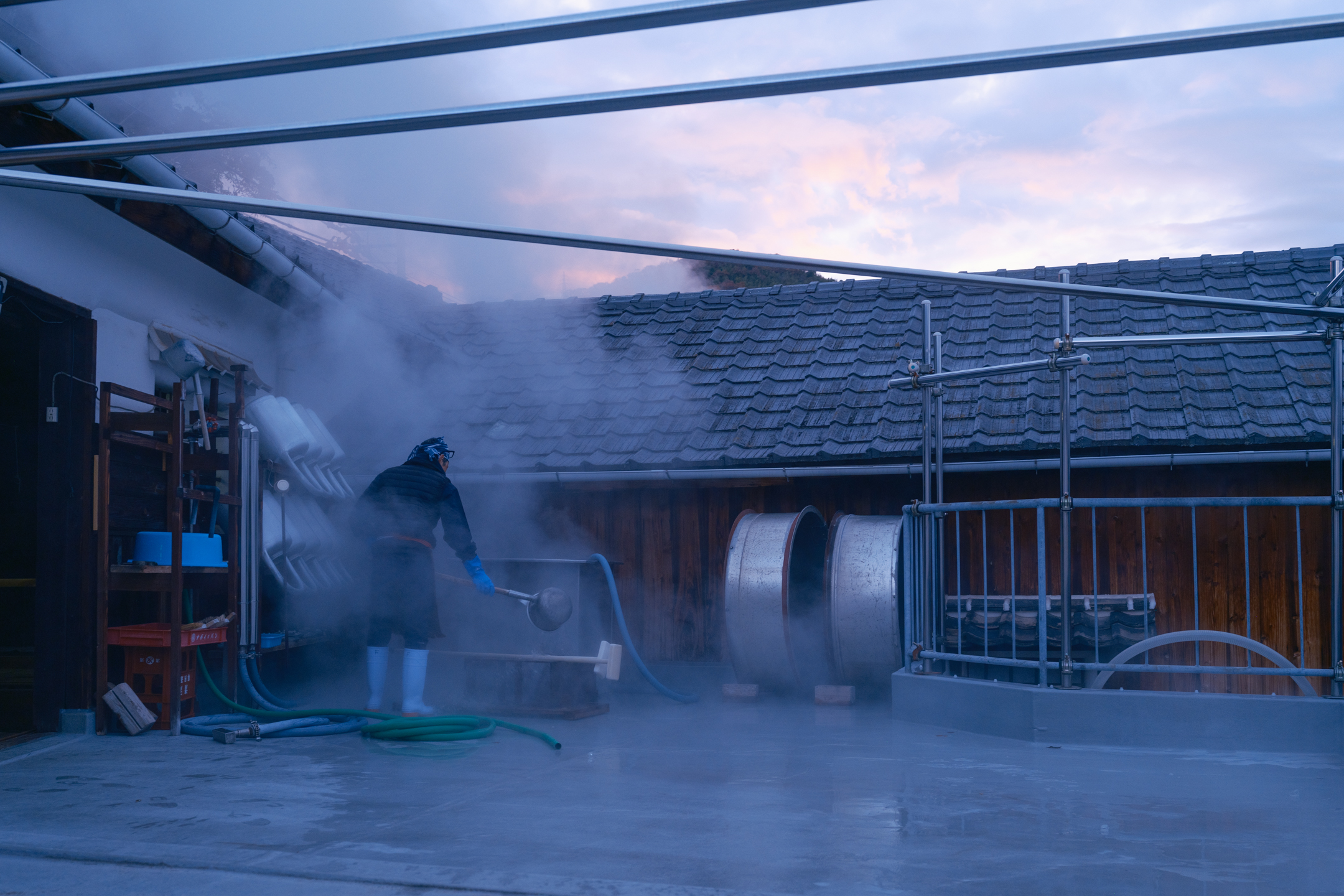
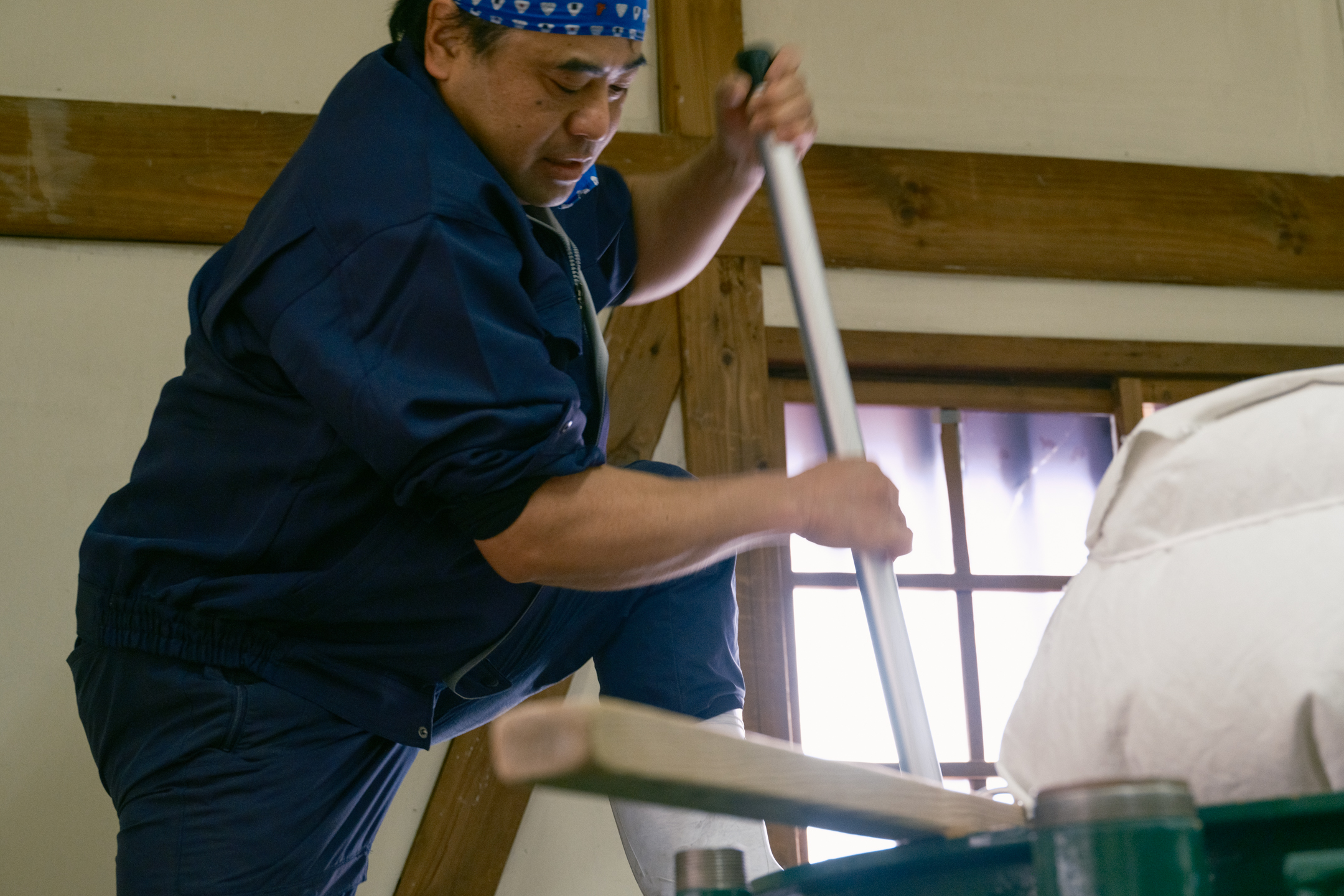
The morning brewing process is a race against time. Steamed rice is quickly broken up and taken to the koji room, where humidity and temperature are delicately managed. At Taketsuru Shuzo, they aim for a signature taste that balances umami, a clean finish, and acidity by letting the koji mold work thoroughly. They also use “koji-buta” (small wooden trays), a method requiring significant skill and labor, making the presence of a talented master brewer essential. Yasumasa Fujiwara, a veteran with 25 years of experience and in his 6th year as master brewer, carries on this tradition. He works in the brewery every day, aiming to create sake that complements the deep-flavored seafood of this region.
Handcrafted traditions passed down with 100-year-old wooden vats
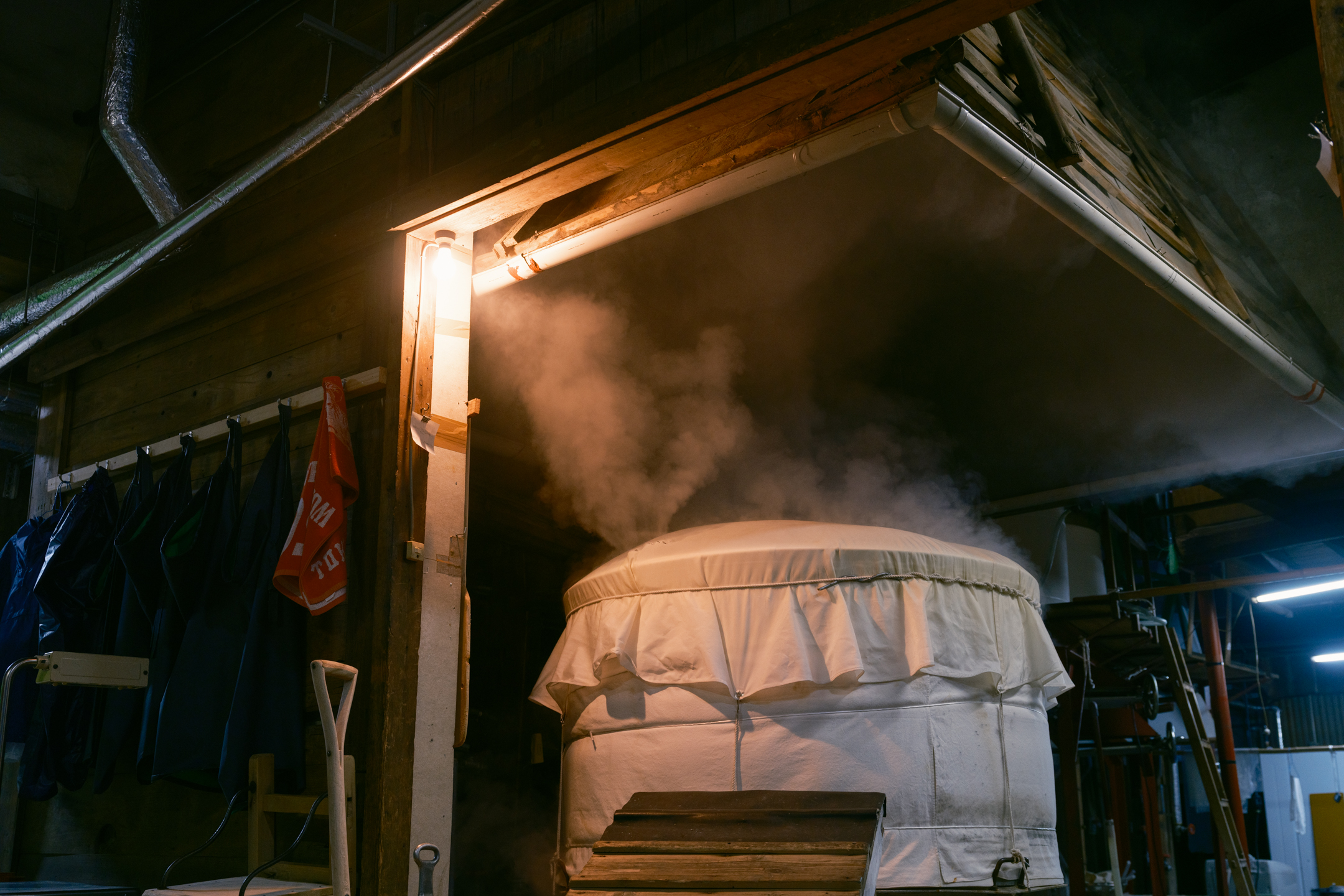
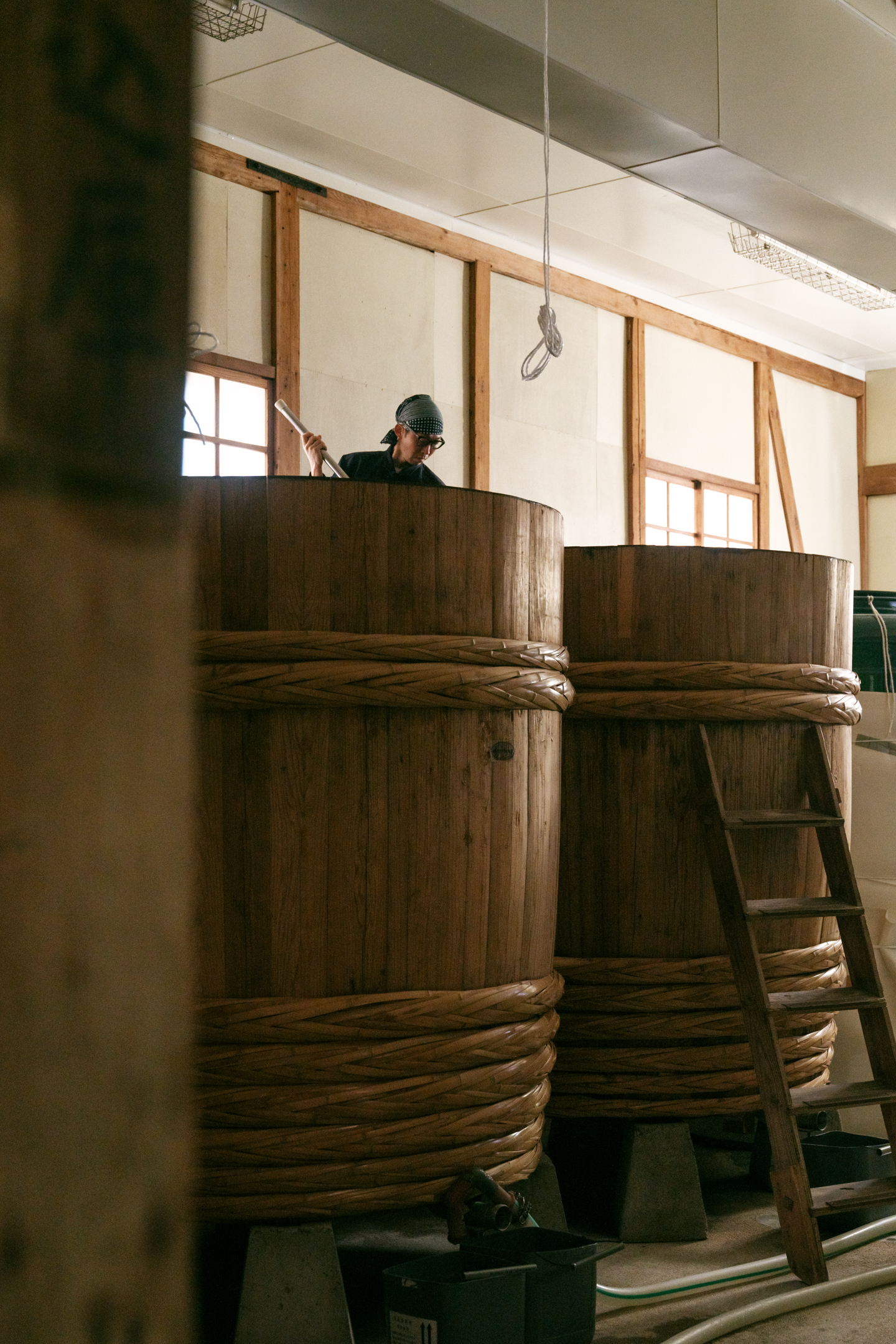
As the sky finally begins to brighten, the brewing work continues. The water, pumped from 126 meters underground, leads the sake toward a rich, full-bodied flavor. The majestic wooden vats in the brewery, which had been kept by the family for over 100 years, were brought back into use in 2009. The various microorganisms on the surface of the wood create a wide range of rich flavors. At the same time, the need for delicate management reflects their commitment to pursuing the unique Taketsuru taste.
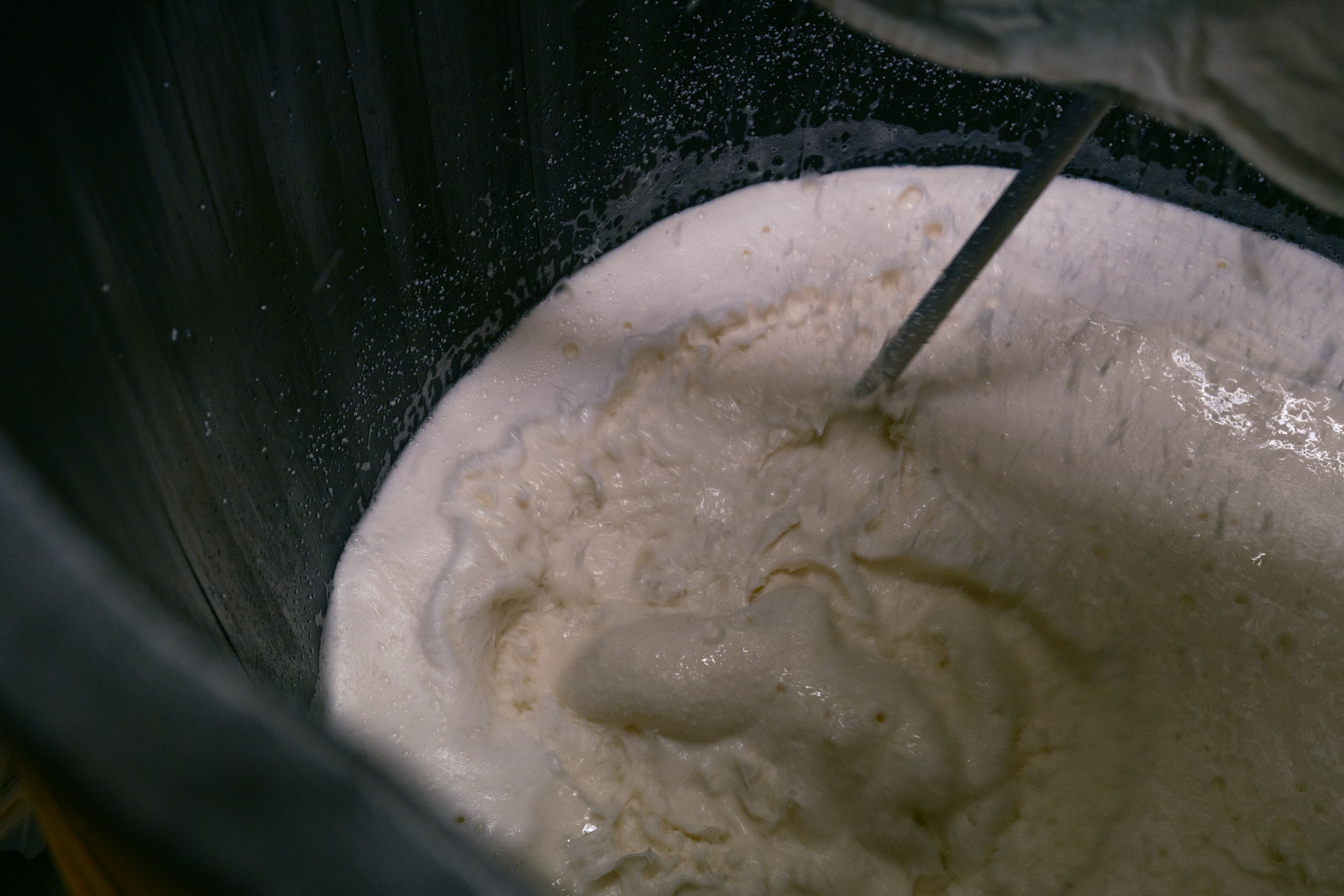
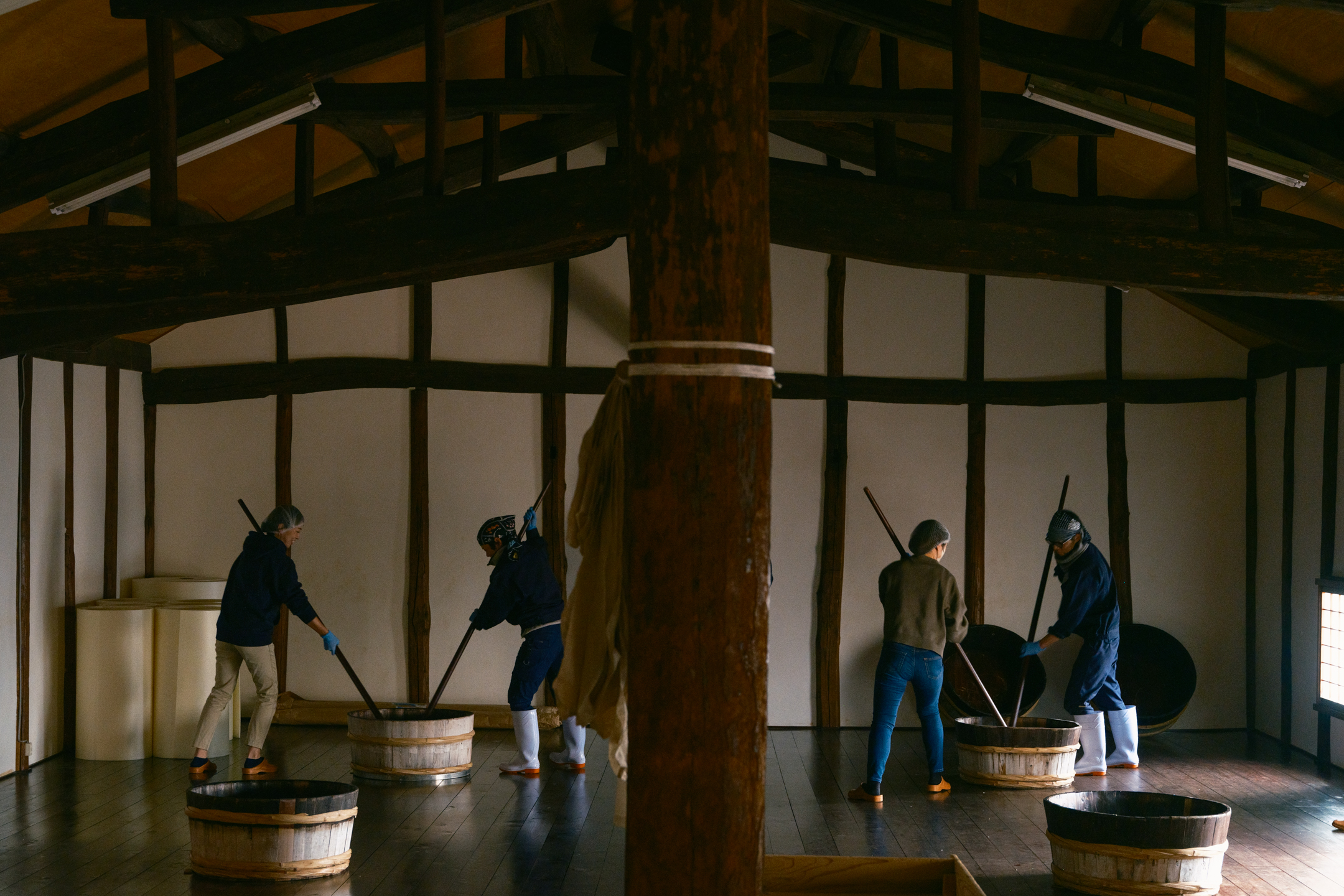
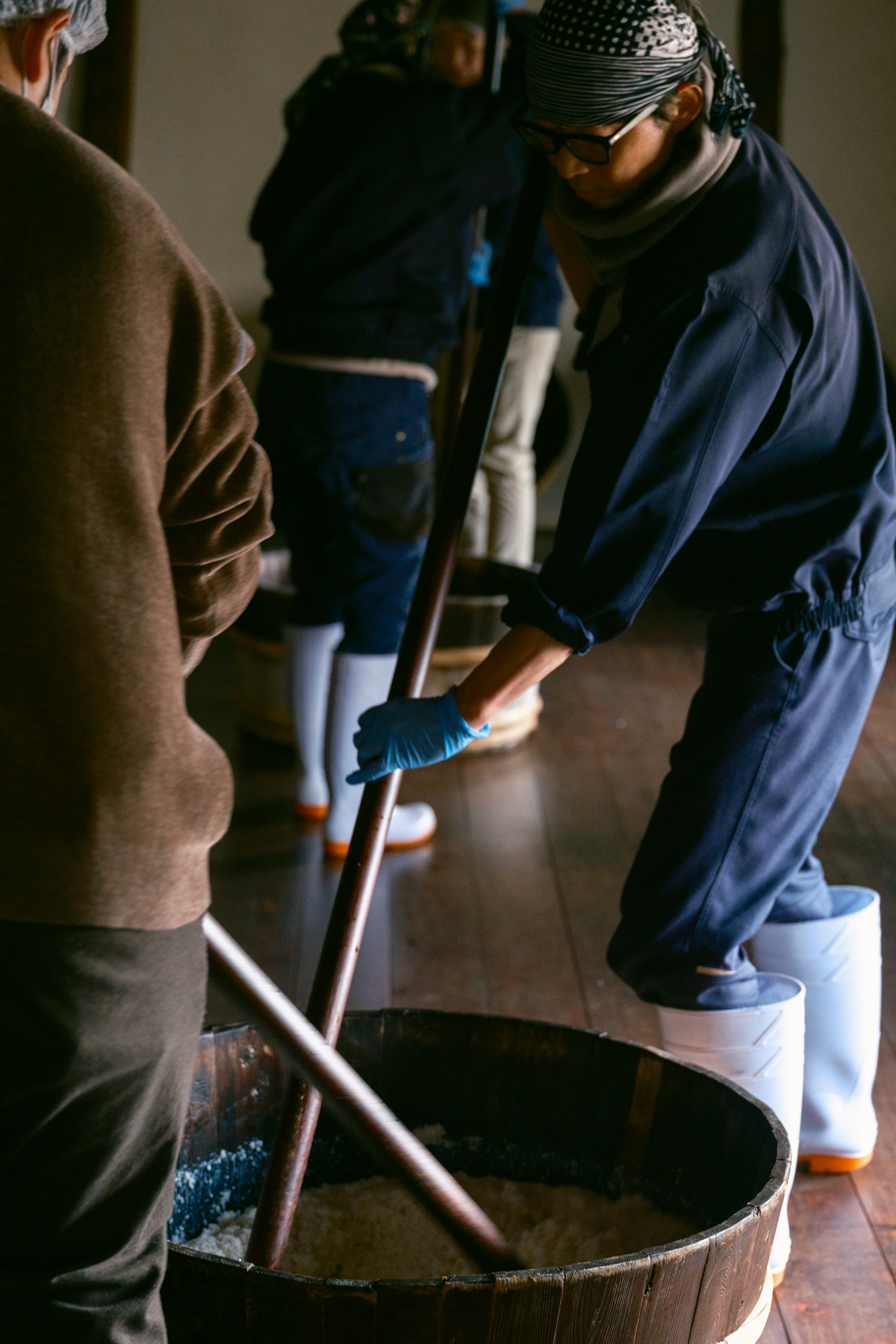
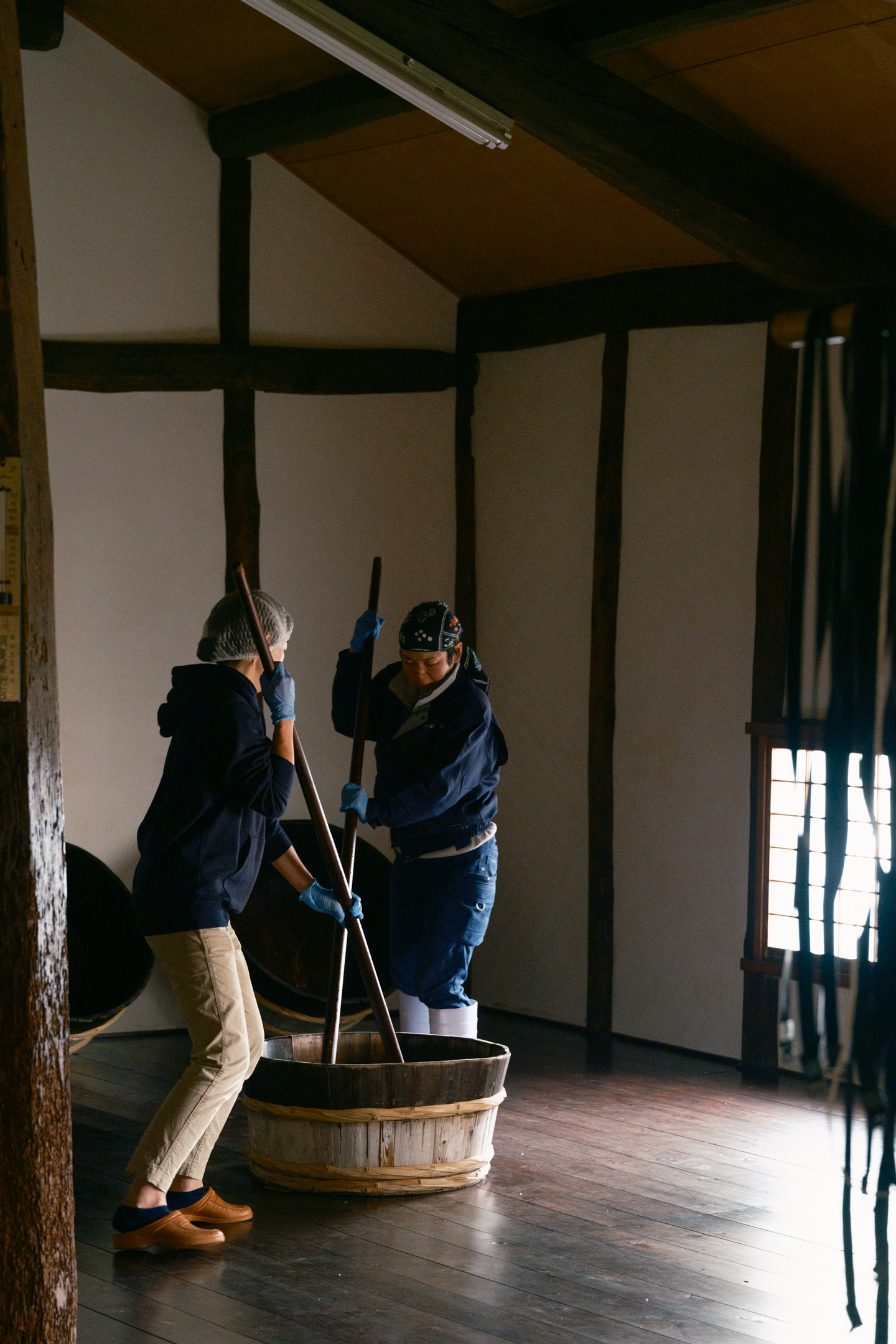
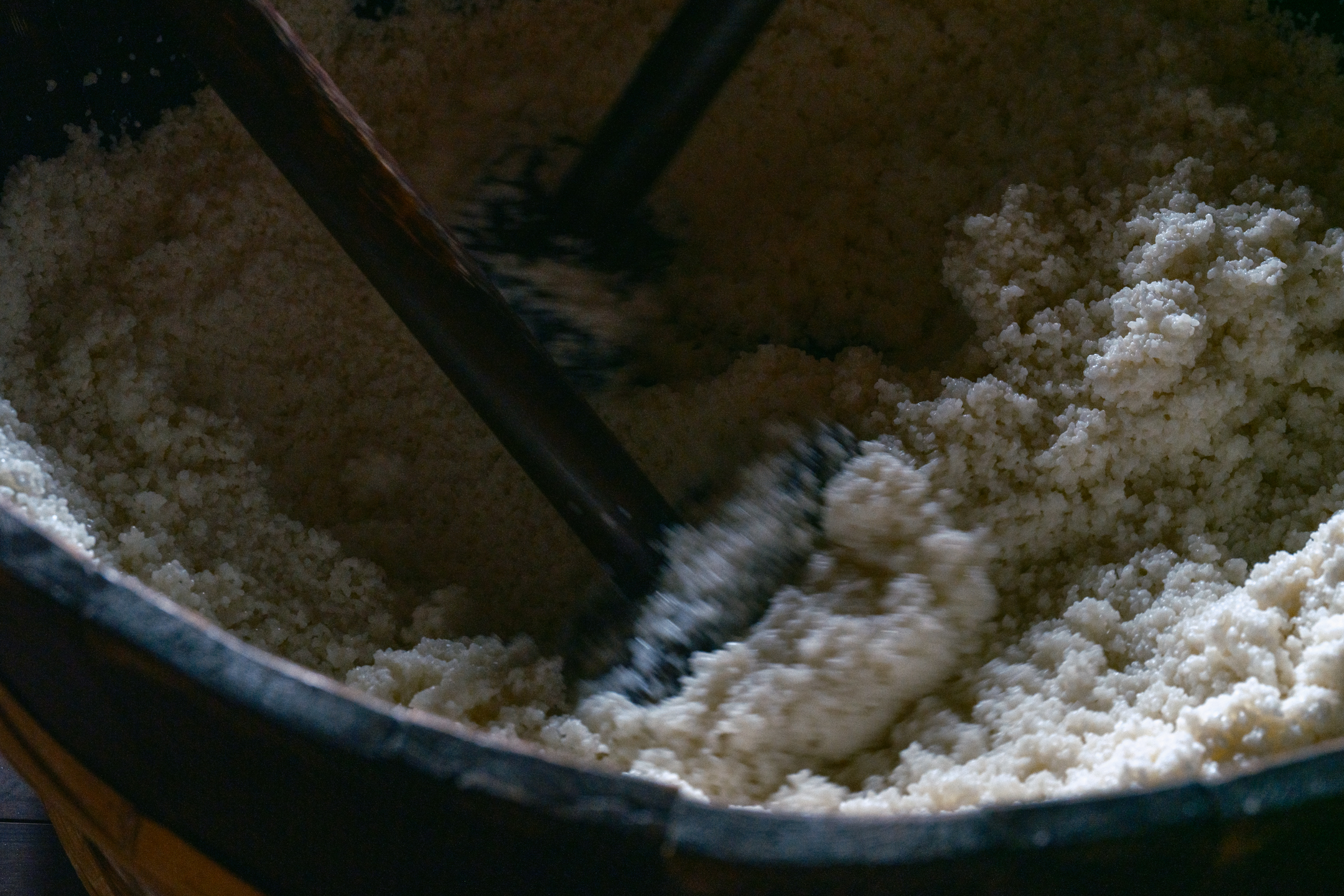
On the second floor of the brewery, “motosuri”—a process that is the true essence of Kimoto-zukuri—was underway. Working in pairs, they repeat two 3-minute sets per vat three times a day to turn the steamed rice and koji into a paste. While it is standard in modern sake brewing to add yeast, here they use “no added yeast,” just as in the Edo period. By utilizing the natural yeast and lactic acid bacteria floating in the brewery, they bring out a complex and deep flavor. Wanting to share the rarity of this process and the story of Taketsuru’s sake-making more widely, they have recently begun offering “motosuri” experiences to beginners, including employees and liquor wholesalers.
Shining a light once again on the essence of Taketsuru Shuzo
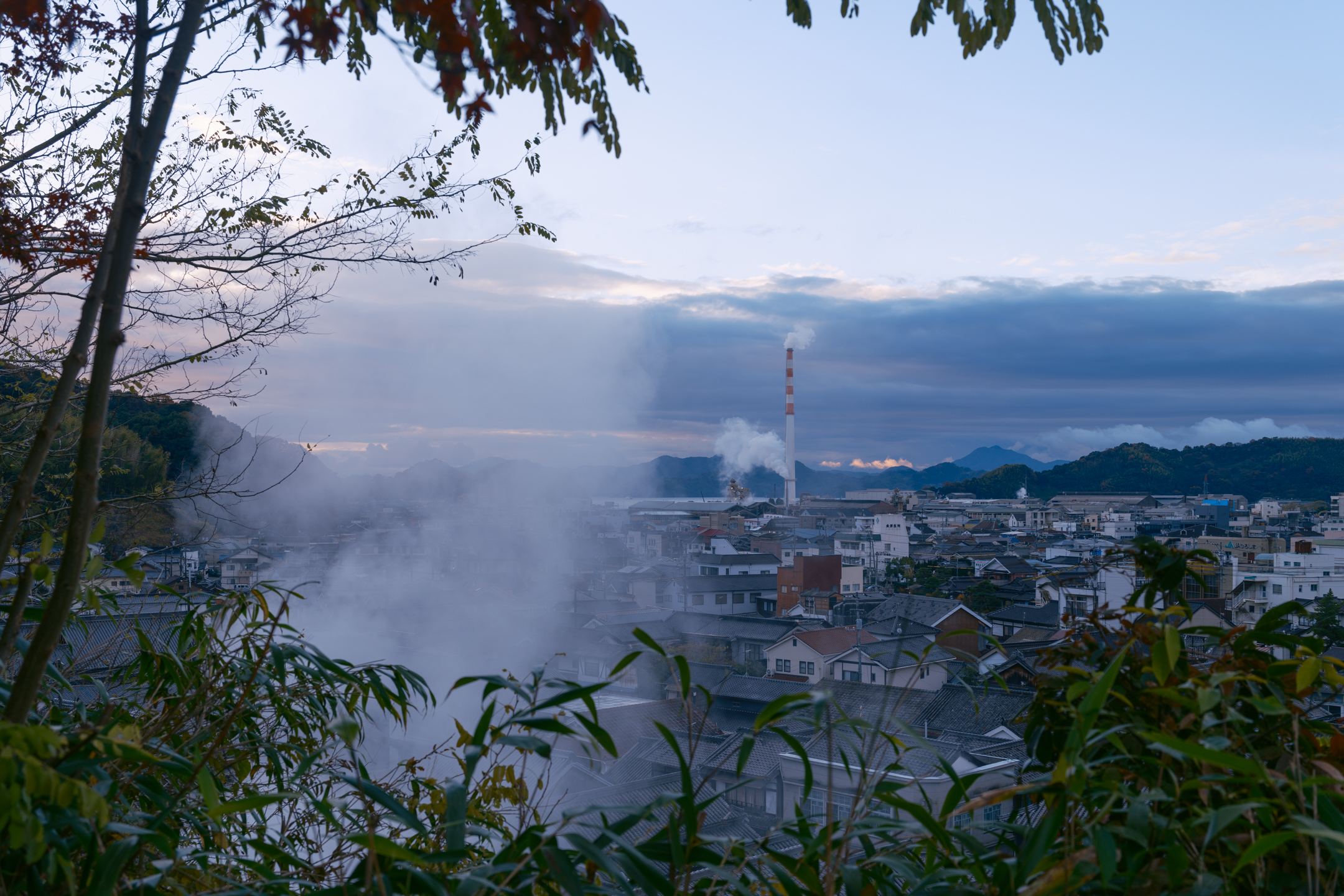
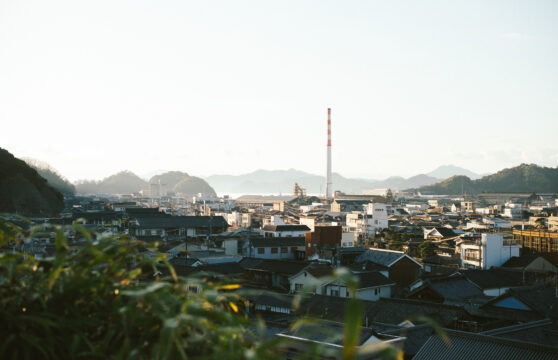
Takehara City flourished as the “port town of the Kobayakawa clan” due to its calm, deep-bay geography. During the Edo period, salt-making technology was introduced from the Ako region, ruled by the Asano family branch, and the town developed into a leading salt-producing area. Taketsuru Shuzo was originally a salt producer named “Ozasaya,” but since salt-making was a summer job, they began brewing sake as a winter occupation. Because Takehara’s water was well-suited for brewing, the business became stable and grew into a multi-generational brewery.
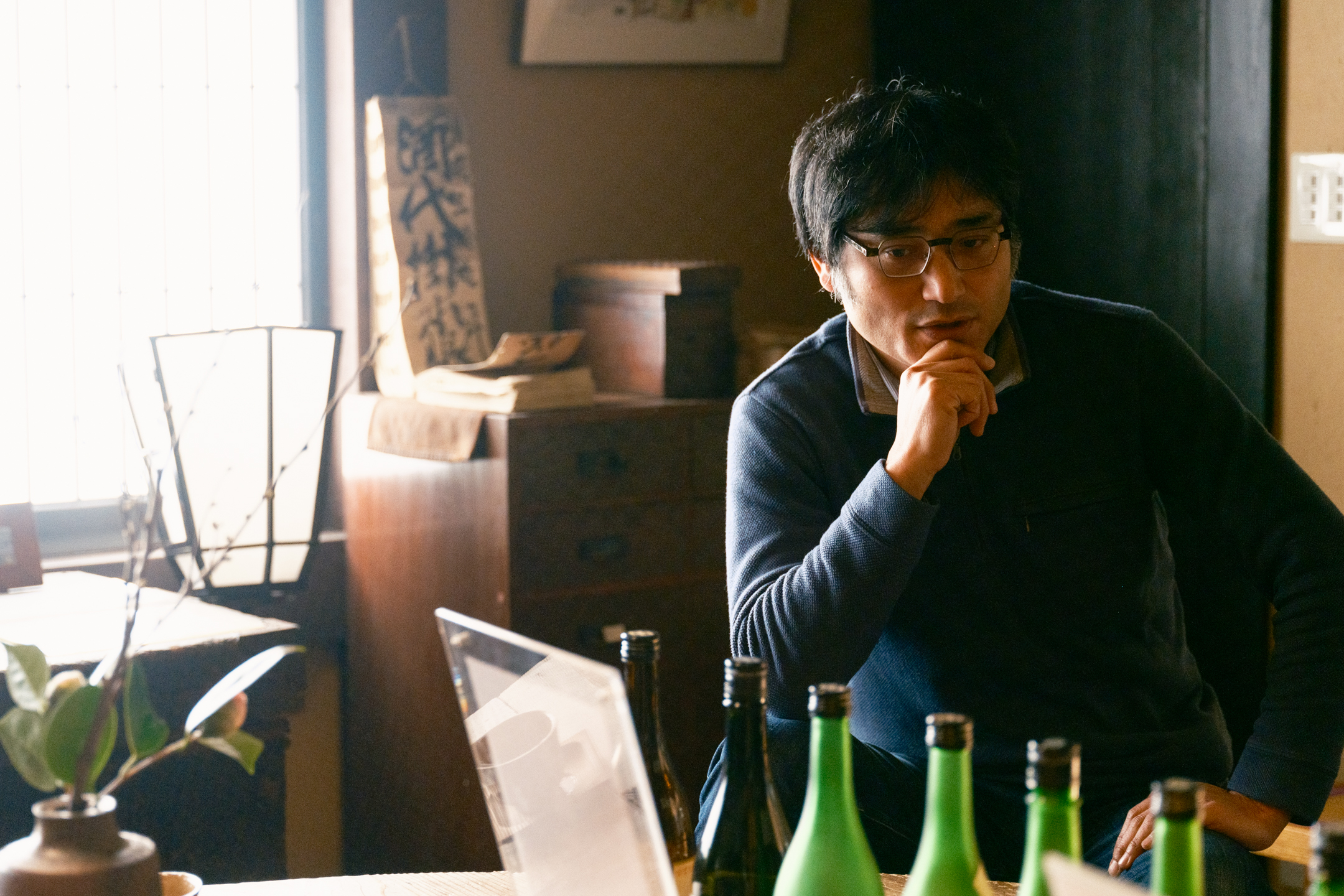
In the early Meiji period, to compete with Nada, a leading sake-brewing region, local brewers united to form Hiroshima Prefecture’s first brewing association, the “Kamo-gun Nanbu Brewing Association,” in 1888. As a member, Taketsuru Shuzo contributed to the development of Takehara. The 14th-generation president, Toshio Taketsuru, found the unique character of their sake in “Kimoto-zukuri” and refocused on the brewery’s essence. “I want to pursue brewing that is shaped by the climate and character of Takehara,” says Mr. Taketsuru.
No need for flashiness—just delicious sake that belongs on the dining table
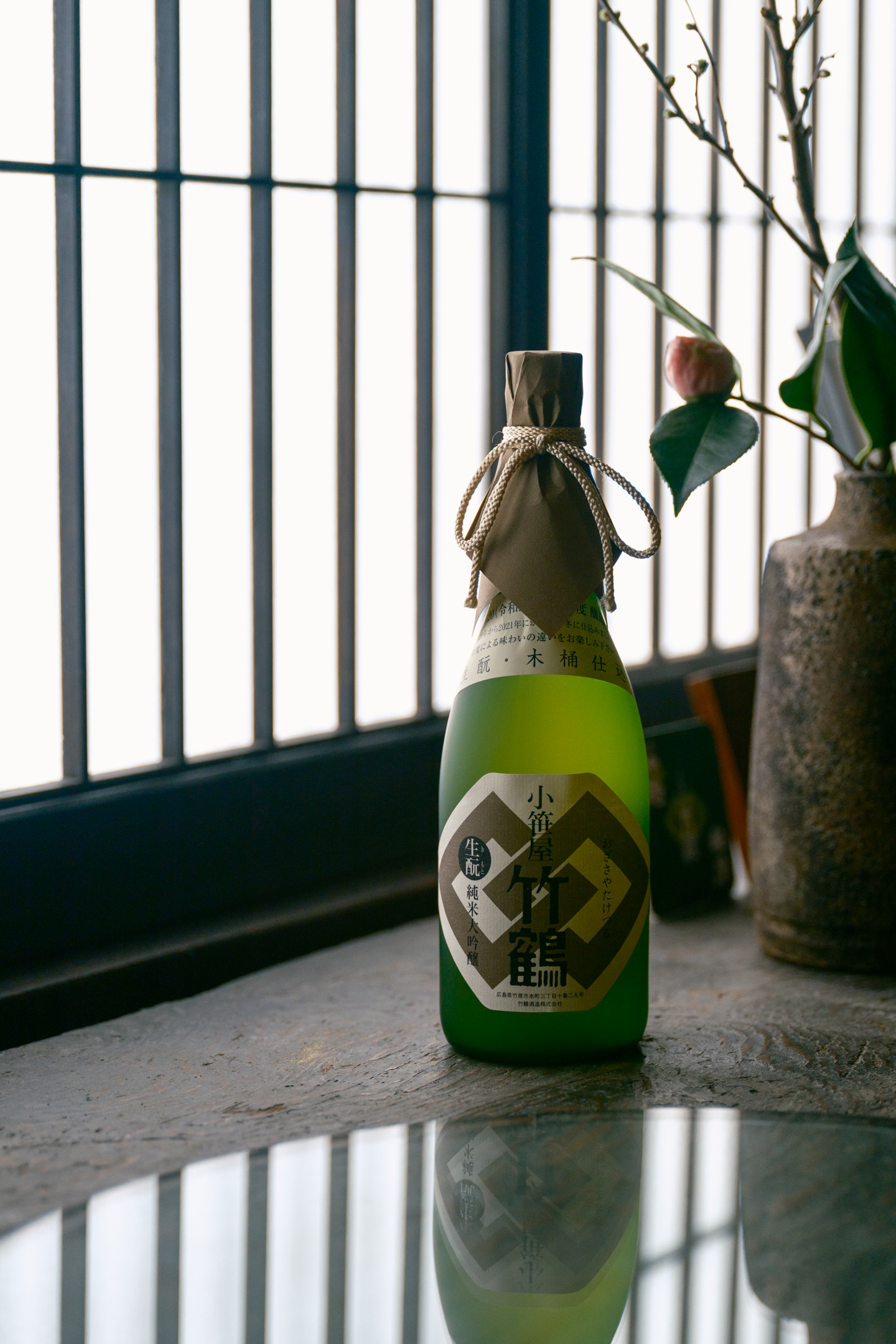
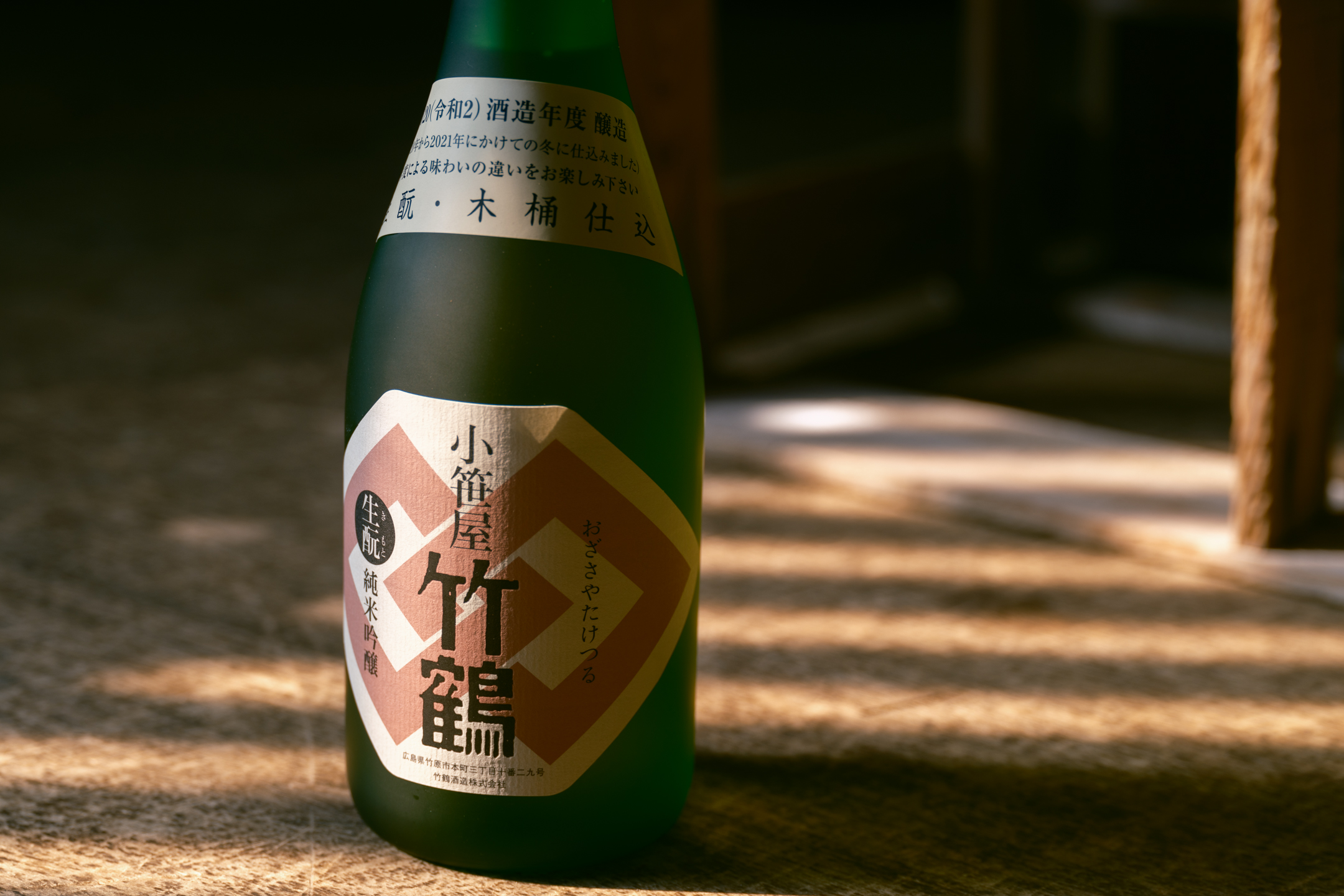
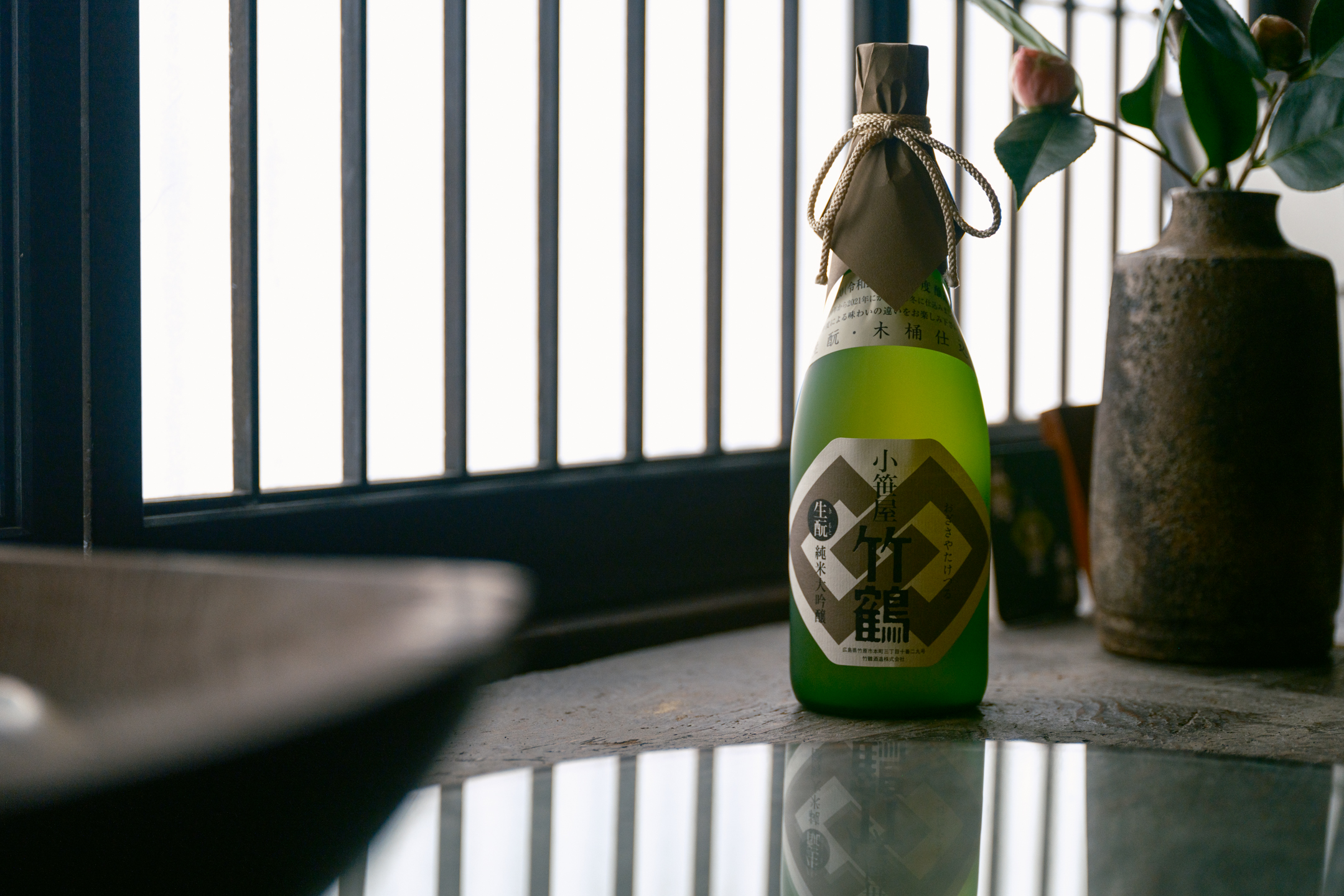
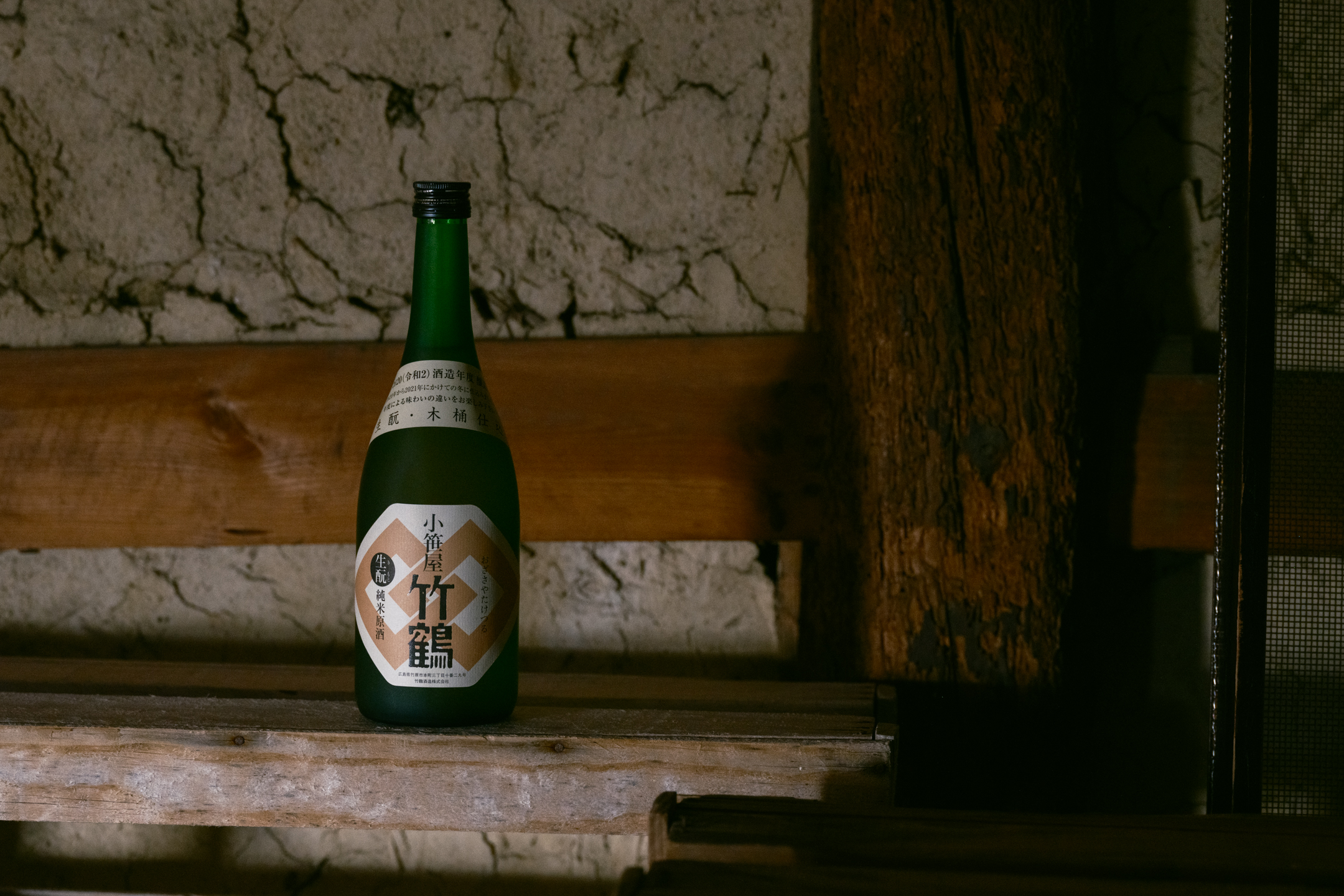
You can clearly taste the difference in this Kimoto-style sake from the very first sip. What you notice first is a firm acidity. While fruity and sweet sakes have become the mainstream in recent years, Taketsuru Shuzo’s sake leaves an impression with its crisp acidity. This is followed by a rich flavor that gradually spreads. Though not flashy, its taste makes you want to keep drinking slowly alongside a meal—a glass full of the Taketsuru essence that truly “makes food taste better.”