Infinite possibilities from a single stalk of bamboo
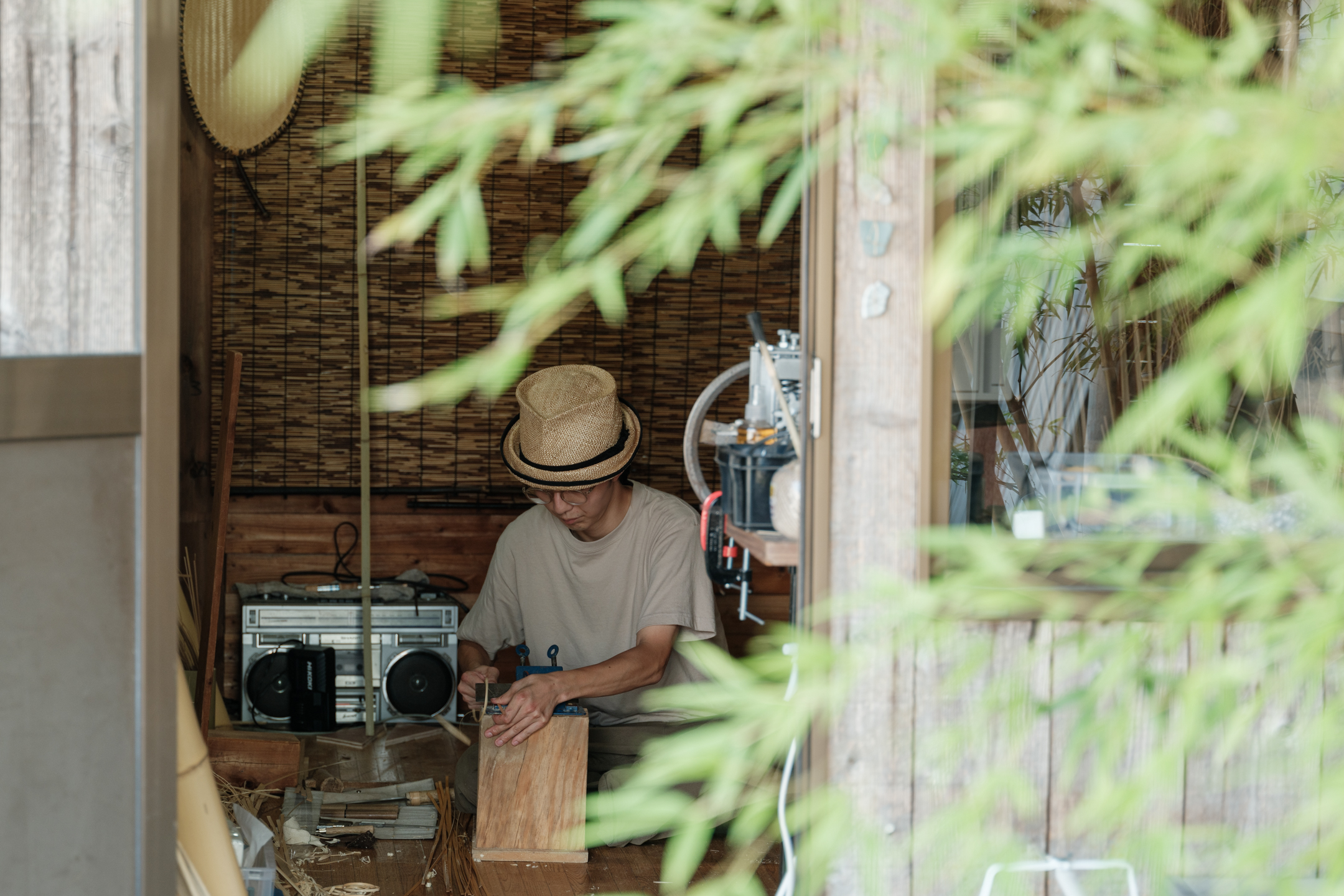
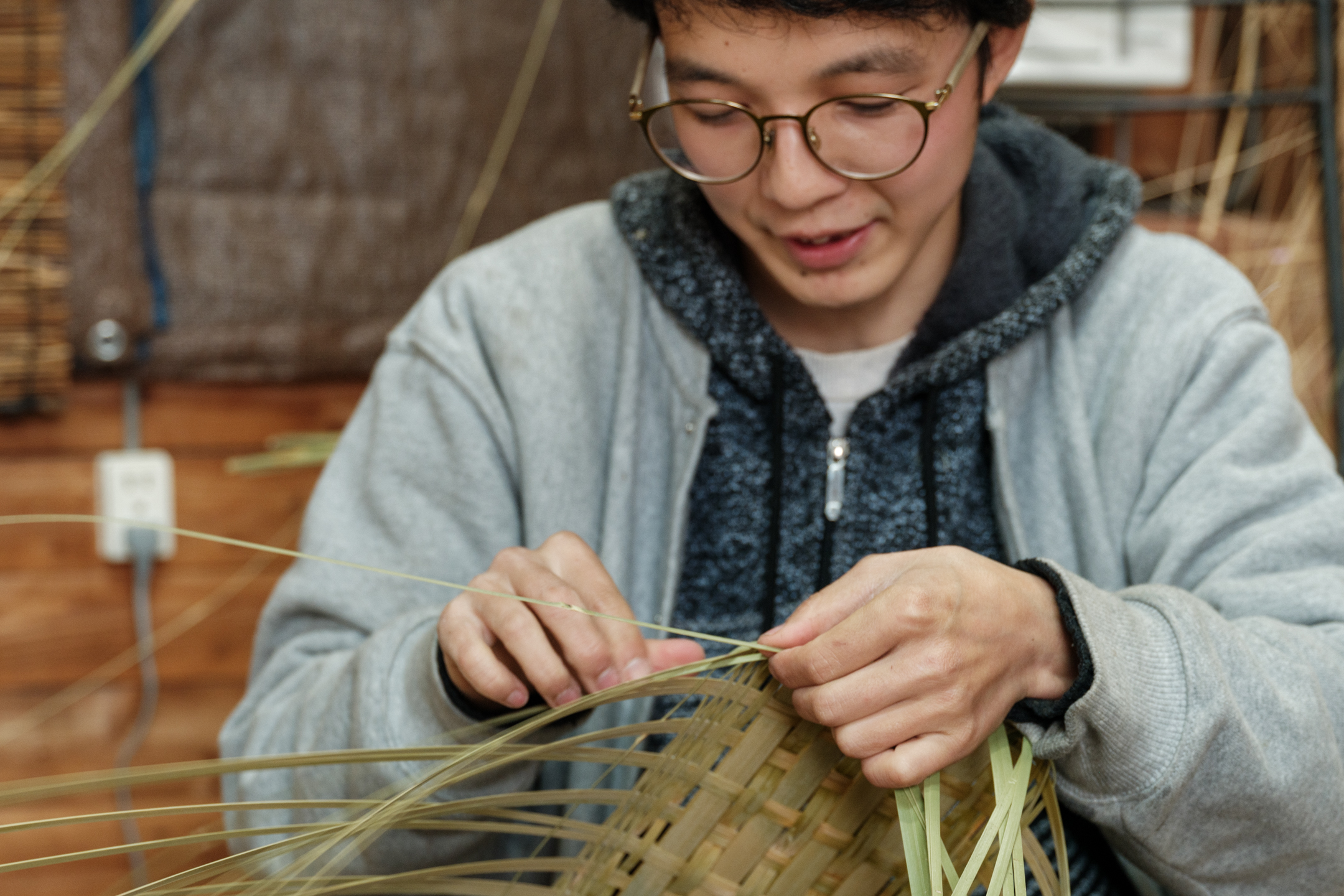
Located along Route 432 is “Take-no-Eki,” a shop specializing in bamboo products. In a room adjacent to this building, Mitsuki Teramoto, who moved here from Yokohama in 2017, works silently with his hands. While helping with sales at Take-no-Eki, Teramoto uses this location as a base to focus on his work as a bamboo craft artisan. “I want more people to know about Takehara,” says Teramoto. What pushed him to move here was a visit to the “Takehara Shokei-no-Michi” (Path of Longing) during his university days. The sight of bamboo cylinders lit with candles, illuminating the historic streets from the Edo period in a magical glow, seems to have ignited Teramoto’s passion as a creator.
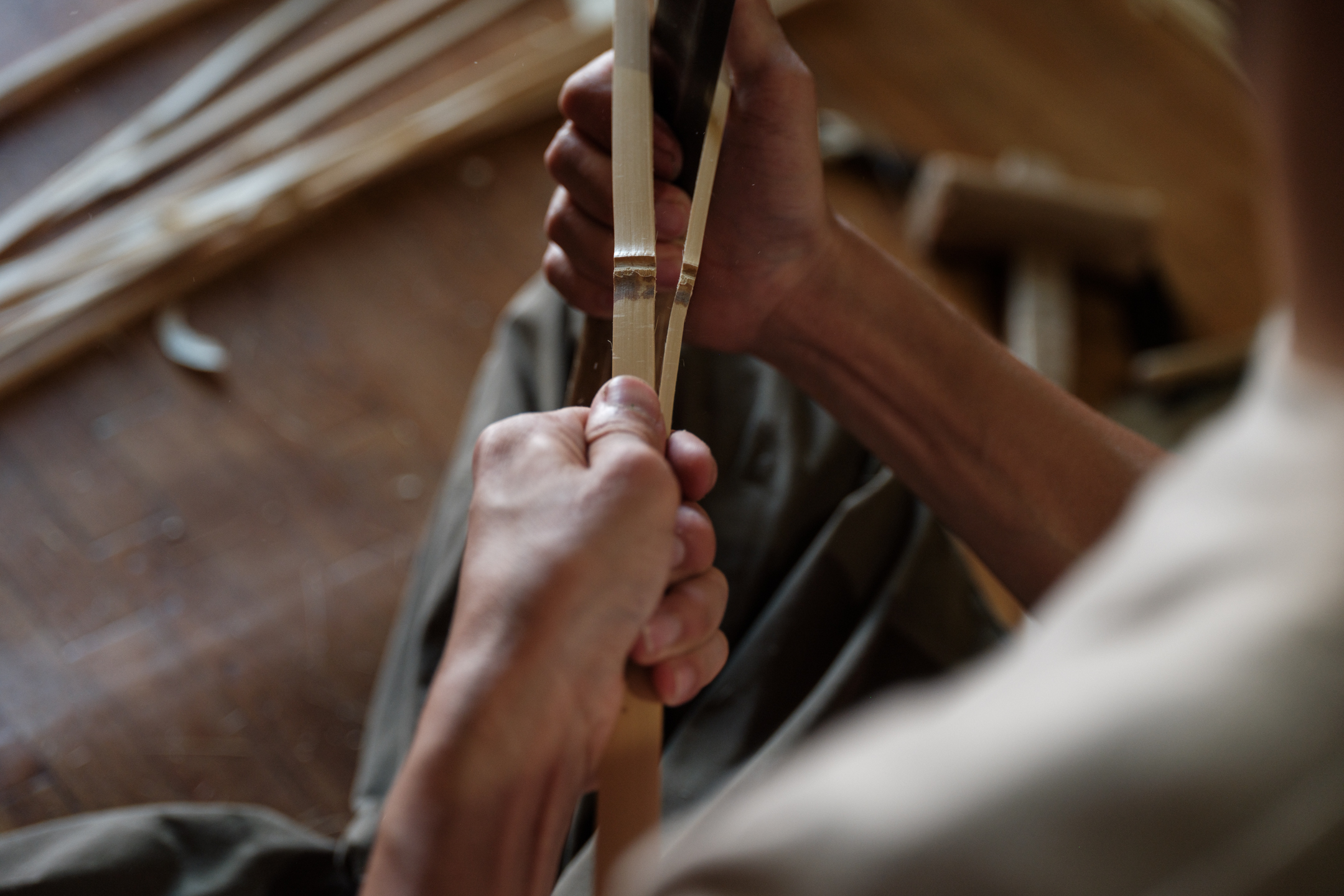
Teramoto says he has been good at arts, crafts, and technical projects since elementary school, and even at a young age, he imagined himself following a path in craftsmanship. “When I was in high school, I was captivated by a scene of bamboo crafting I saw on TV,” he recalls. Deciding to master the art of bamboo, he majored in bamboo crafts at university to hone his skills. Since moving to Takehara City, he has handled everything from harvesting “Madake” (Japanese timber bamboo) in the mountains to production and sales. Through creating daily necessities and hosting workshops, he shares the town’s charm through the medium of bamboo.
Beyond tradition: New forms of bamboo craft
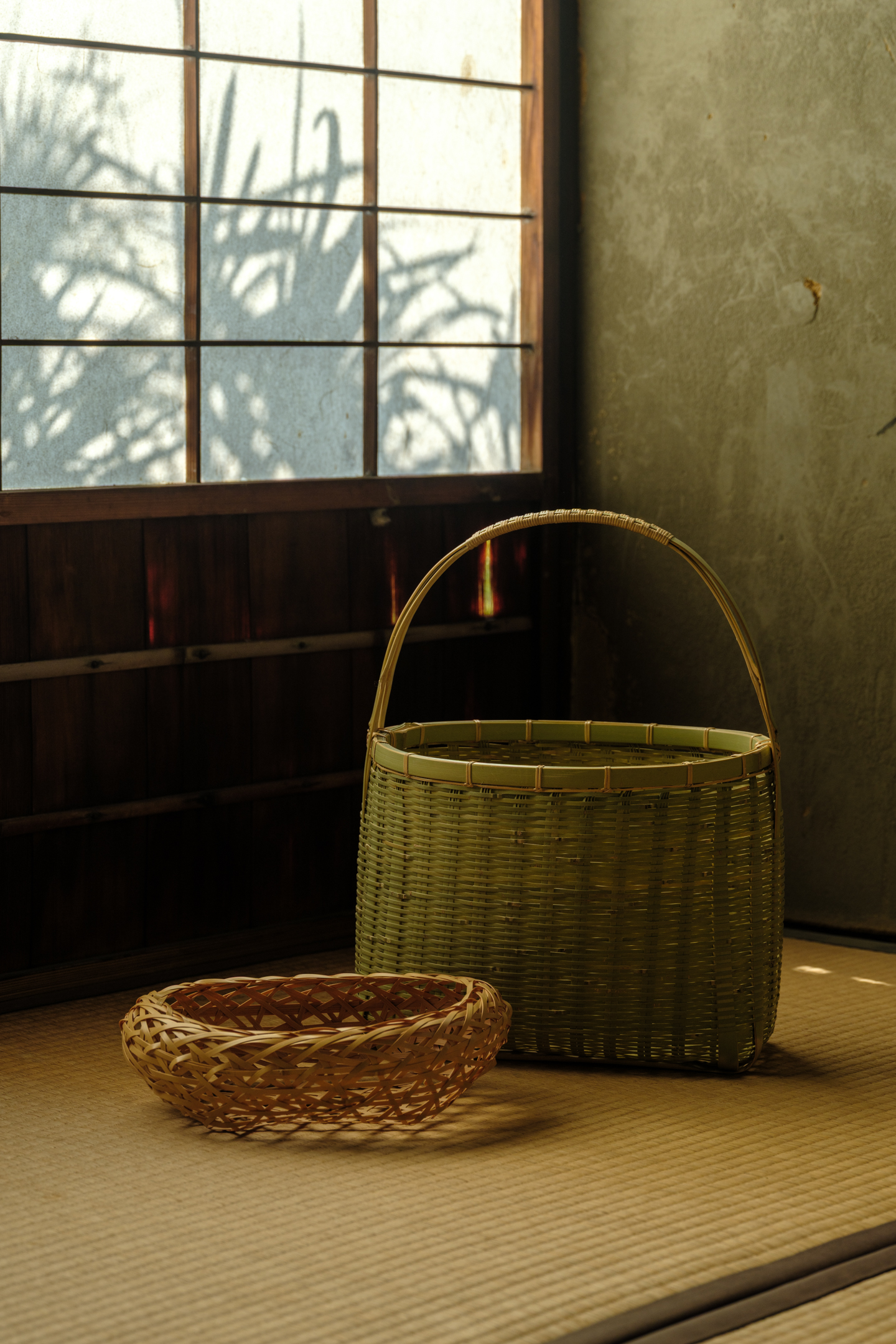
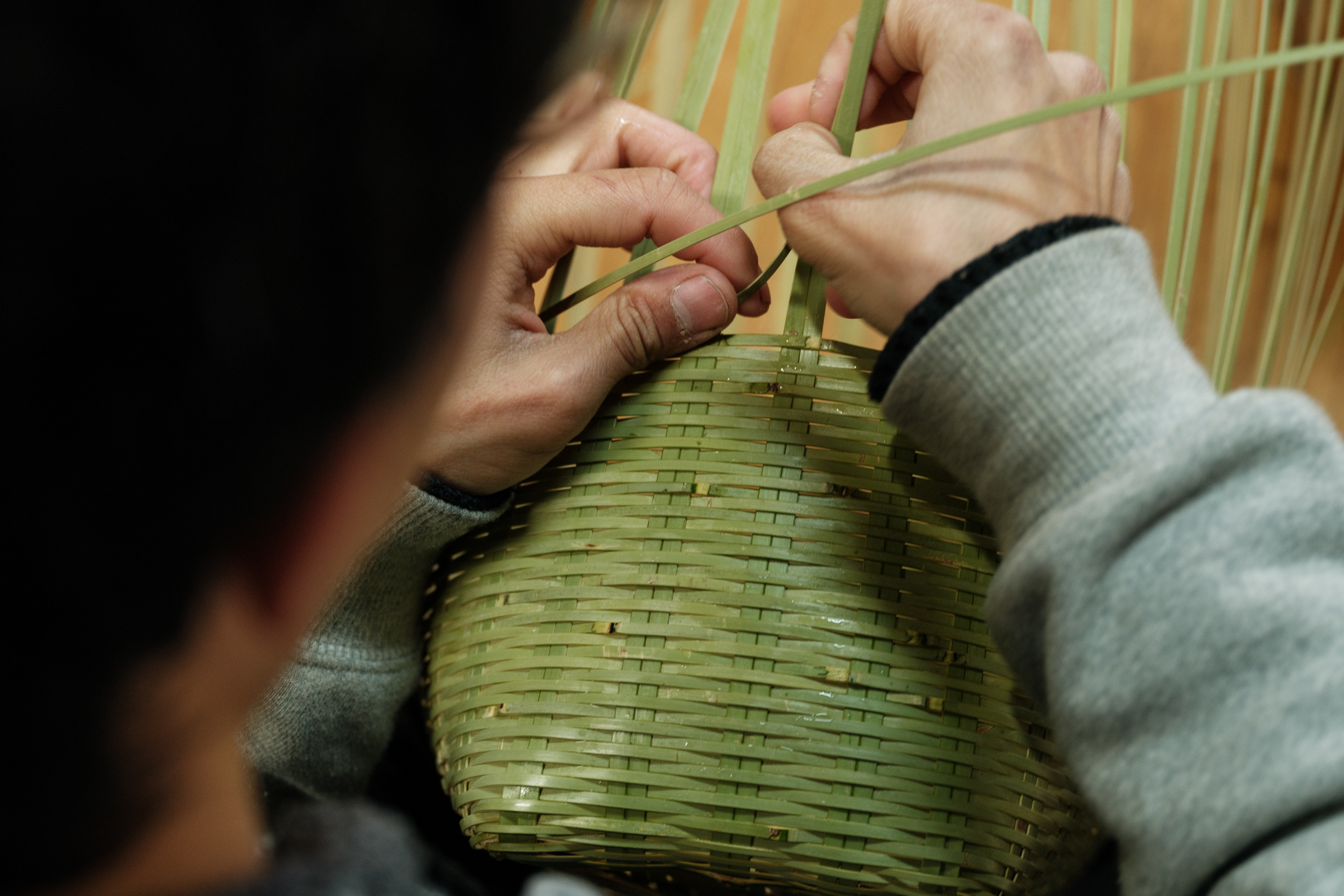
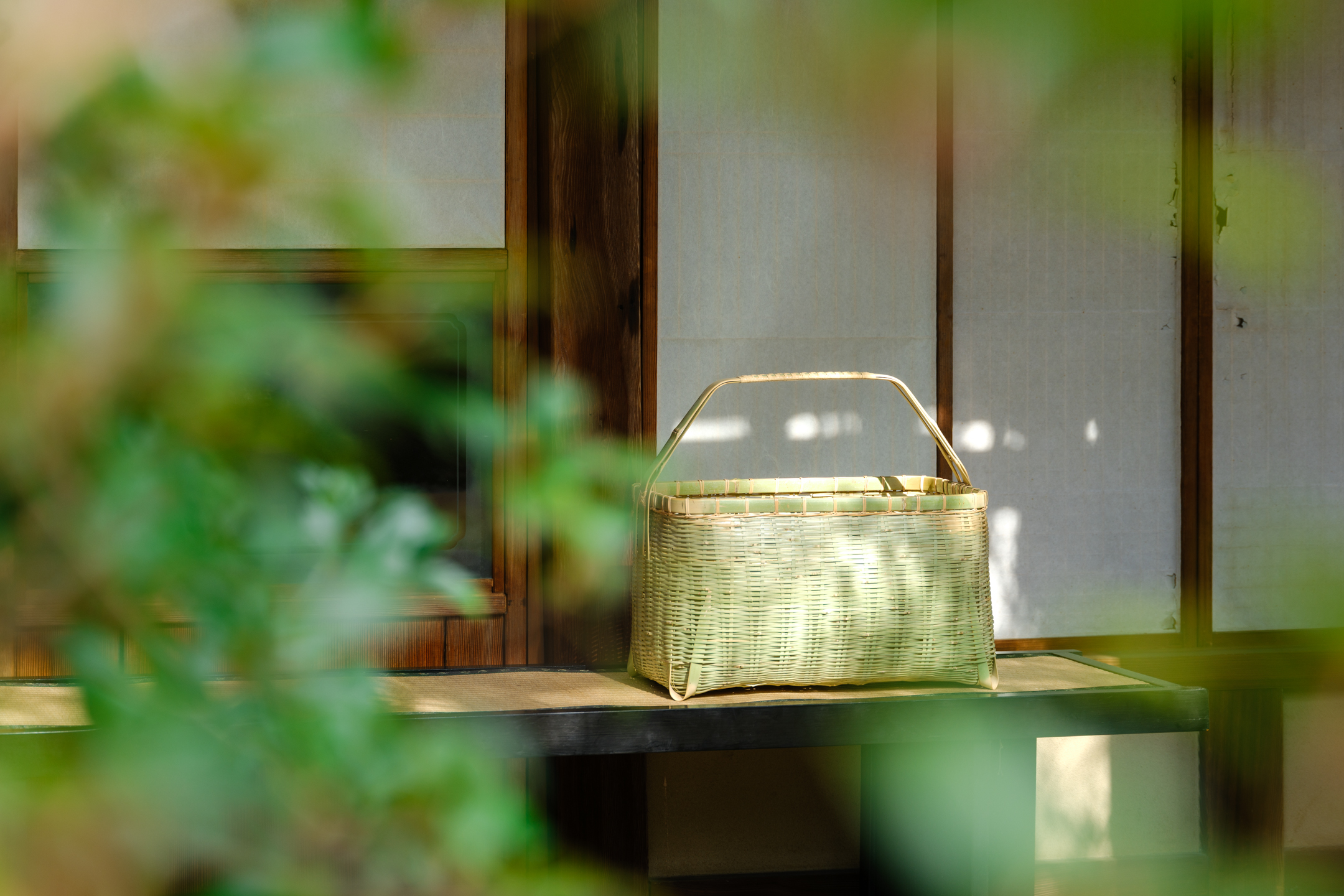
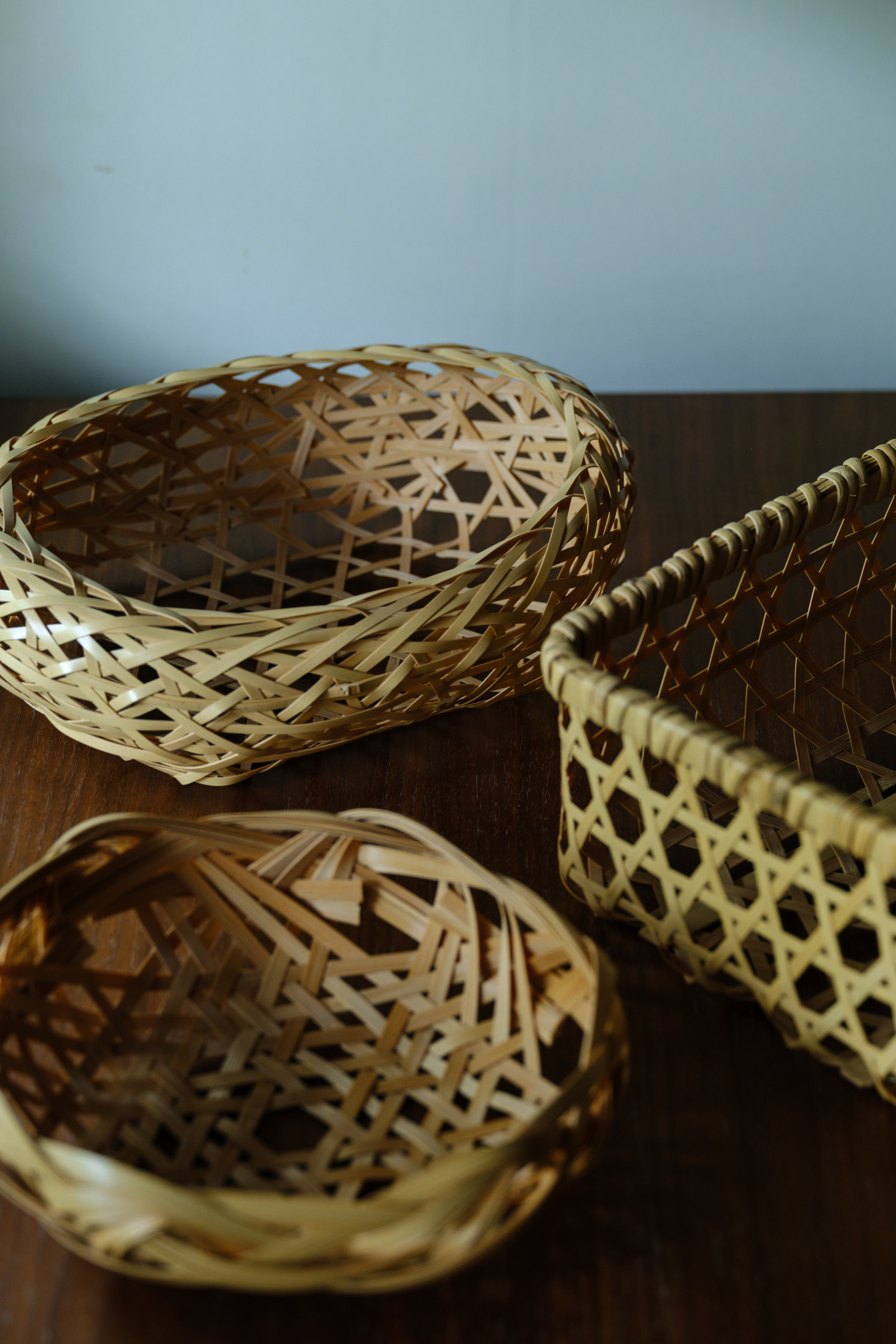
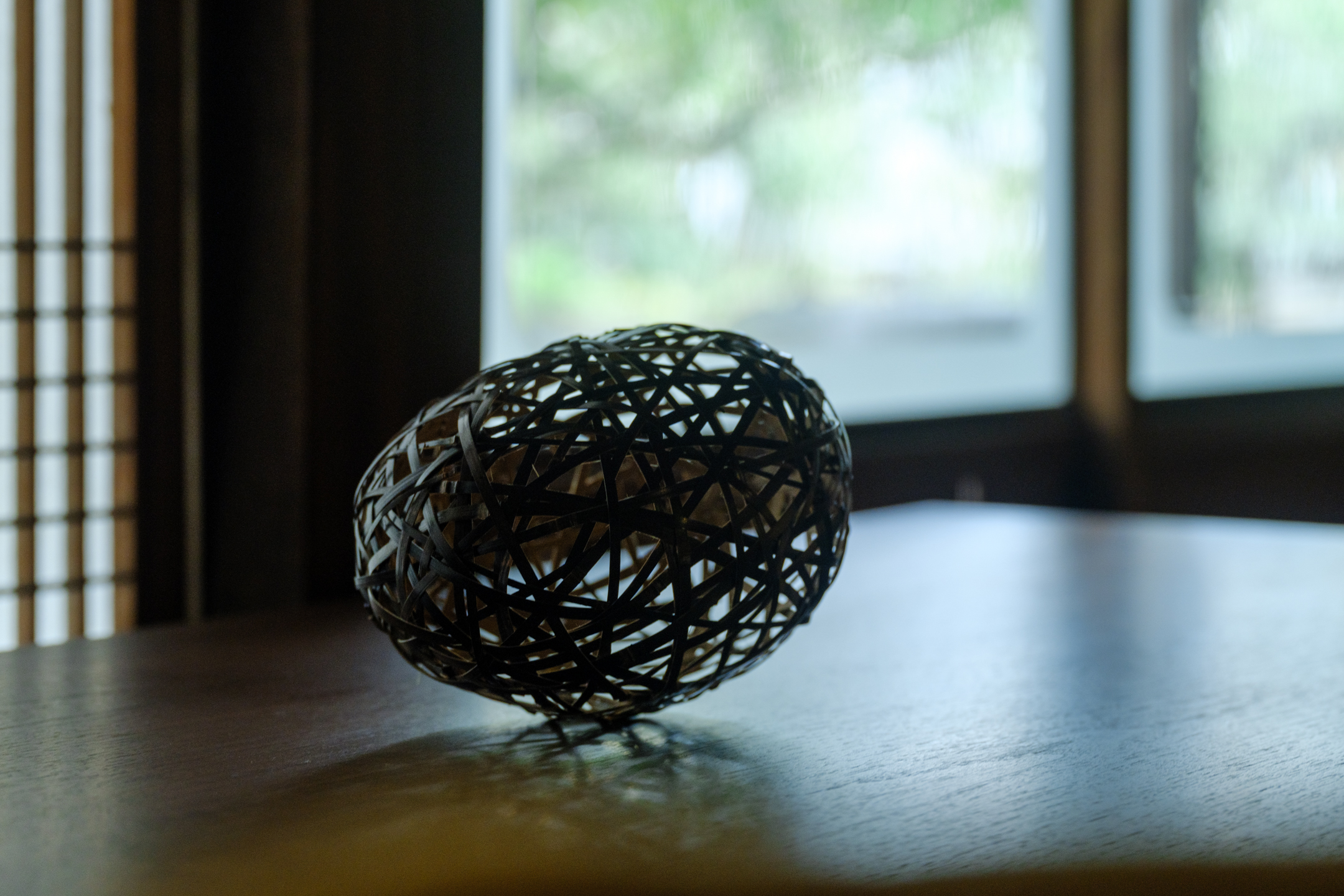
Teramoto focuses particularly on making tools that blend into daily life. He notes that the history of bamboo crafting in Takehara is relatively short. “I want to challenge myself with new designs without being bound by existing frameworks,” he says. In addition to making delicate baskets and small containers from finely prepared bamboo strips, he occasionally tries his hand at three-dimensional art pieces. A small item placed on a desk brings a sense of playfulness to the space while somehow looking right at home in the building—a quality unique to natural materials. These works, born from meticulous handiwork, add color to everyday life.
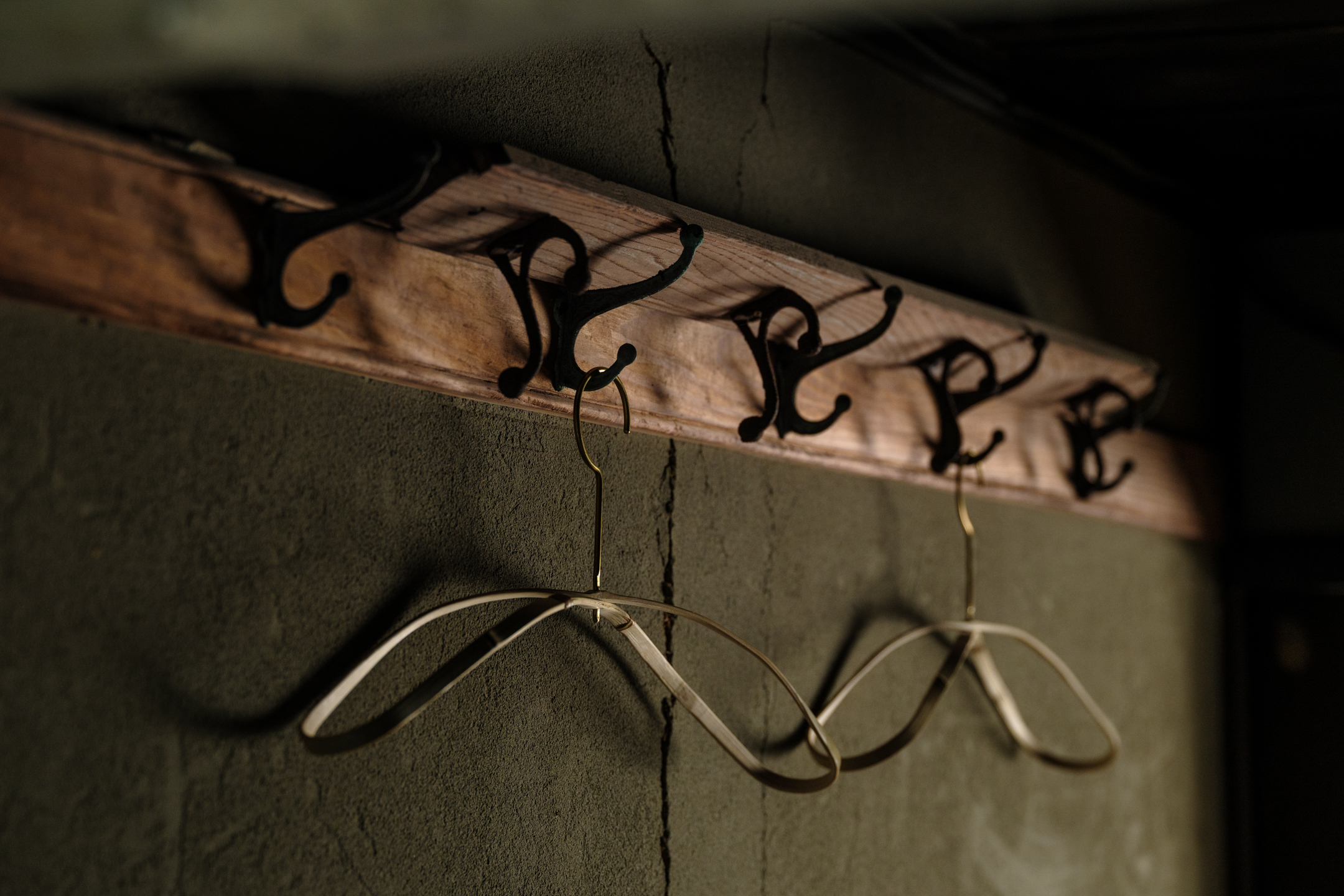
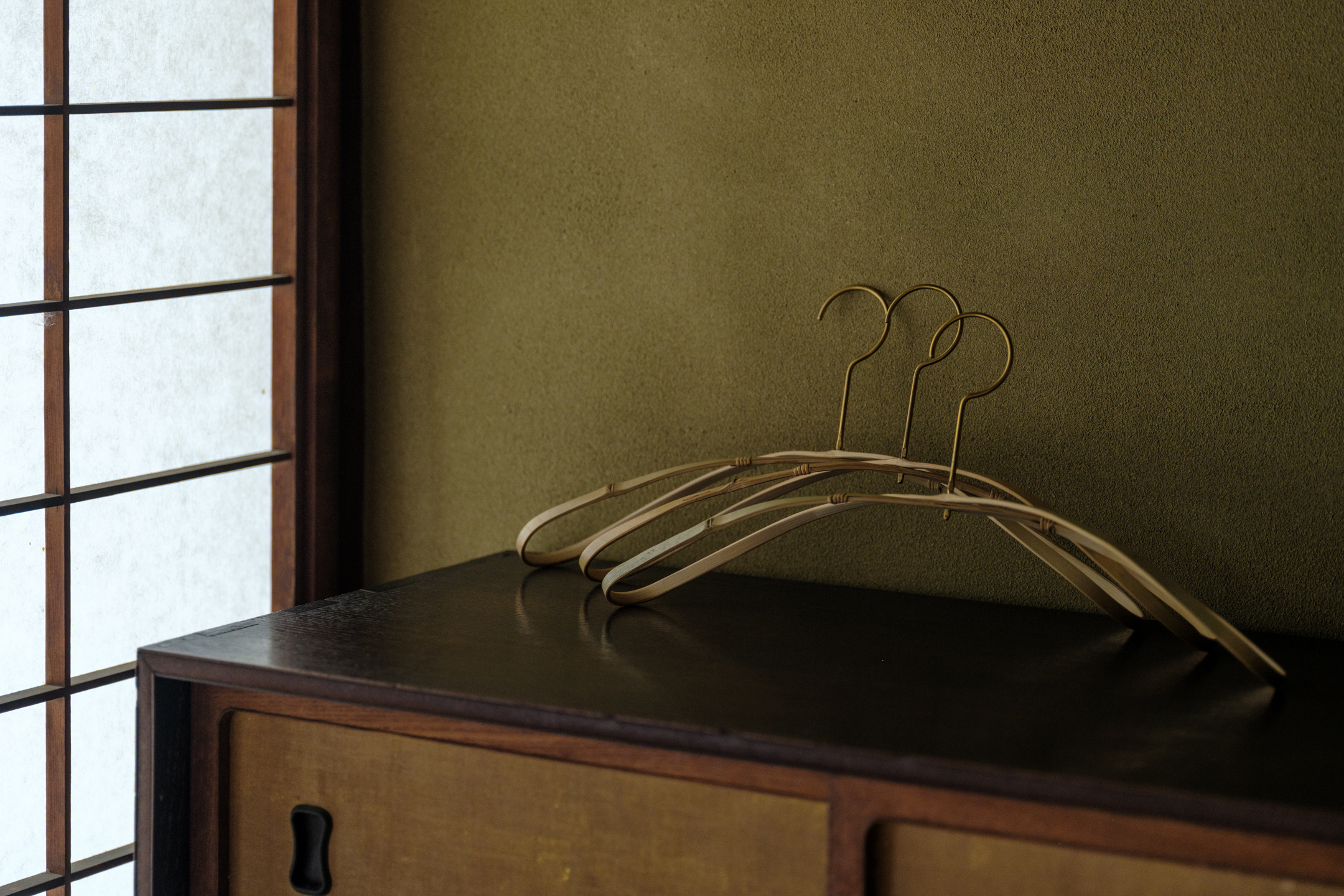
The hangers, which radiate a mobile-like beauty with bamboo strips twisted into a figure-eight, were created in collaboration with metal artist Yosui Tsuji. The brass used for the hooks serves as an accent, giving the pieces an air of elegance. While Teramoto used to work mostly alone, he has recently been expanding the scope of his work by exploring combinations with different materials and interacting with artisans from other fields.
Learn about bamboo, weave bamboo, and play with bamboo
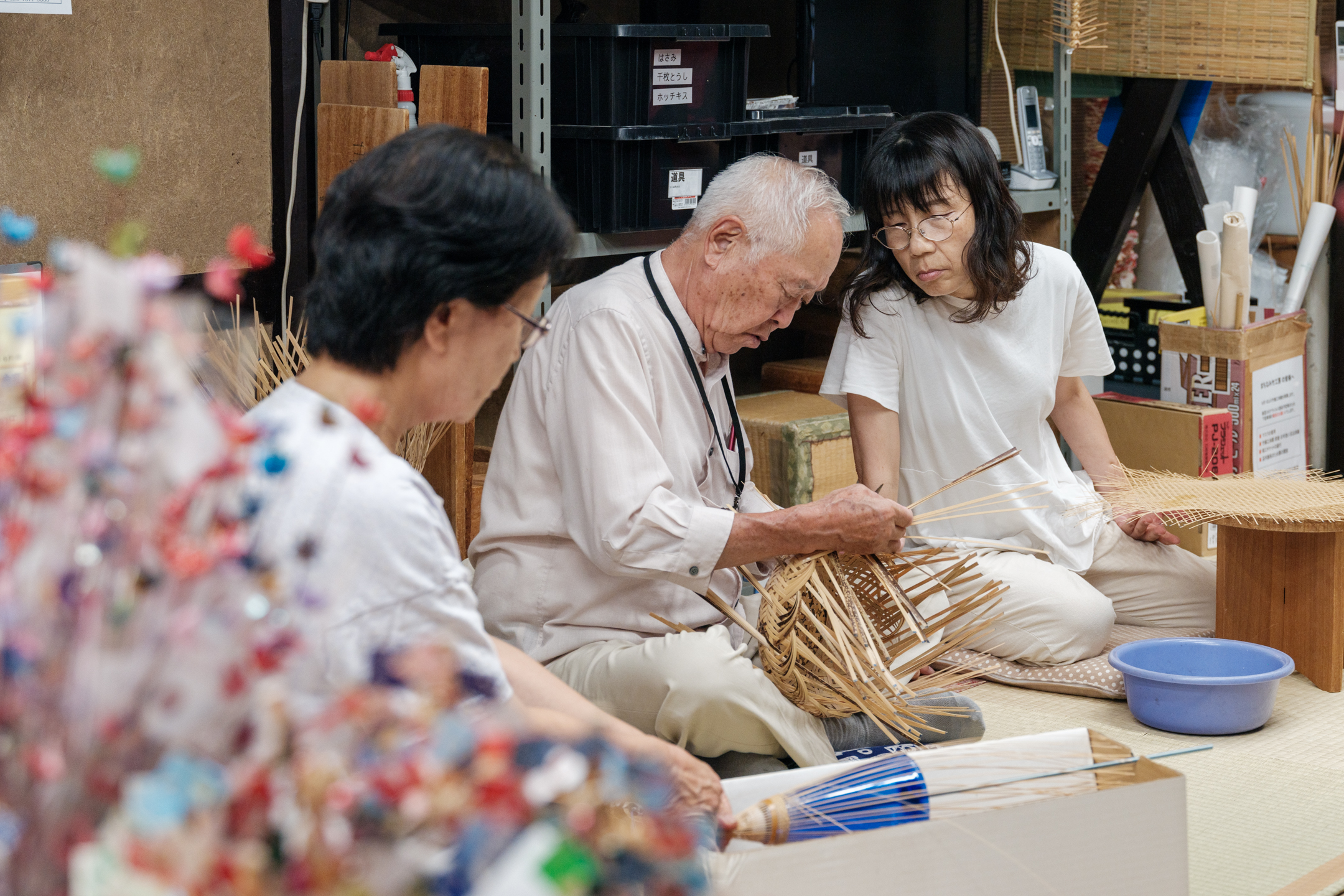
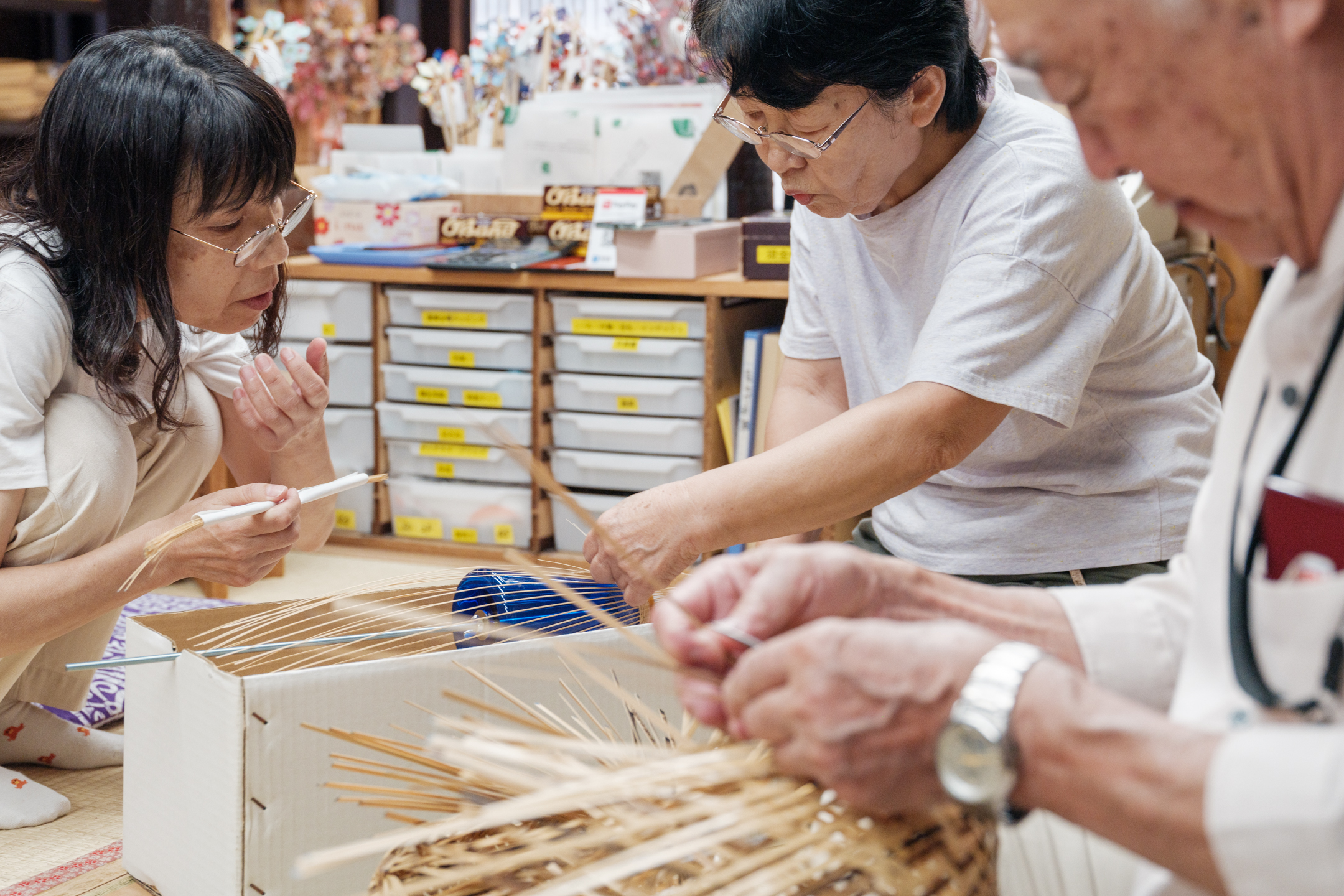
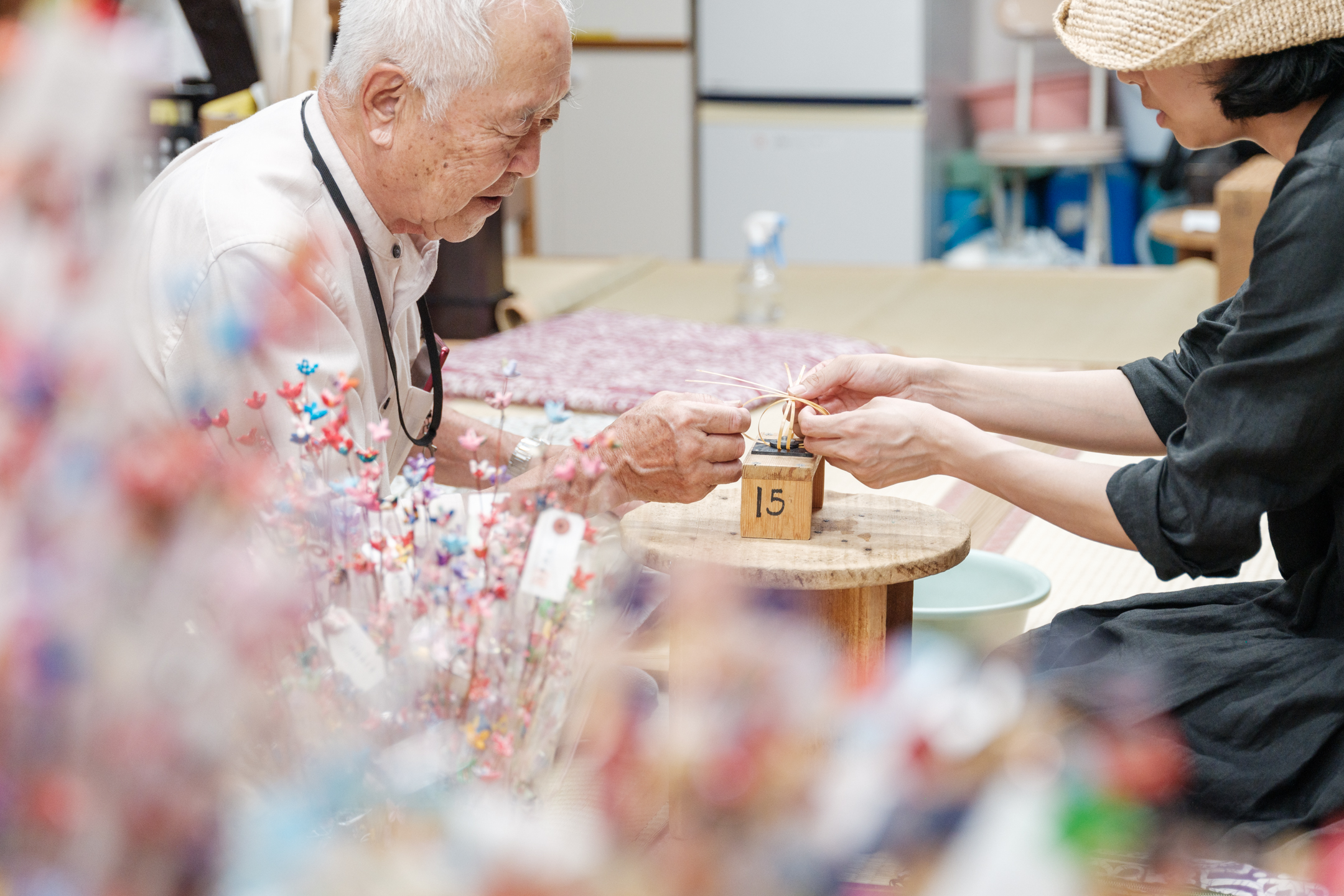
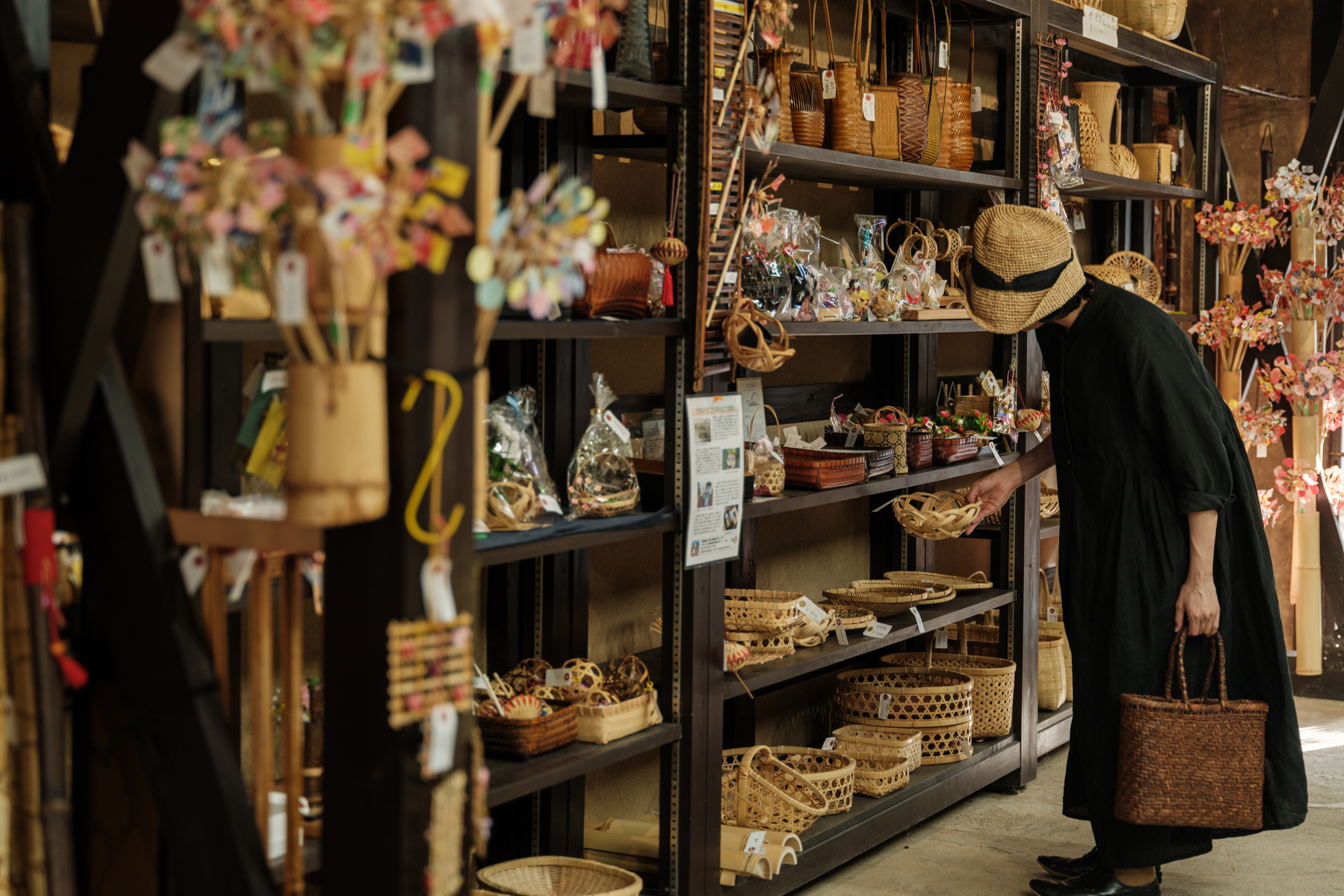
In Takehara City, bamboo is treated as a symbolic element in various locations and events, including bamboo-lined paths, a bamboo-themed sports park, the “Bamboo Festival,” and “Takehara Shokei-no-Michi.” A famous tourist spot where you can enjoy bamboo more closely is the “Machinami Bamboo Workshop” located within the Takehara Historic District. Here, shelves are filled with everything from daily necessities like bamboo baskets and strainers to traditional toys like bamboo dragonflies and windmills. In one corner of the space, there are tatami mats where several workshop artisans create their pieces while assisting customers and leading bamboo craft experiences. Despite being a small workshop, the sheer variety of bamboo items is striking.
The “Machinami Bamboo Workshop” is operated by members of the “Takehara City Bamboo Craft Promotion Association” (formerly the Bamboo Craft Hobbyist Group), which is celebrating its 45th year. Teramoto also contributes to the town’s vitality as a member by providing his works and collaborating on large-scale art pieces. The association has over 100 total members. By offering courses through the Silver Human Resources Center, many seniors have become members and joined community contribution activities. They have been active in various scenes, such as exhibiting large-scale works at local festivals and events, creating the bamboo tunnel at Mazda Stadium, and making commemorative gifts for Coming-of-Age ceremonies.
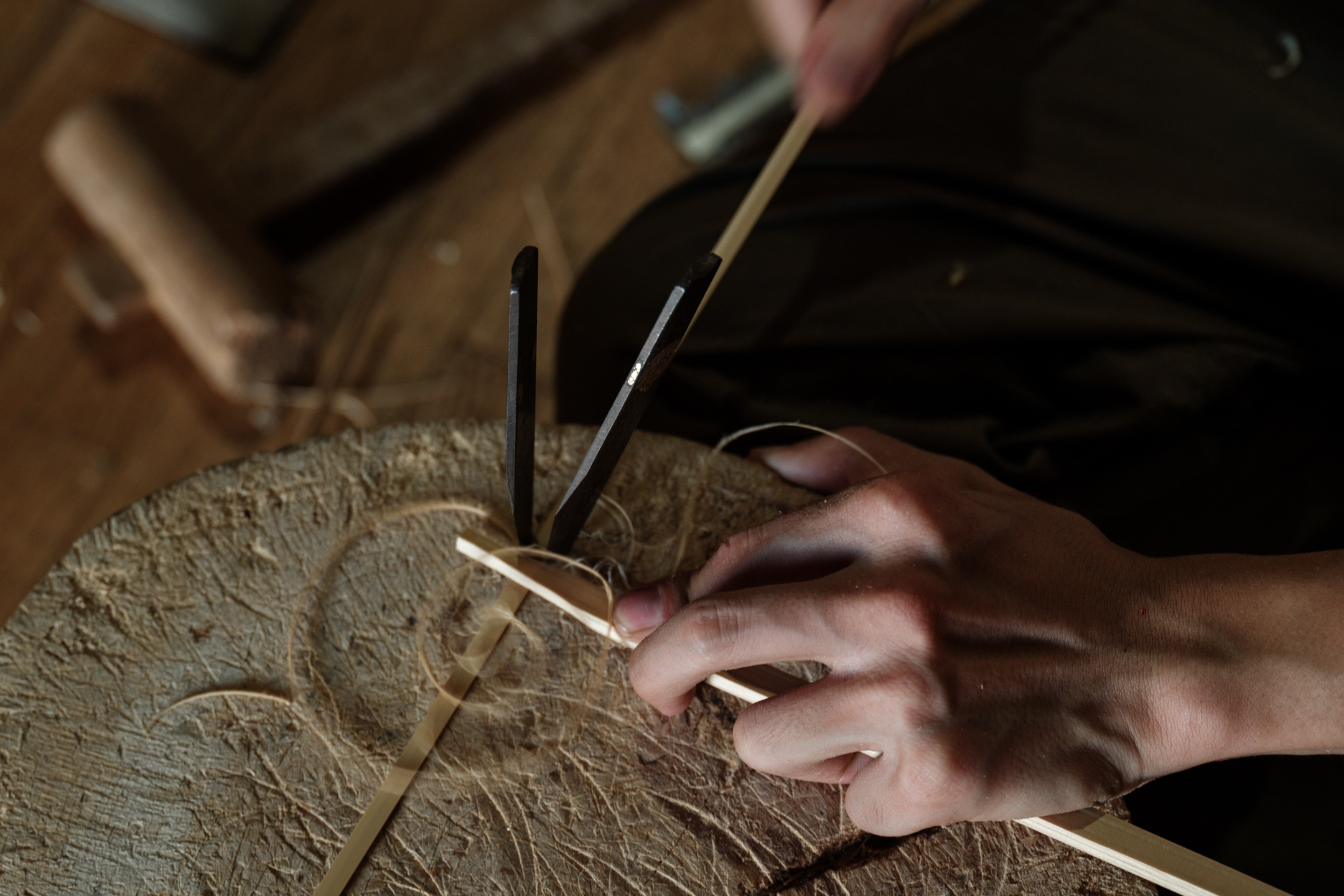
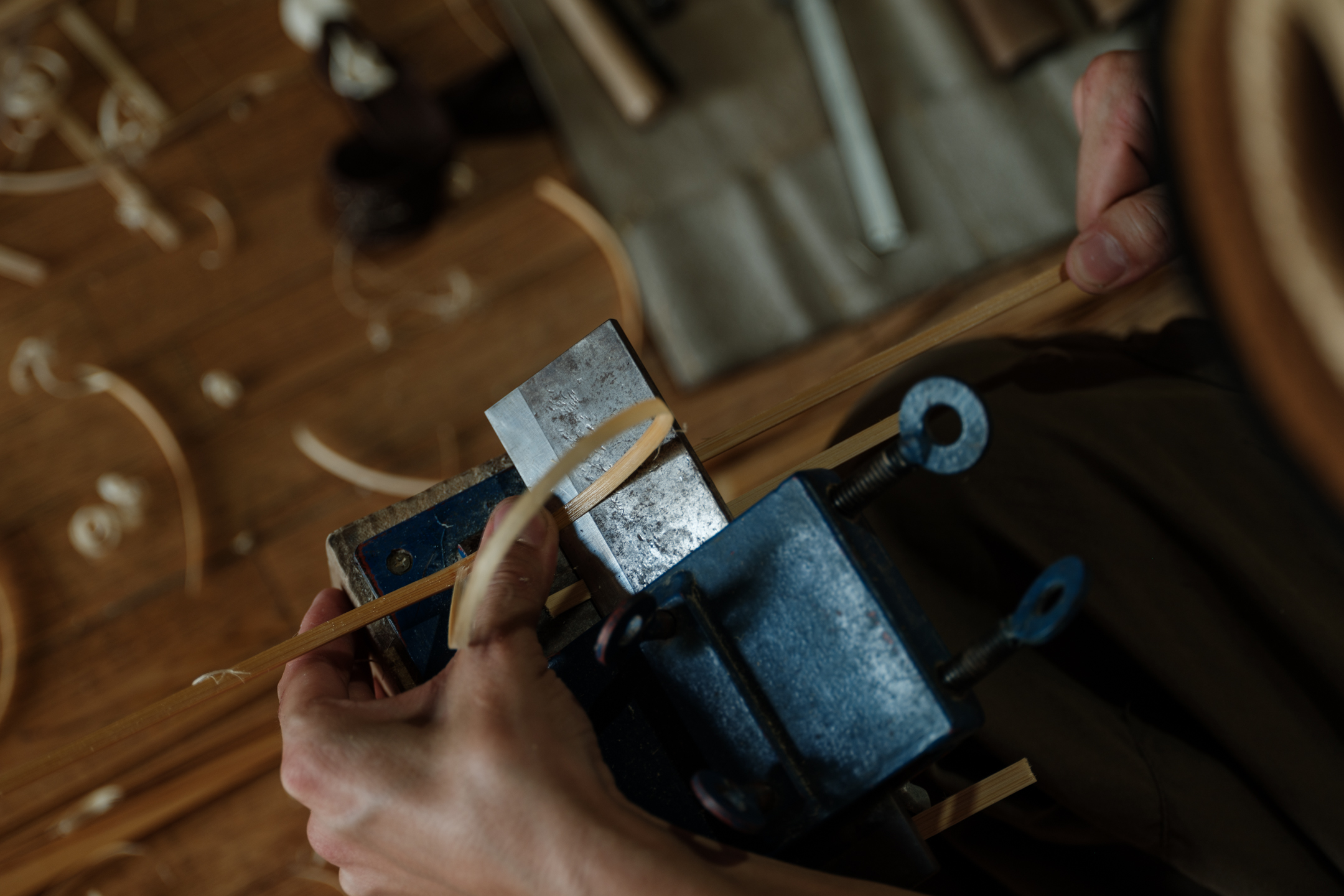
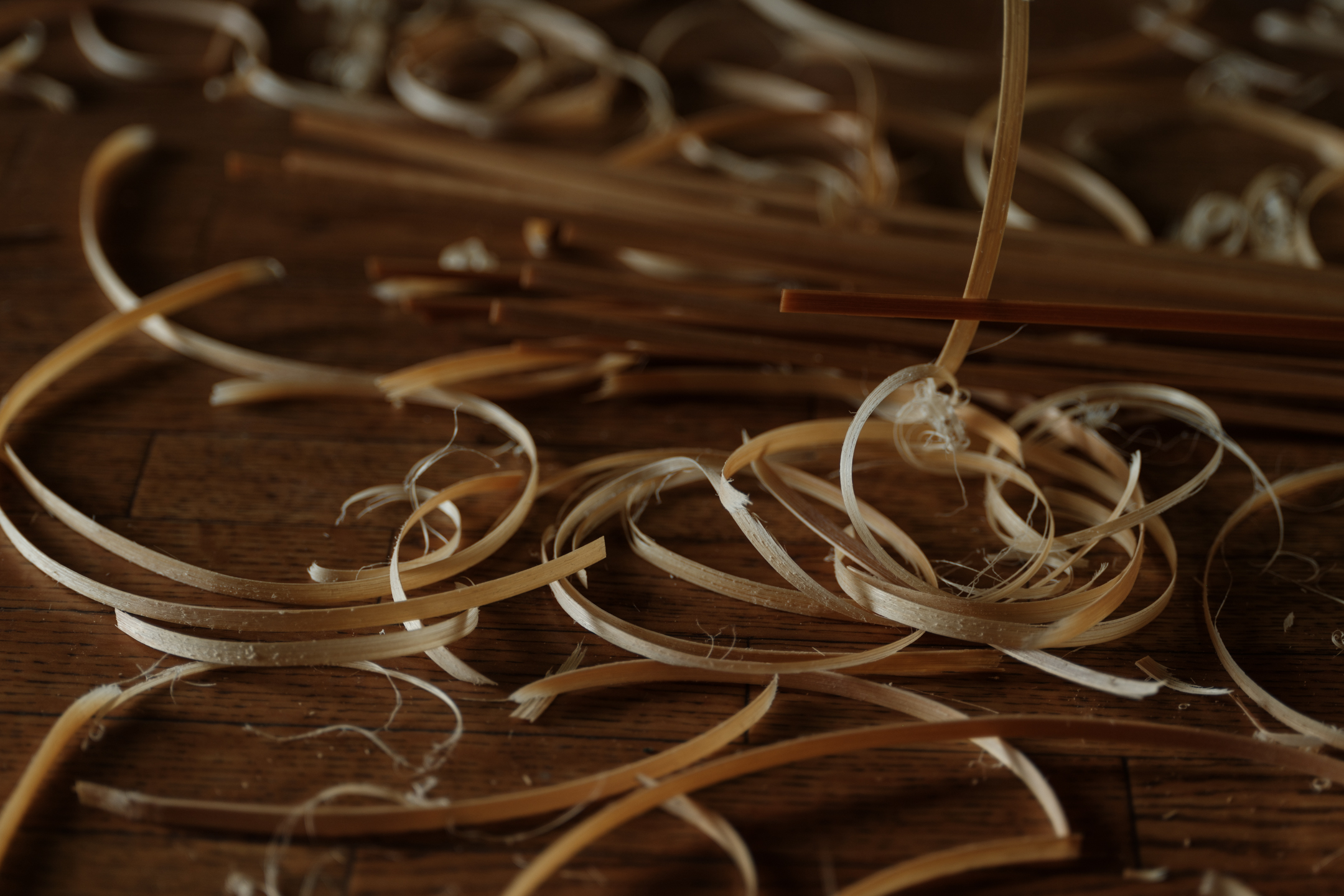
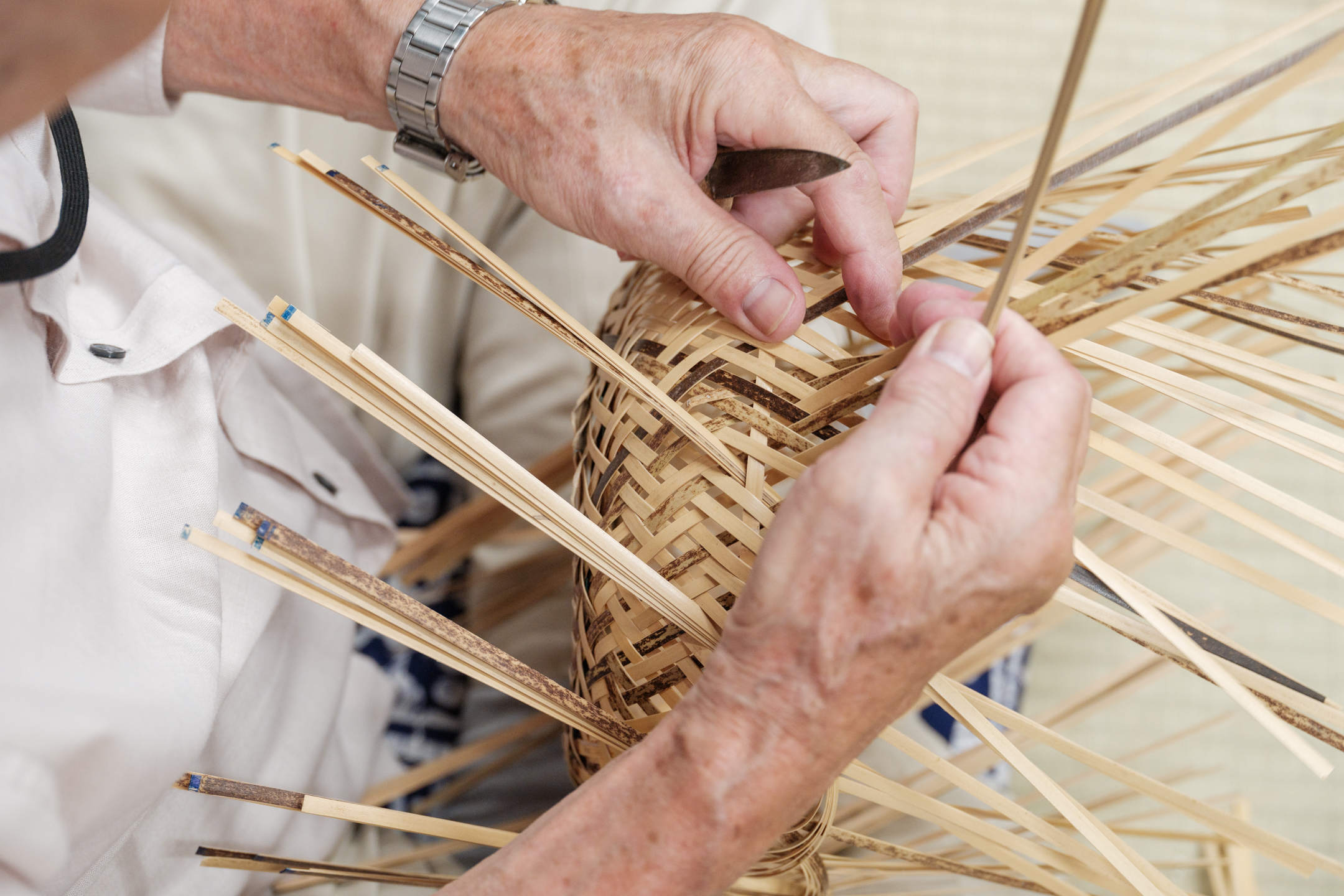
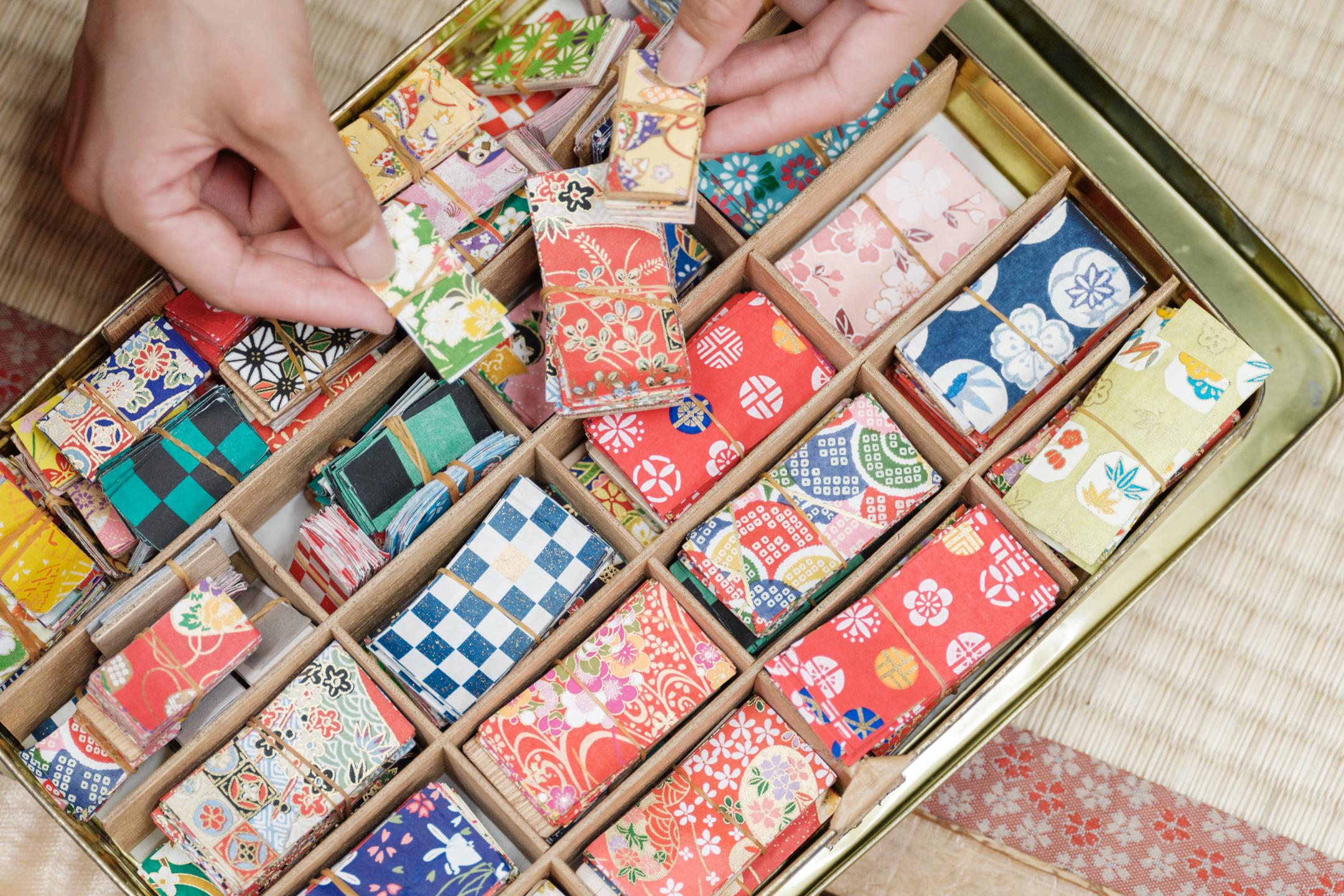
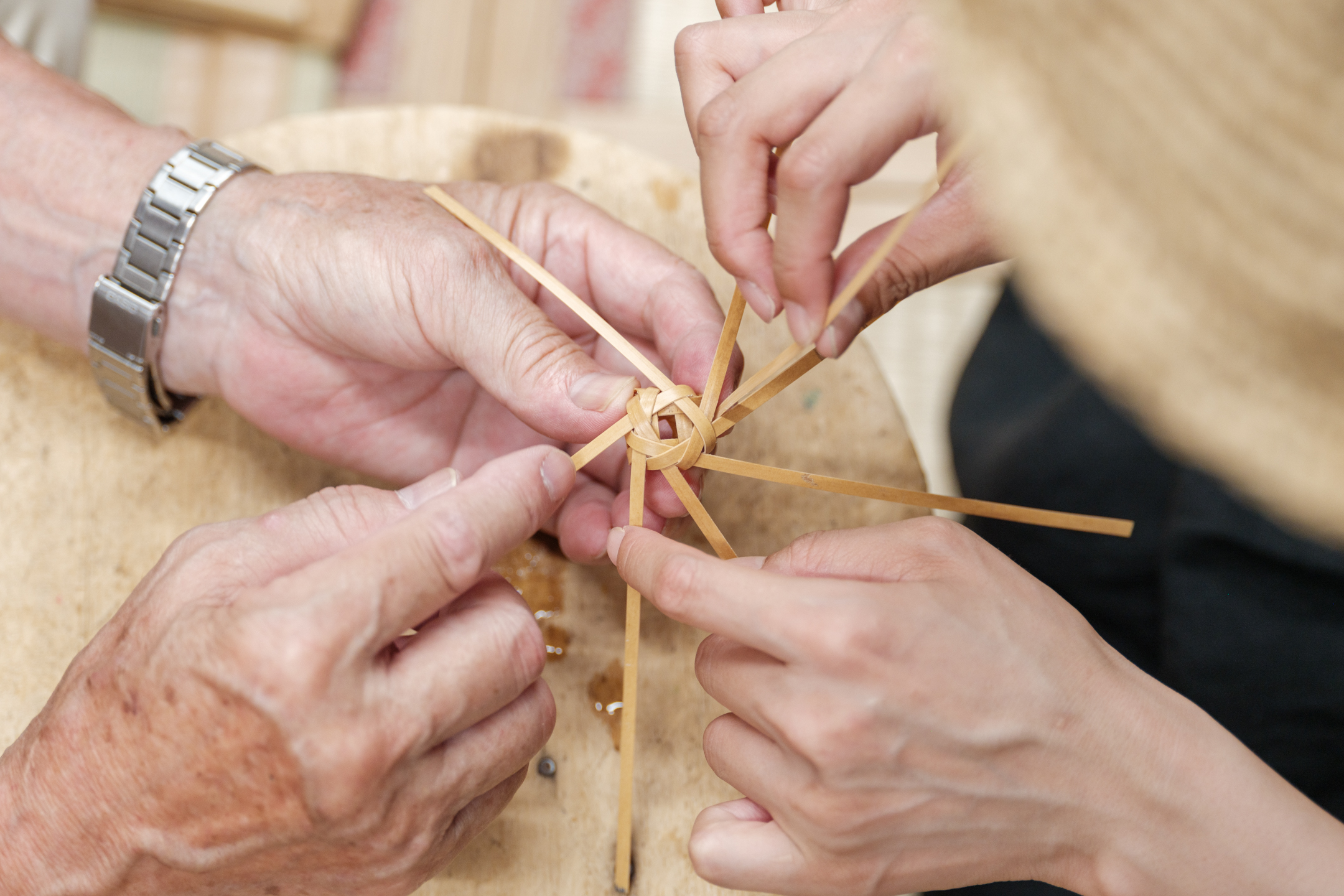
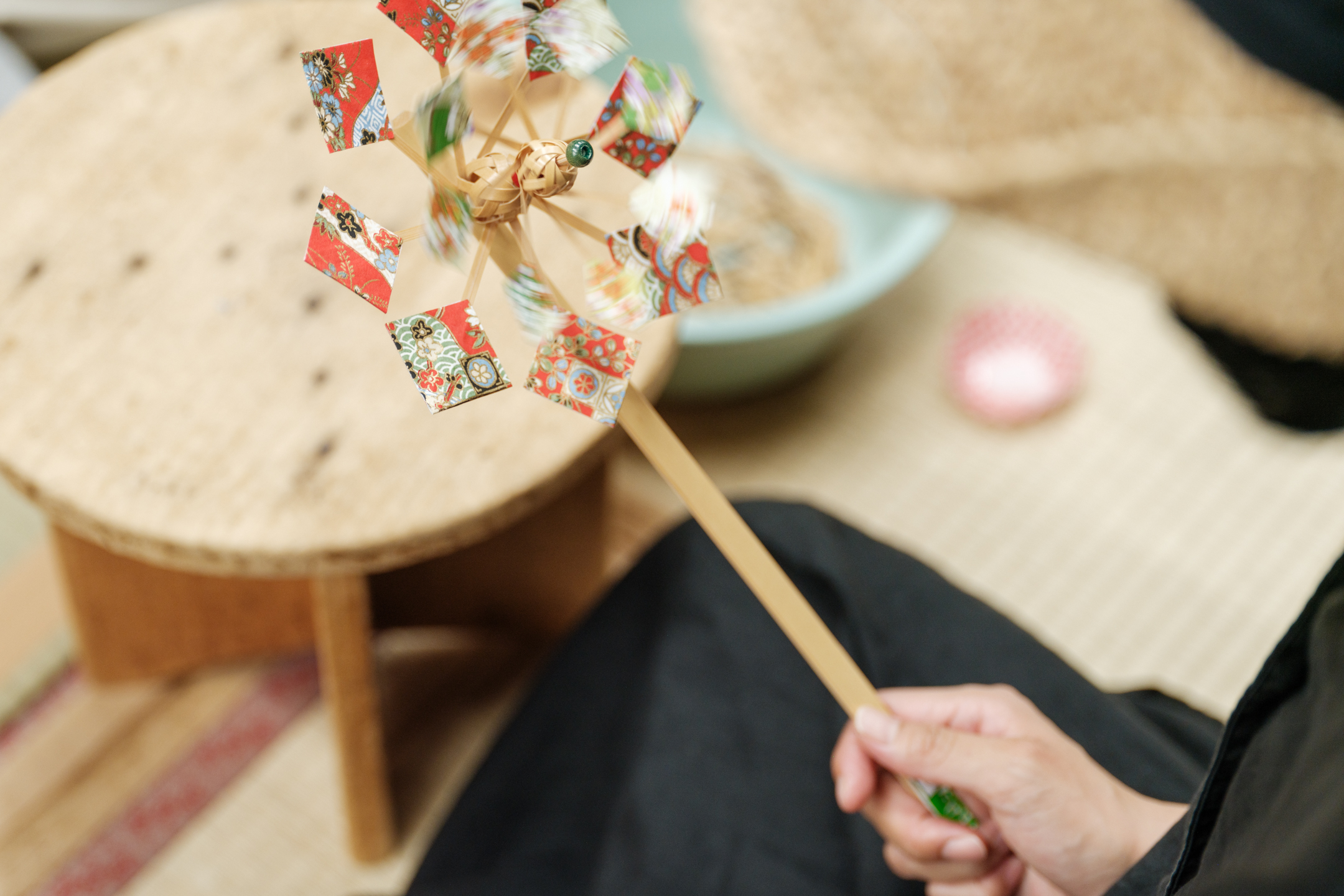
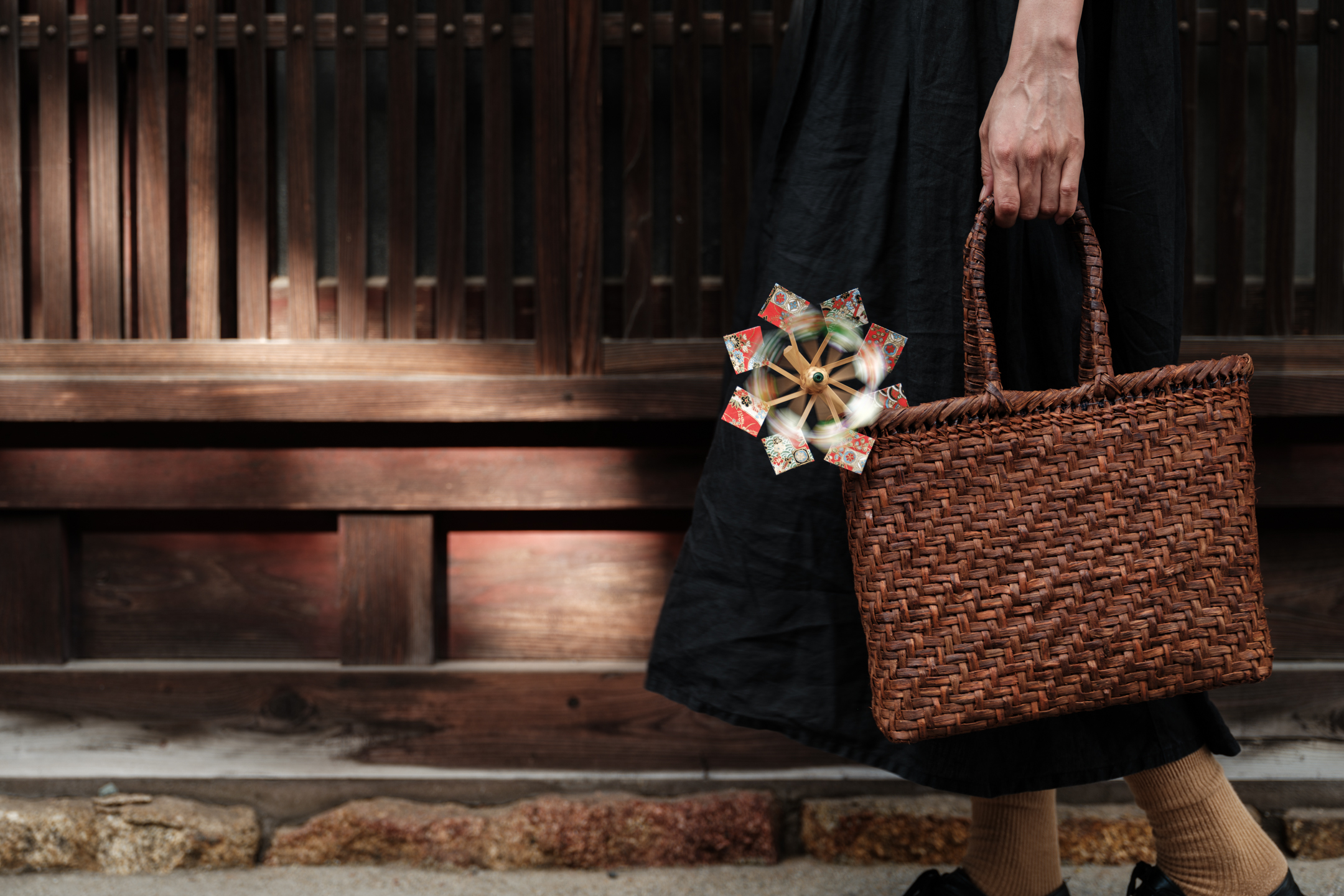
The most popular activity at the “Machinami Bamboo Workshop” is “windmill making,” which can be enjoyed by everyone from small children to adults. Windmills are made by splitting and shaving bamboo into thin strips of the correct length, then weaving them on a specialized stand. You can feel at ease because the weaving technique is taught one-on-one at your own pace. For small children who might find weaving difficult, simply choosing and attaching colorful Japanese washi paper to the windmill is a fun experience. When you blow on the finished windmill, it spins lightly and looks adorable. It is a highly recommended souvenir to decorate your room as a memory of your visit to Takehara.
Experience the handiwork of artisans carrying bamboo crafts into the future
Bamboo crafts, which utilize the flexibility and strength of the material, are characterized by a balance of beauty and practicality, with many designs that fit well into modern life. In Takehara, numerous works that actively showcase the individuality of their creators are produced daily, ranging from daily items like baskets and strainers to interior goods like lighting fixtures and baskets. The presence of new practitioners like Teramoto, who come to Takehara seeking the possibilities of bamboo craft, is also essential. You can feel the warmth and depth of craftsmanship in the handiwork of artisans who split, weave, and shape a single stalk of bamboo. Please come and feel the charm of bamboo while experiencing the artisans’ work in Takehara.