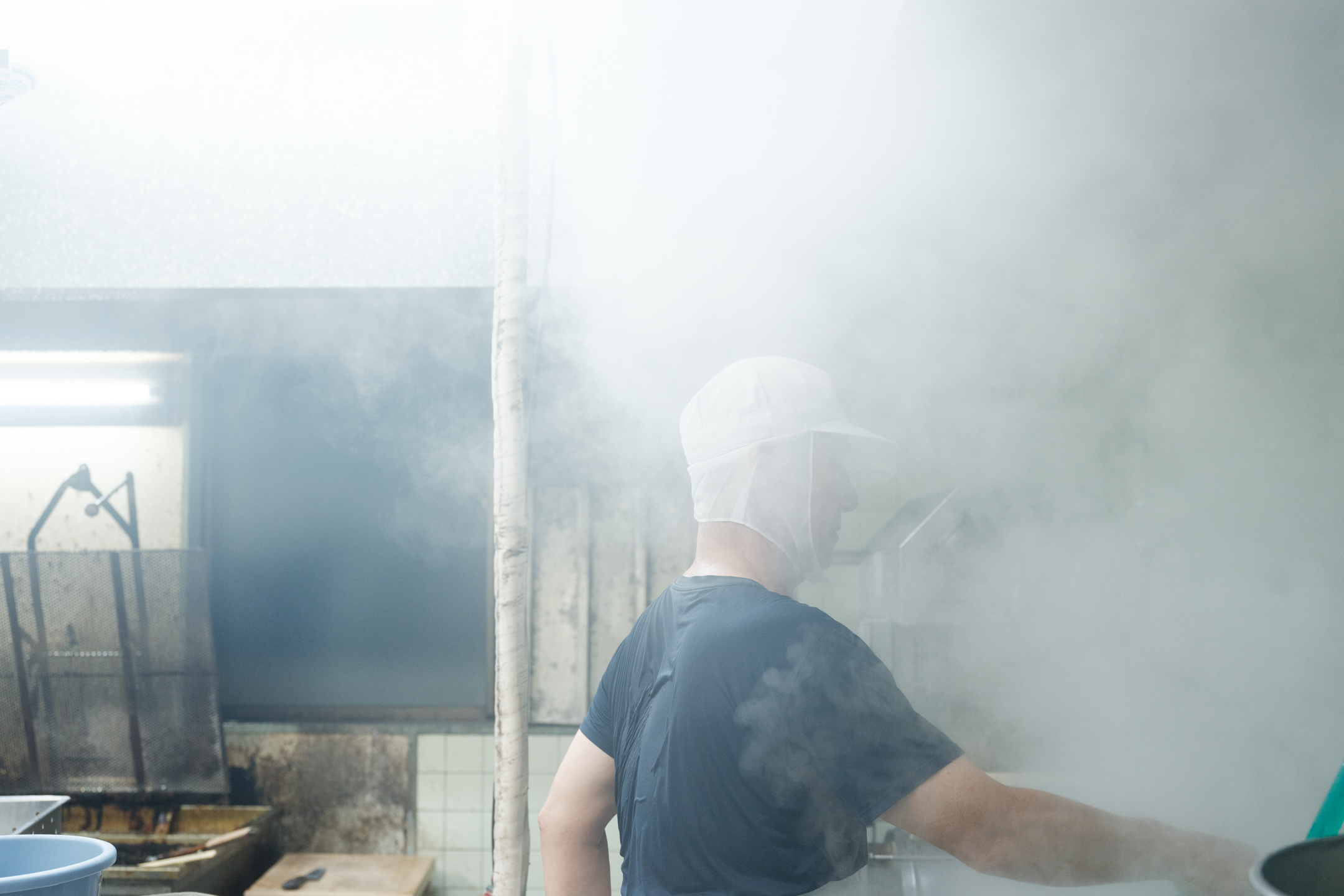
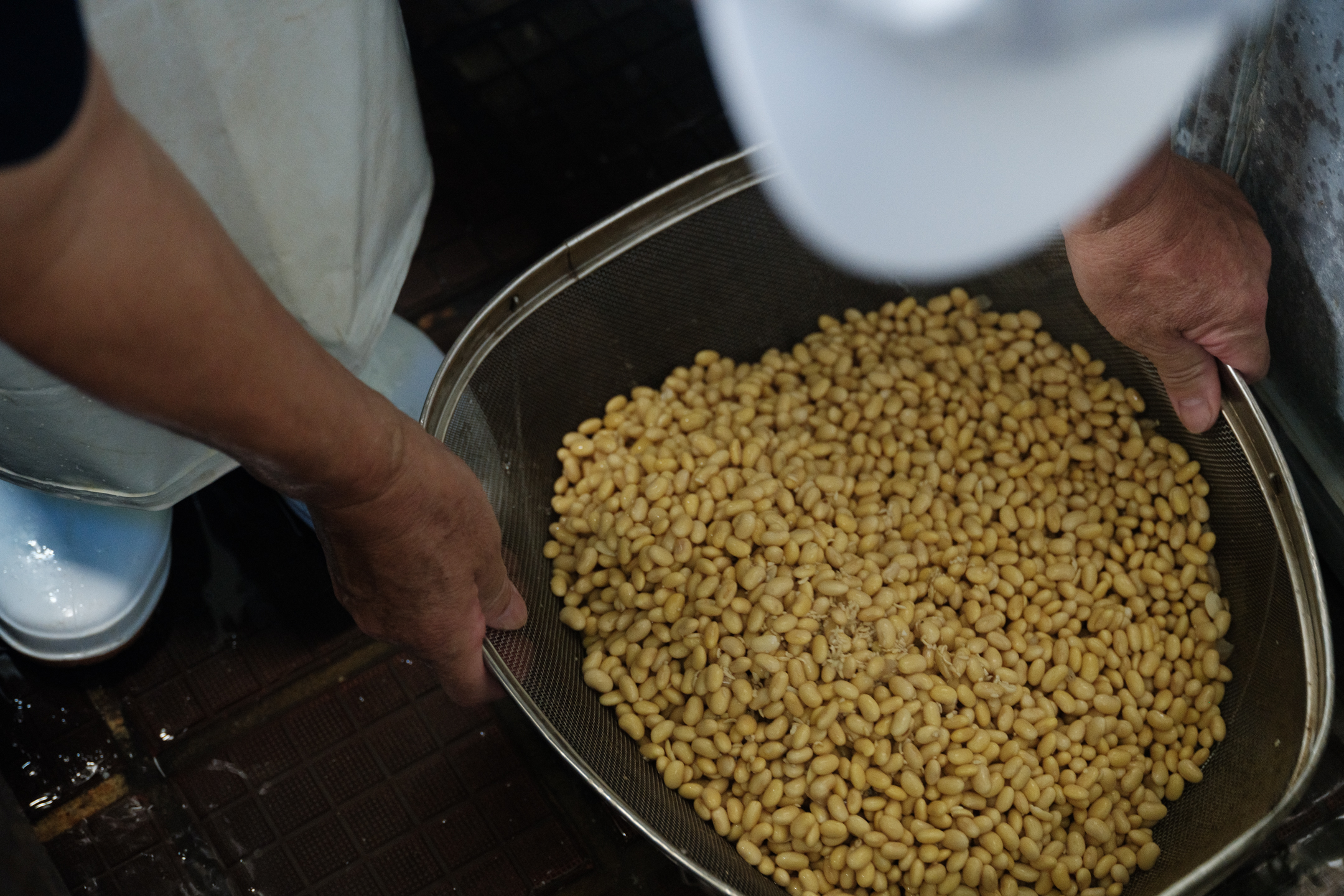
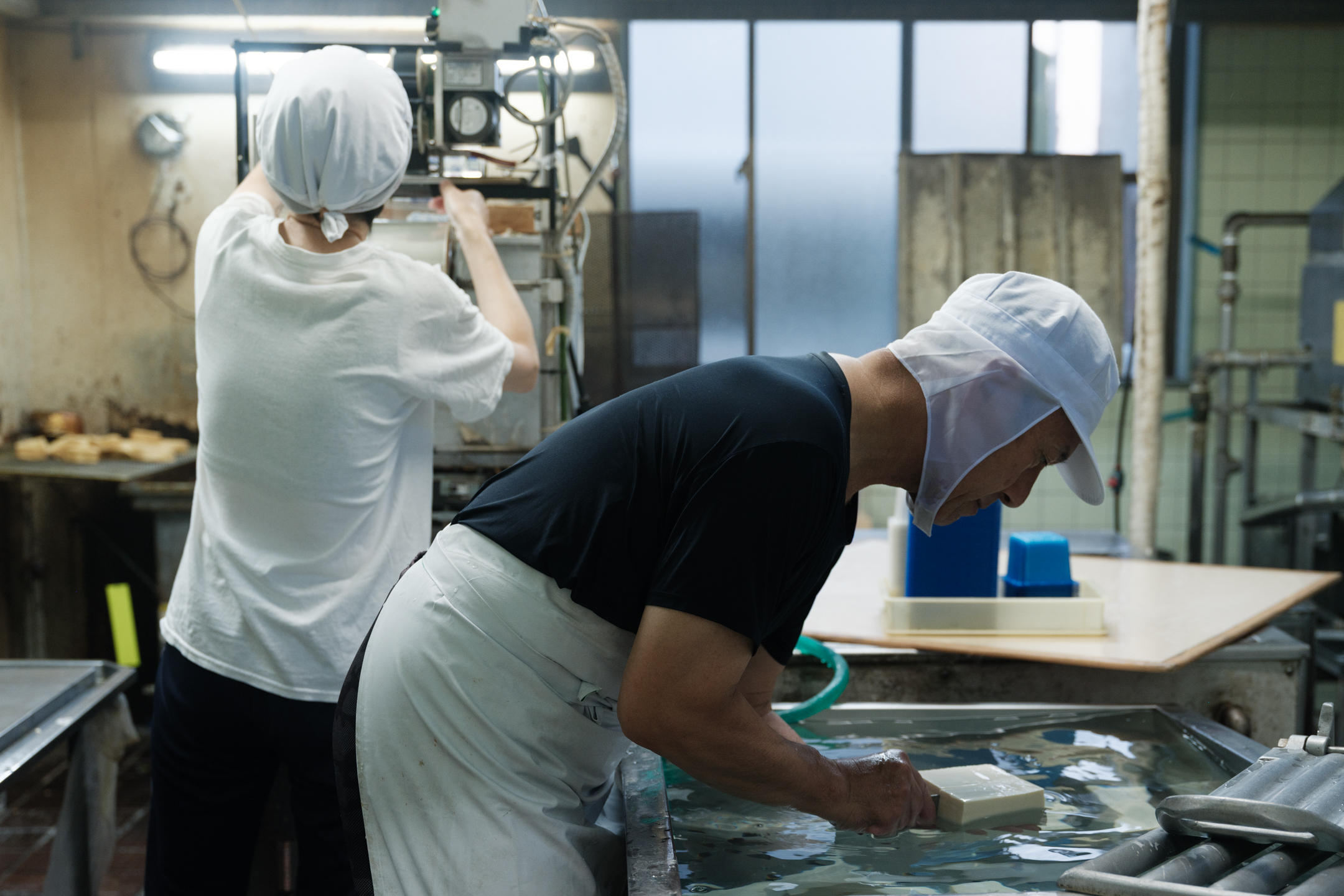
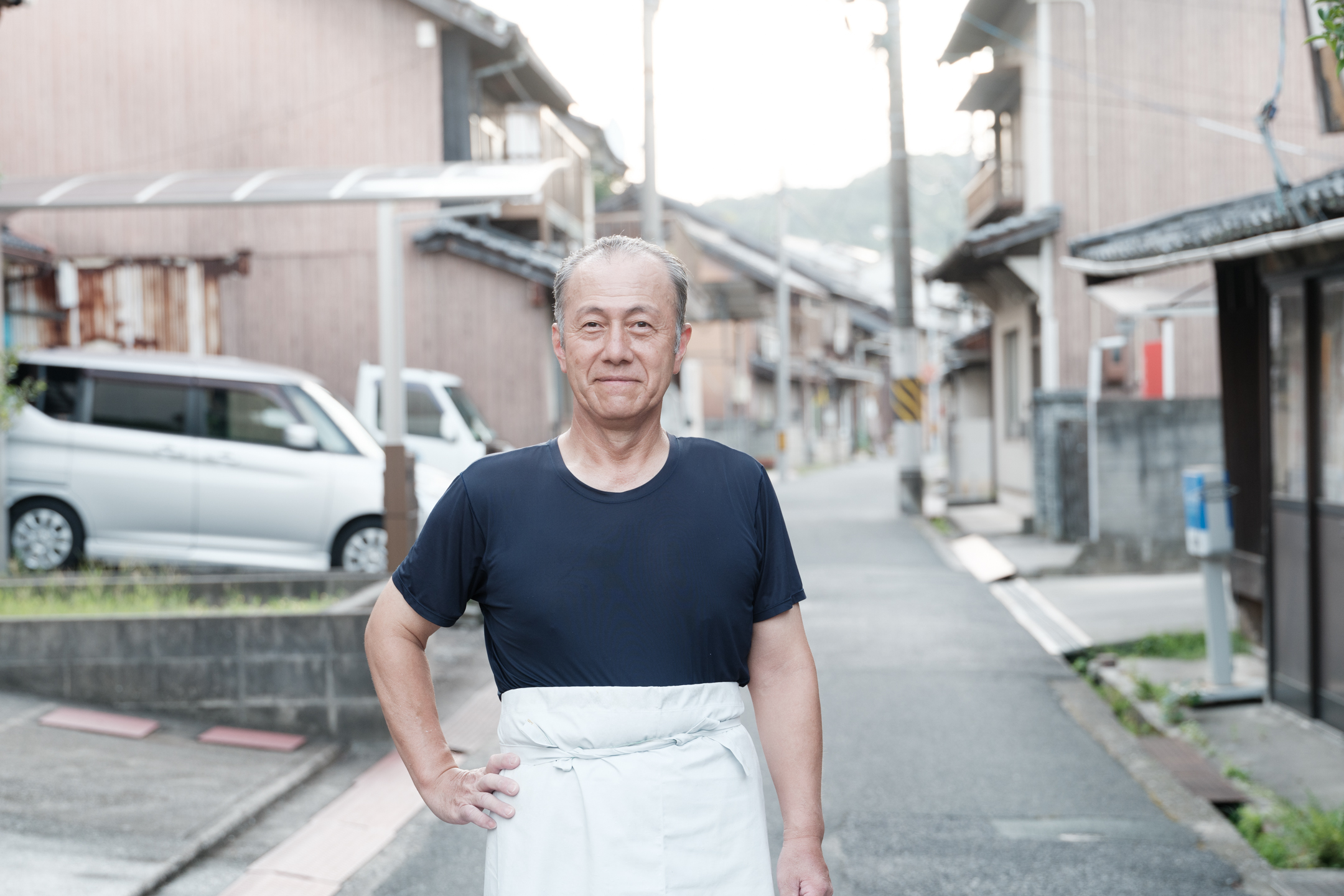
With pure white steam rising from the soybeans, the workshop is quickly filled with a gentle, toasty aroma. This is a tofu shop founded in Tadanoumi in 1939. Ryuzo Ikuta, the third-generation owner of Oida Shokuhin, has been in the trade for about 40 years. He starts work at 3 a.m., but in fact the real work begins the day before, when the soybeans are soaked in water. He gauges the temperature and humidity, which change with the seasons, and decides the best soaking time each time. Those small, steady choices lead to a rich flavor. Ryuzo has helped make tofu since elementary school. At 24, he decided to take over the family business in earnest when, as he puts it, “Dad ended up in the hospital.”
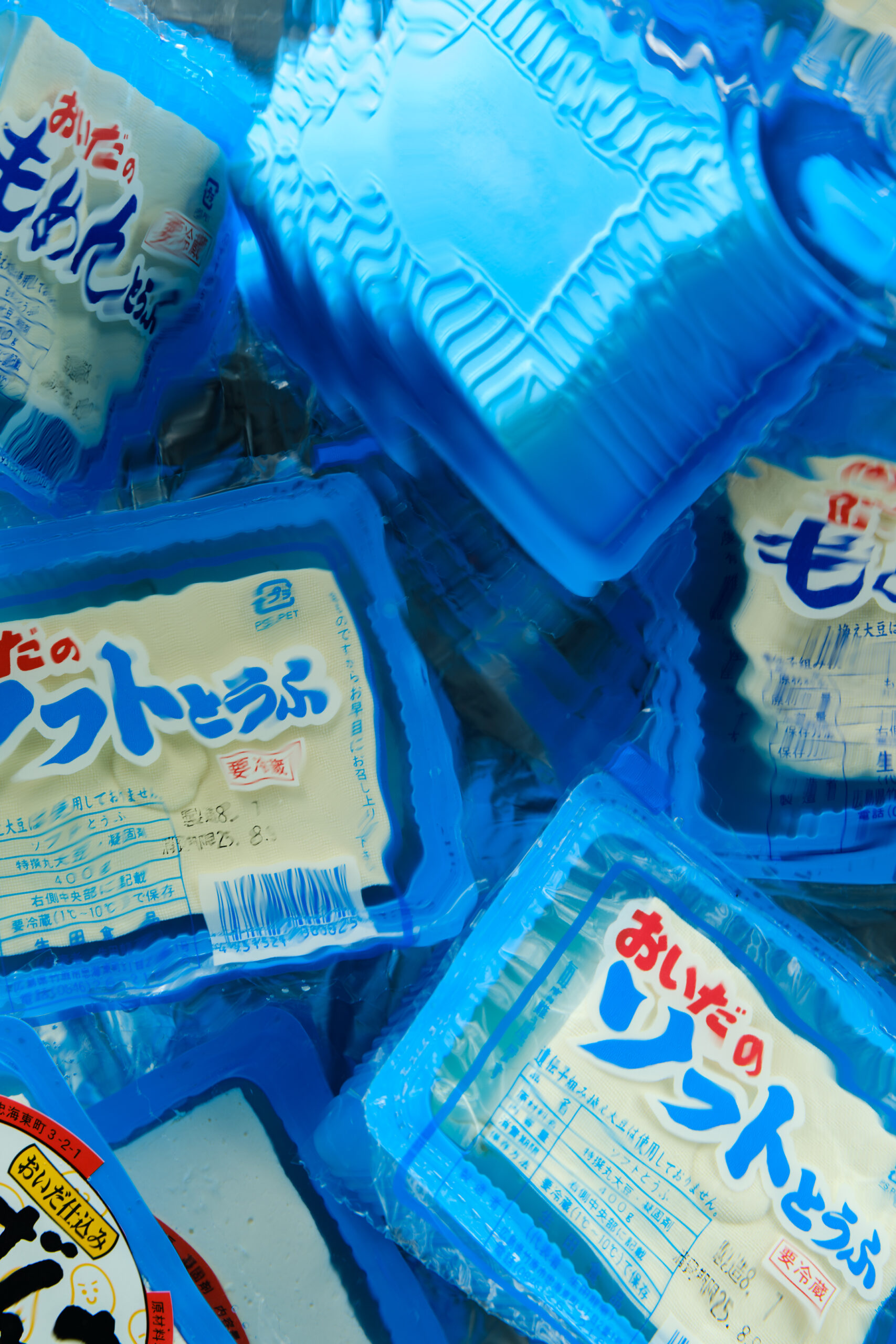
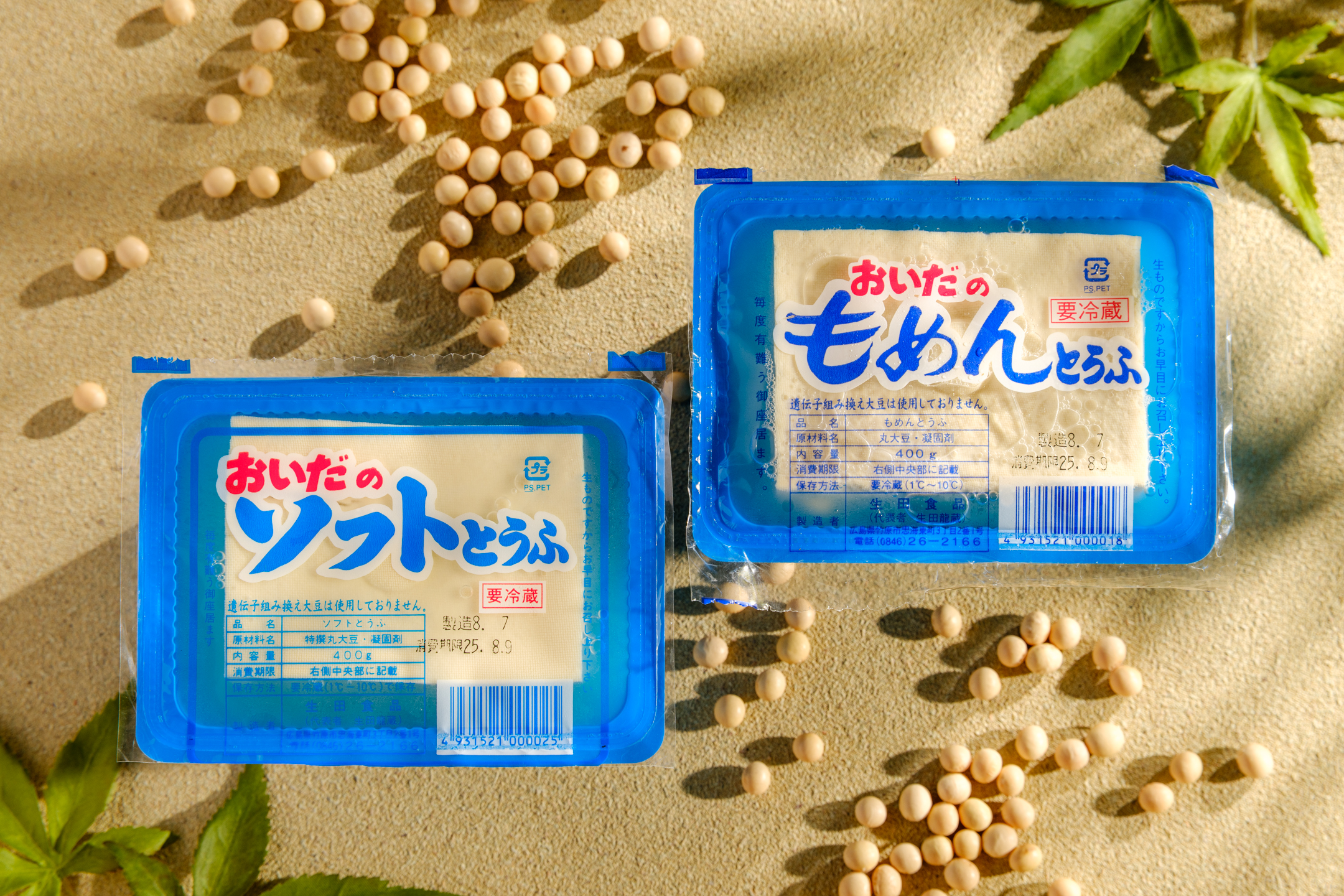
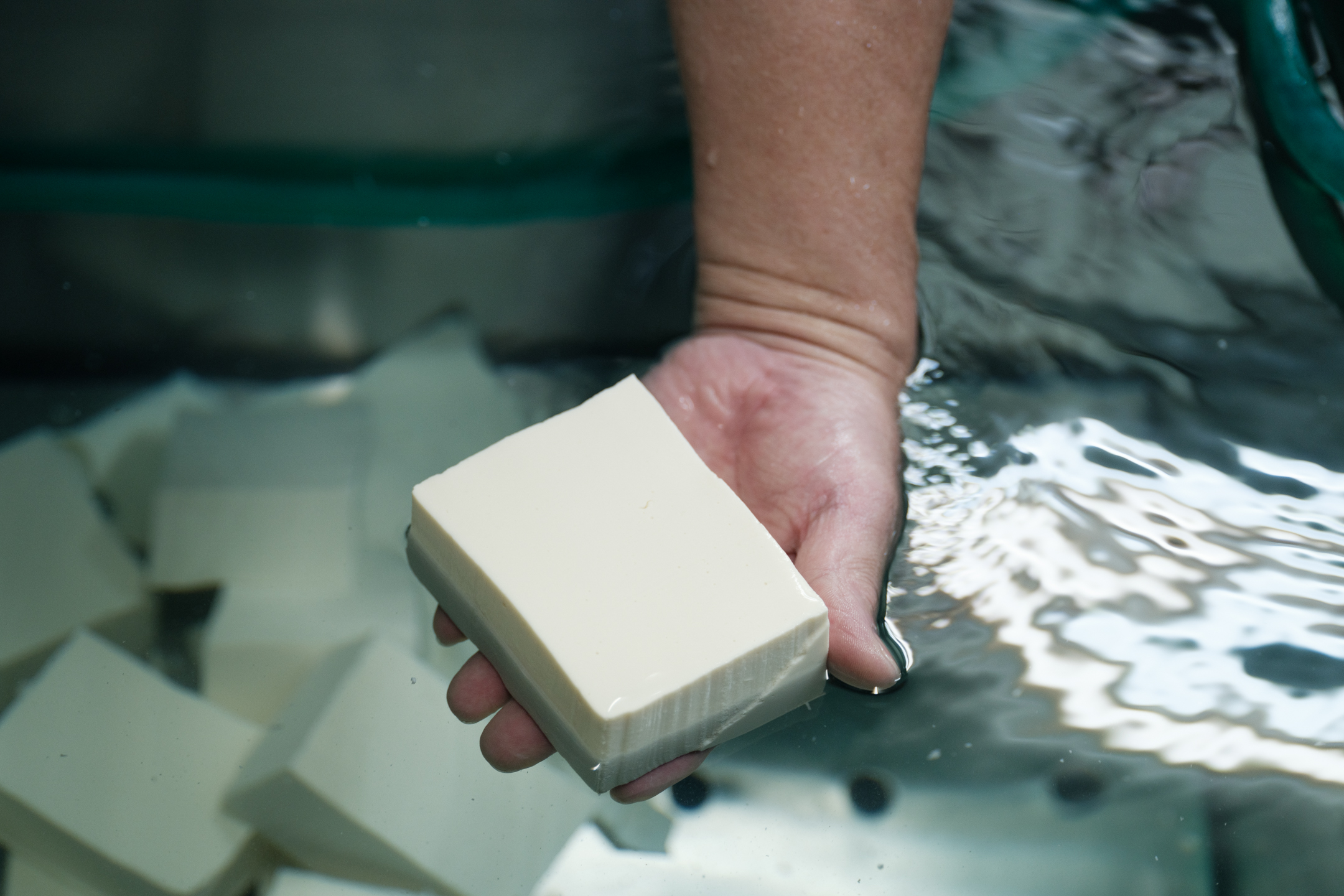
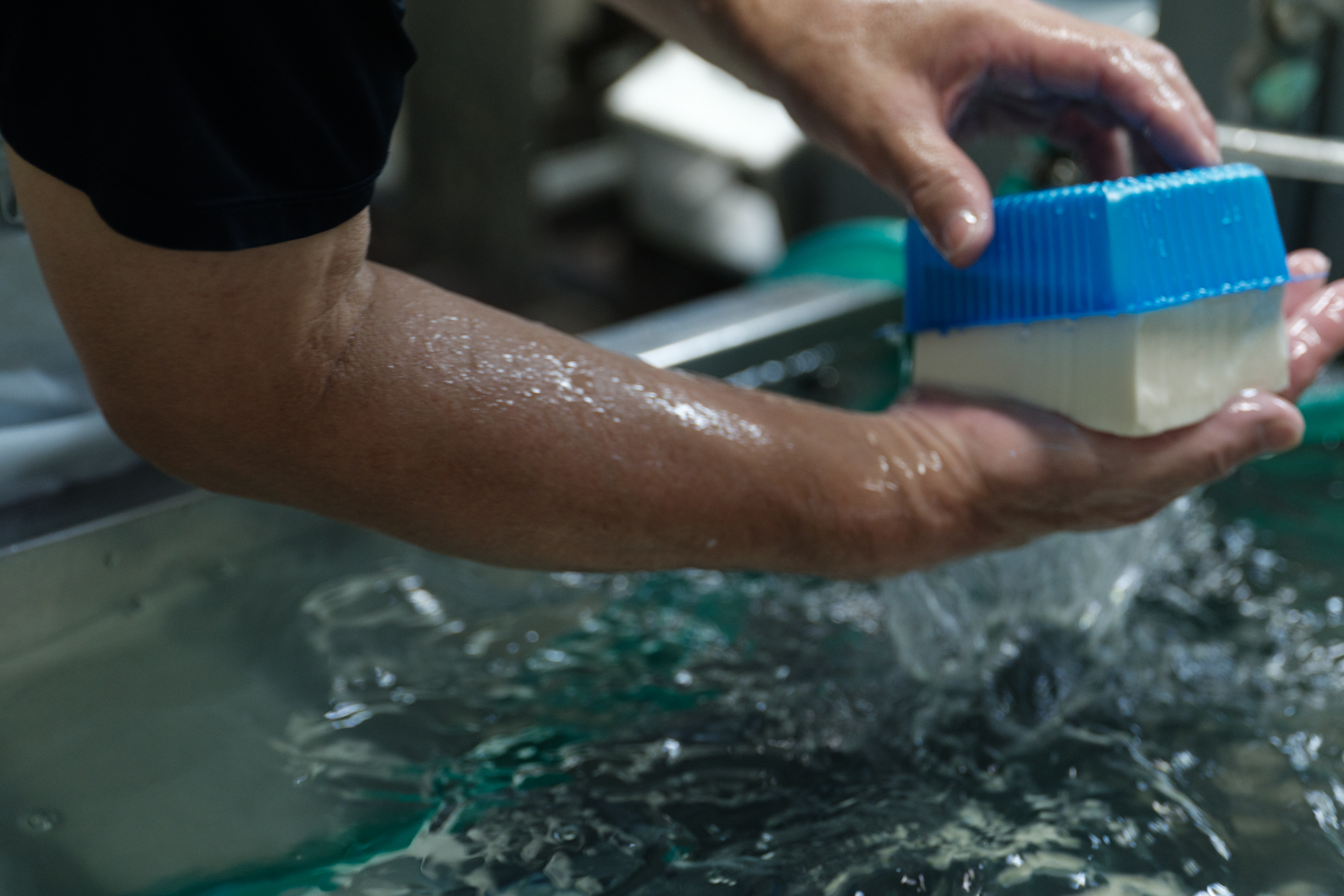
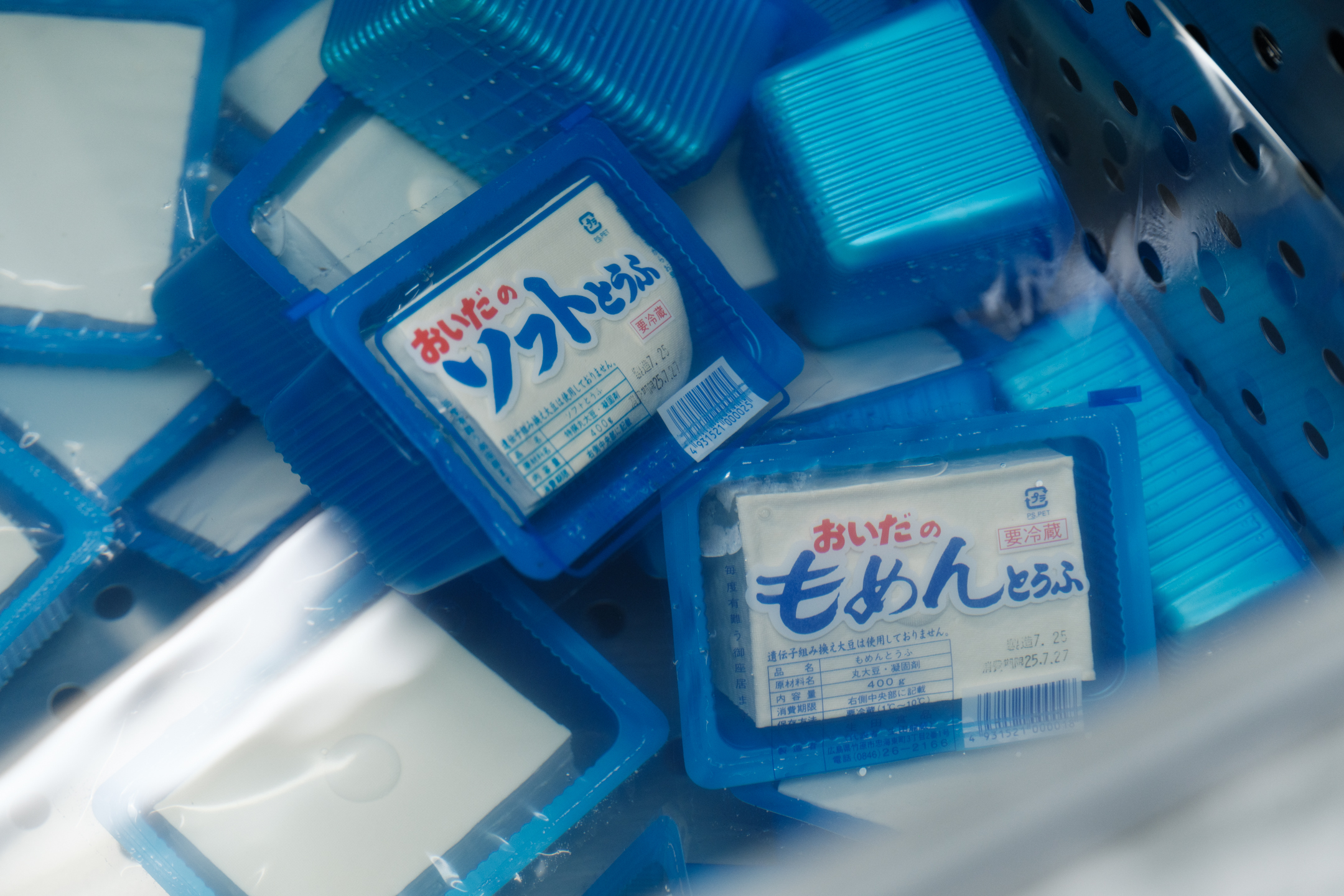
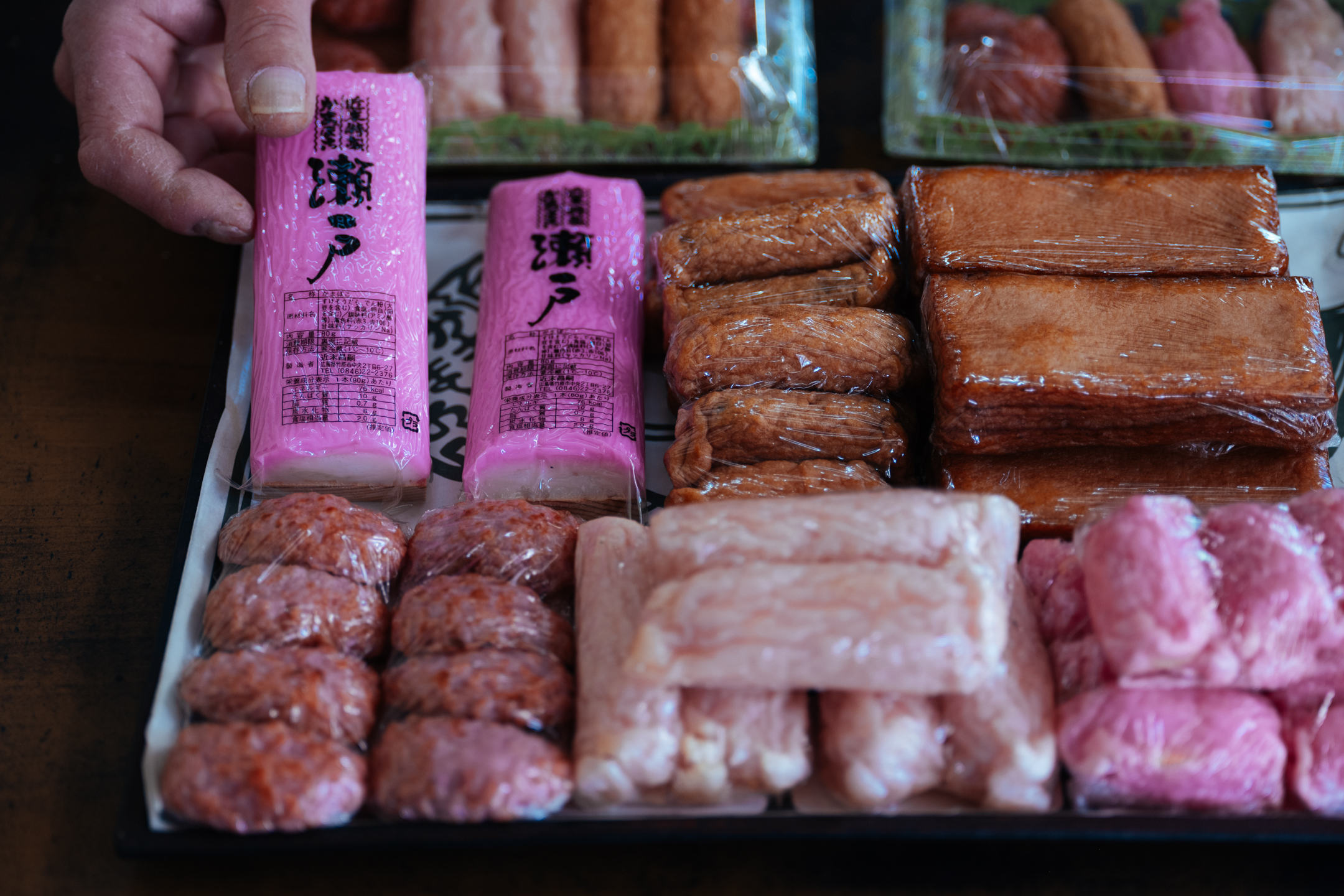
Today, he and his wife Emi deliver directly to school lunch programs, local hospitals, supermarkets, roadside stations, and more. Takehara once had more than 20 tofu shops, but now only Oida Shokuhin remains. Though the workshop is small, they have long continued to make seven varieties without changing their approach—classic firm tofu (momen), silken tofu (kinu), and the popular “soft” tofu, which is even more tender than momen. Even as they work at a brisk pace, the way they set aside soy milk “because it’s special” for regular customers offered a glimpse of their deep ties to the community.
Traditional handmade methods, with a dash of curiosity
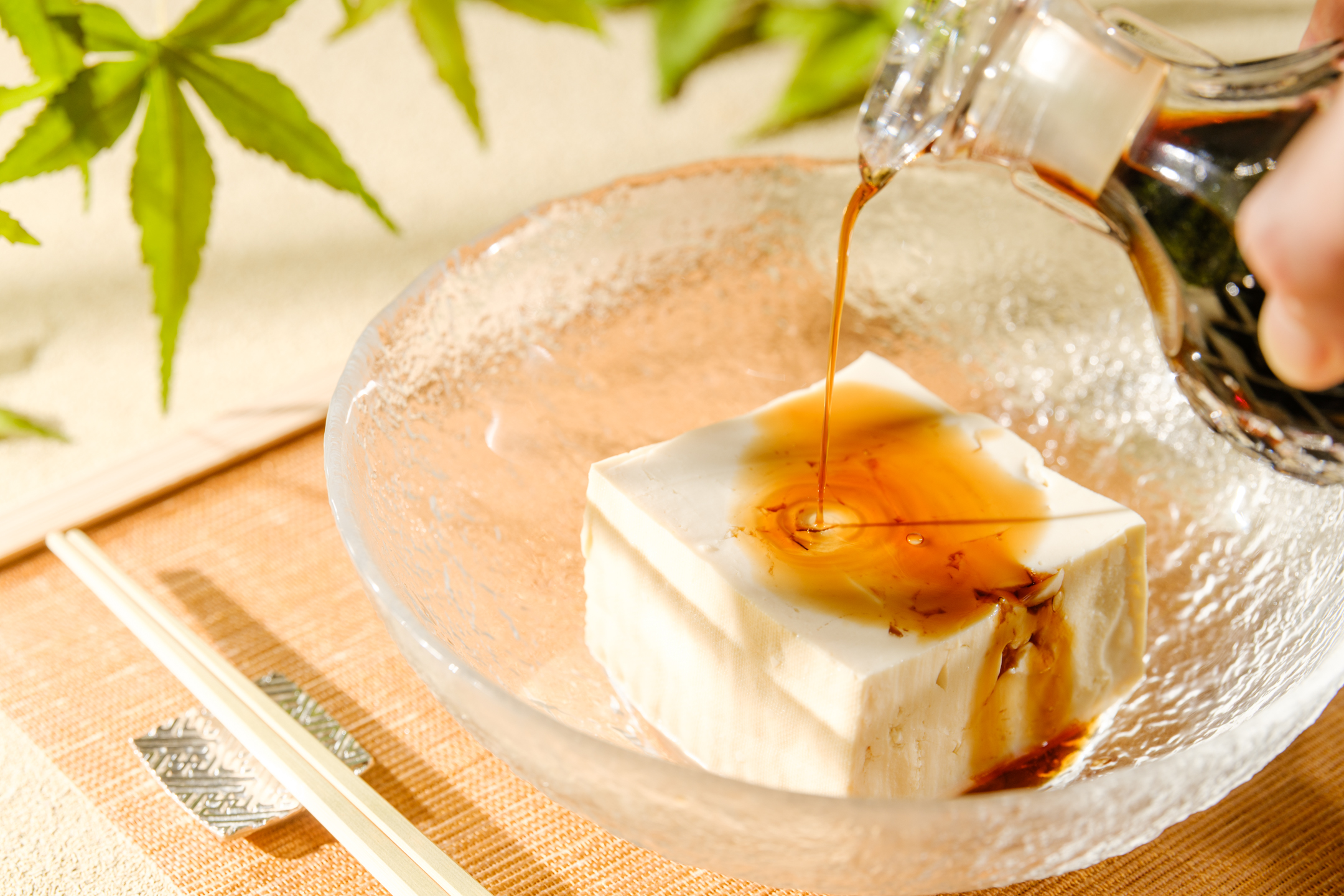
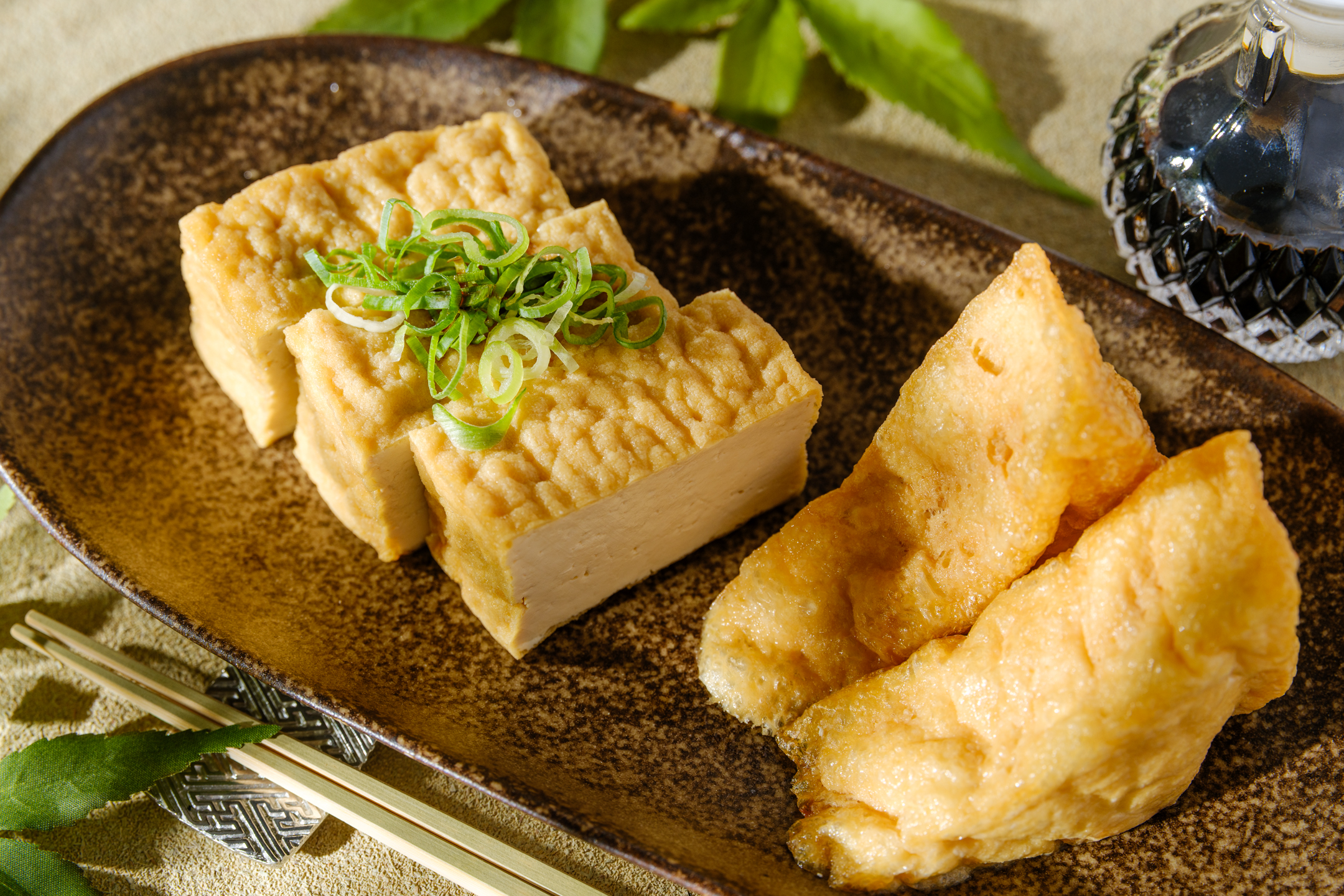
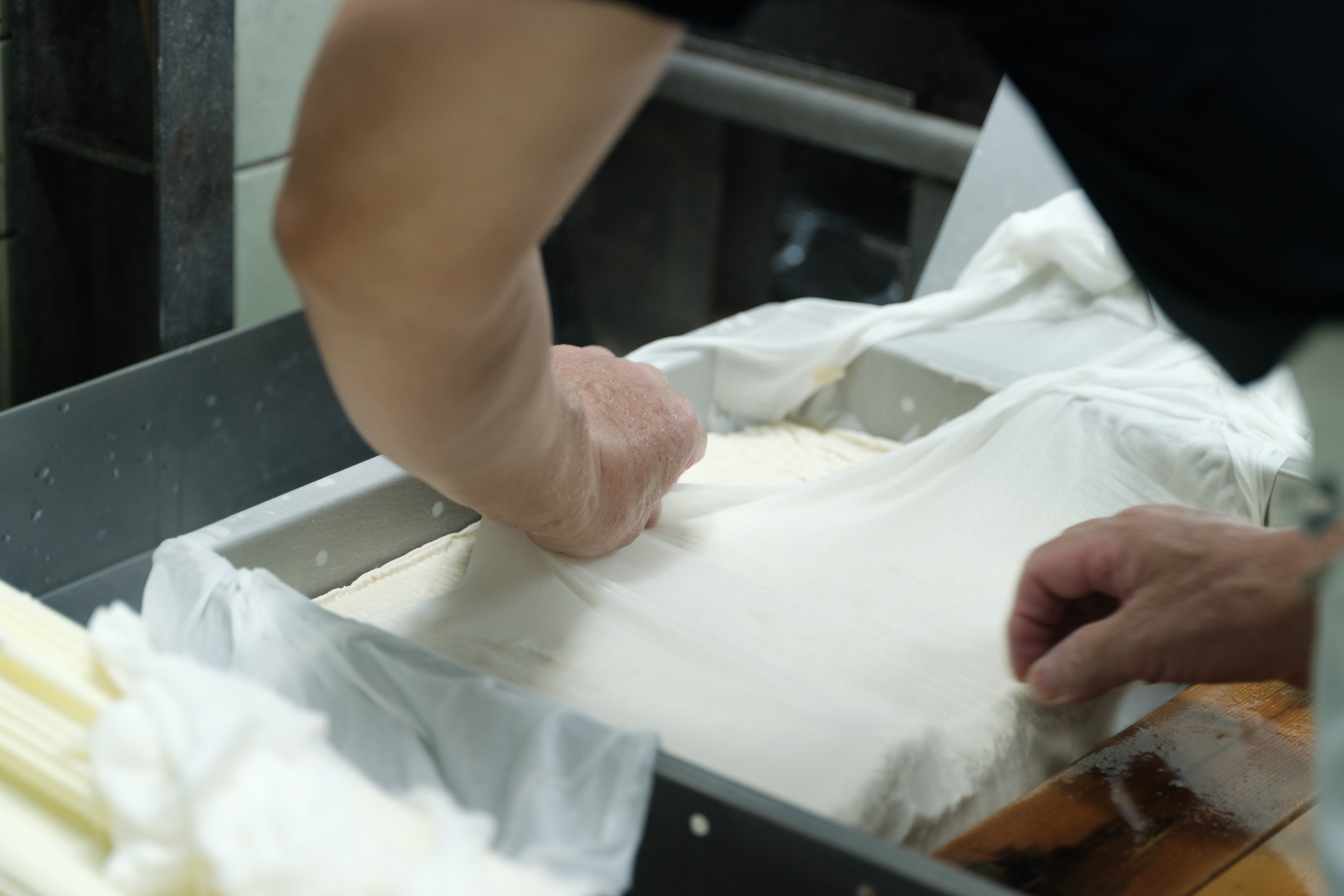
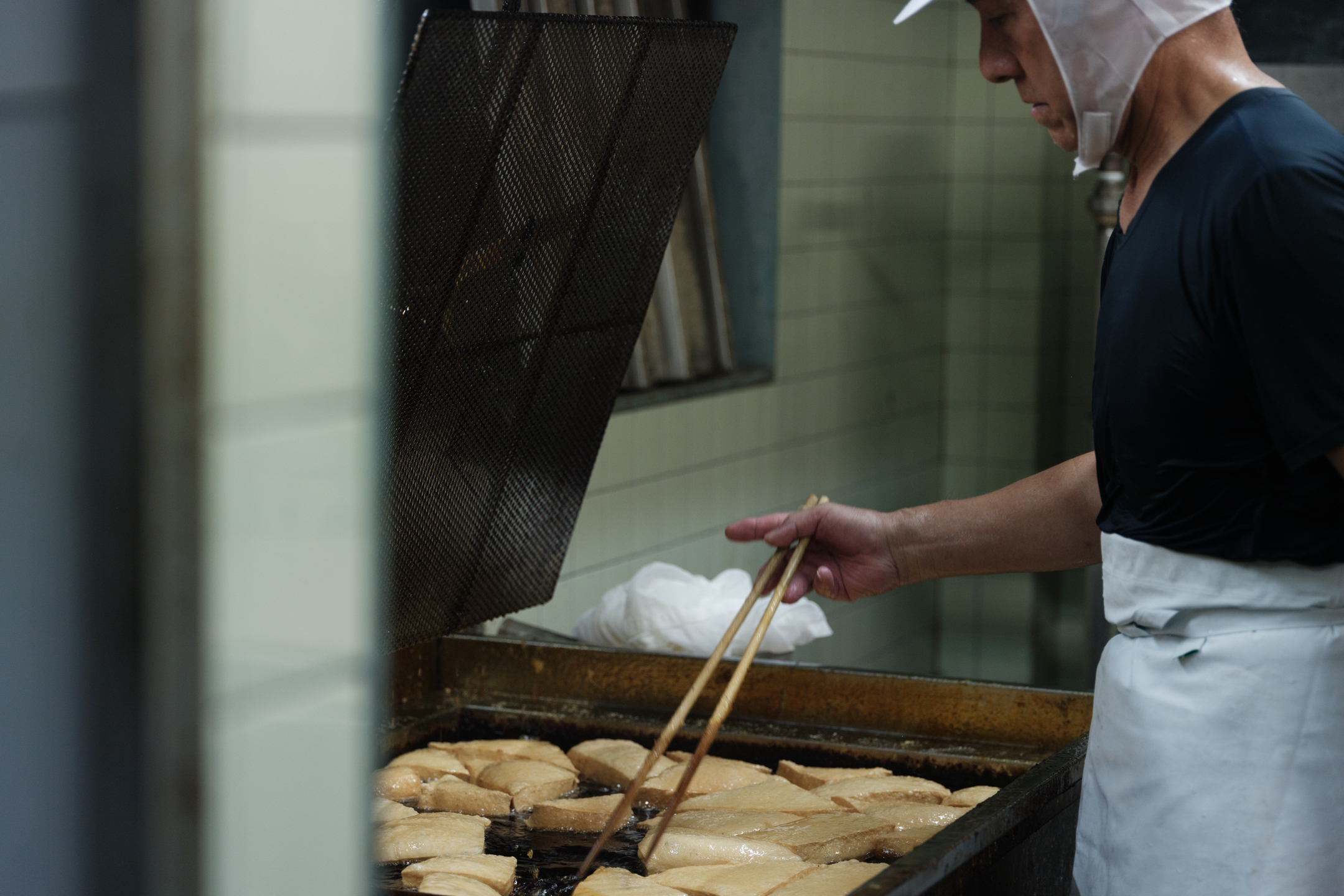
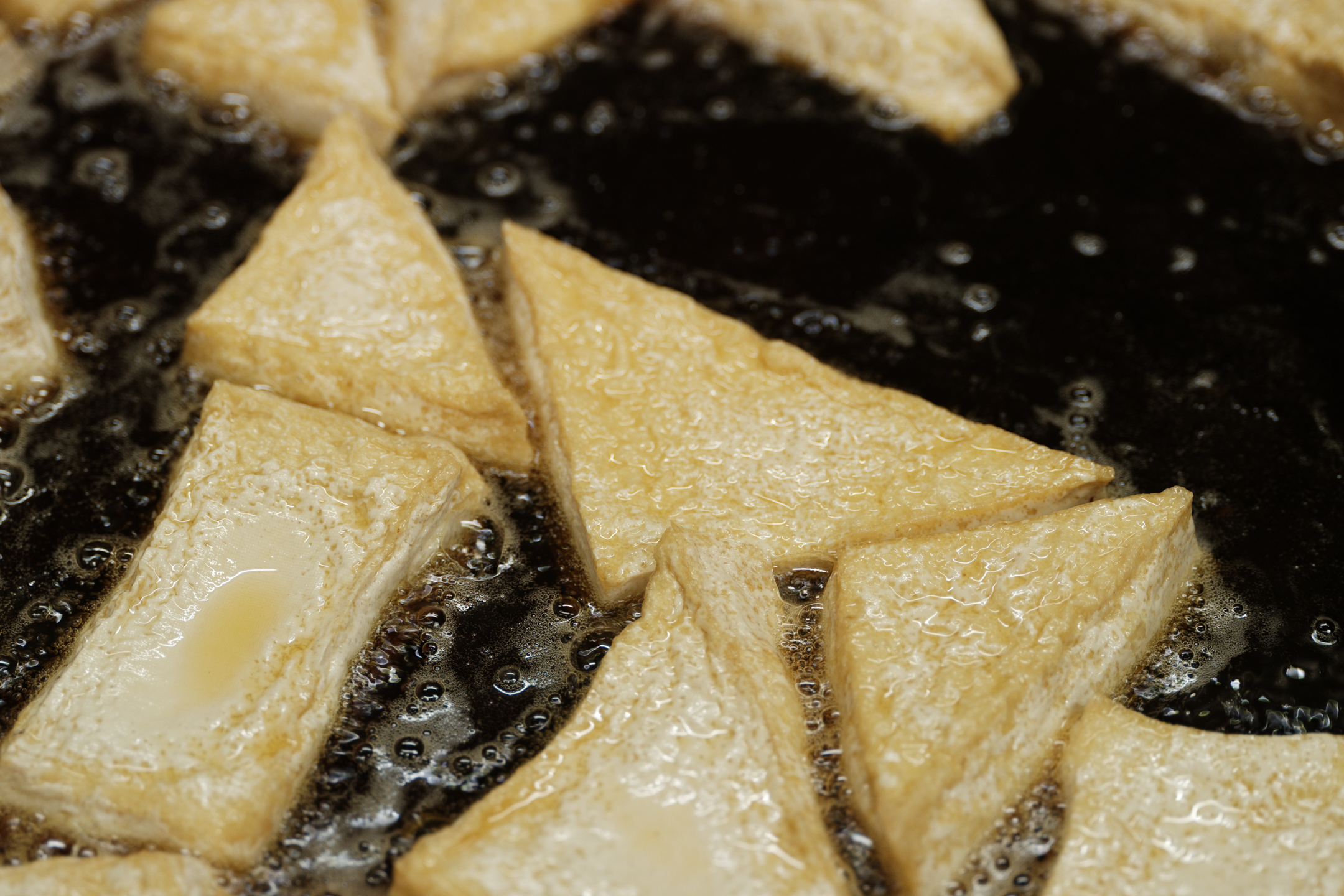
Oida Shokuhin’s tofu stands out for its careful, time-intensive process. By slowly applying pressure to remove moisture, even their soft tofu holds together well when picked up with chopsticks, and the more you chew, the more the soybean flavor spreads. In Ryuzo’s generation, they also added a twist to their fried tofu by adjusting the thickness. They take the time to fry an extra-thick base—“as thick as you can possibly fry,” as he puts it—creating a deeply savory, satisfying piece packed with soybean umami. It looks so bold you might mistake it for atsuage, and it’s hard not to smile.
Ryuzo’s tofu-making feels both earnest and playful. When asked what it takes to make great tofu, he replies with a joking, “Don’t overdo it—take it easy sometimes!” Yet Emi says that whenever they spot tofu while traveling, they can’t help buying it and comparing it back at their lodging. That curiosity is what feeds into each block they make every day—serious about the craft, but with just the right amount of ease. Their tofu seems to carry that personality, too.