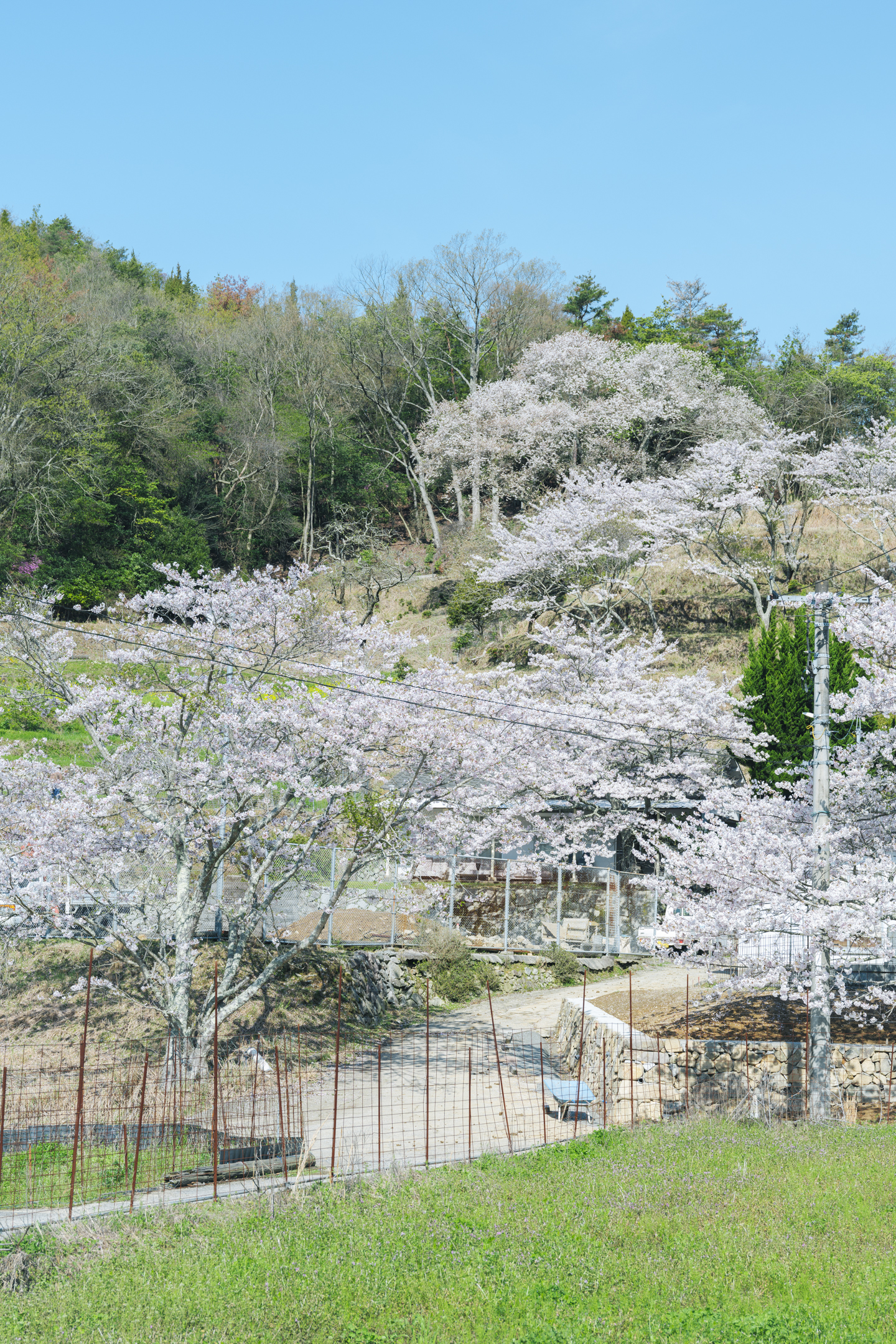
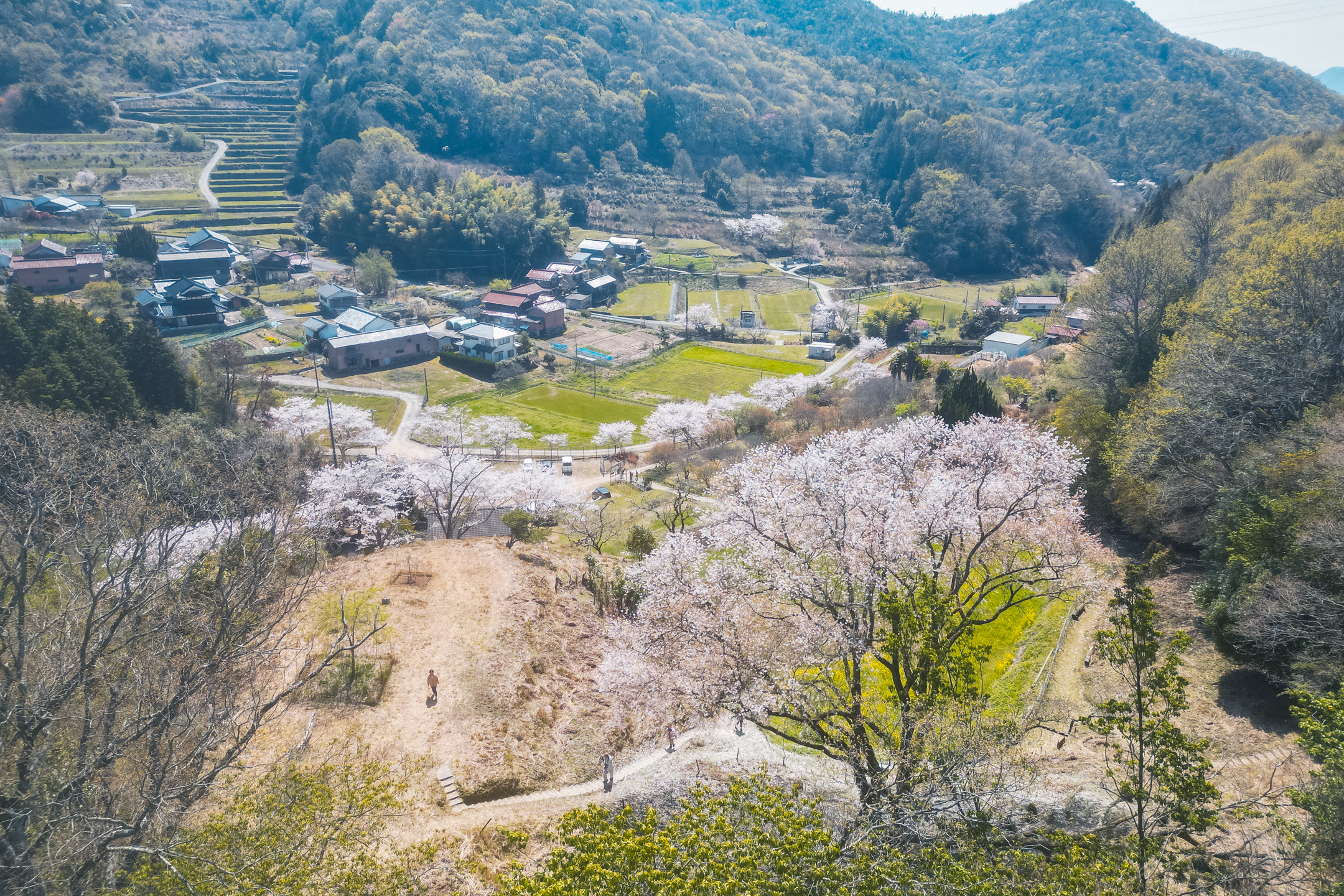
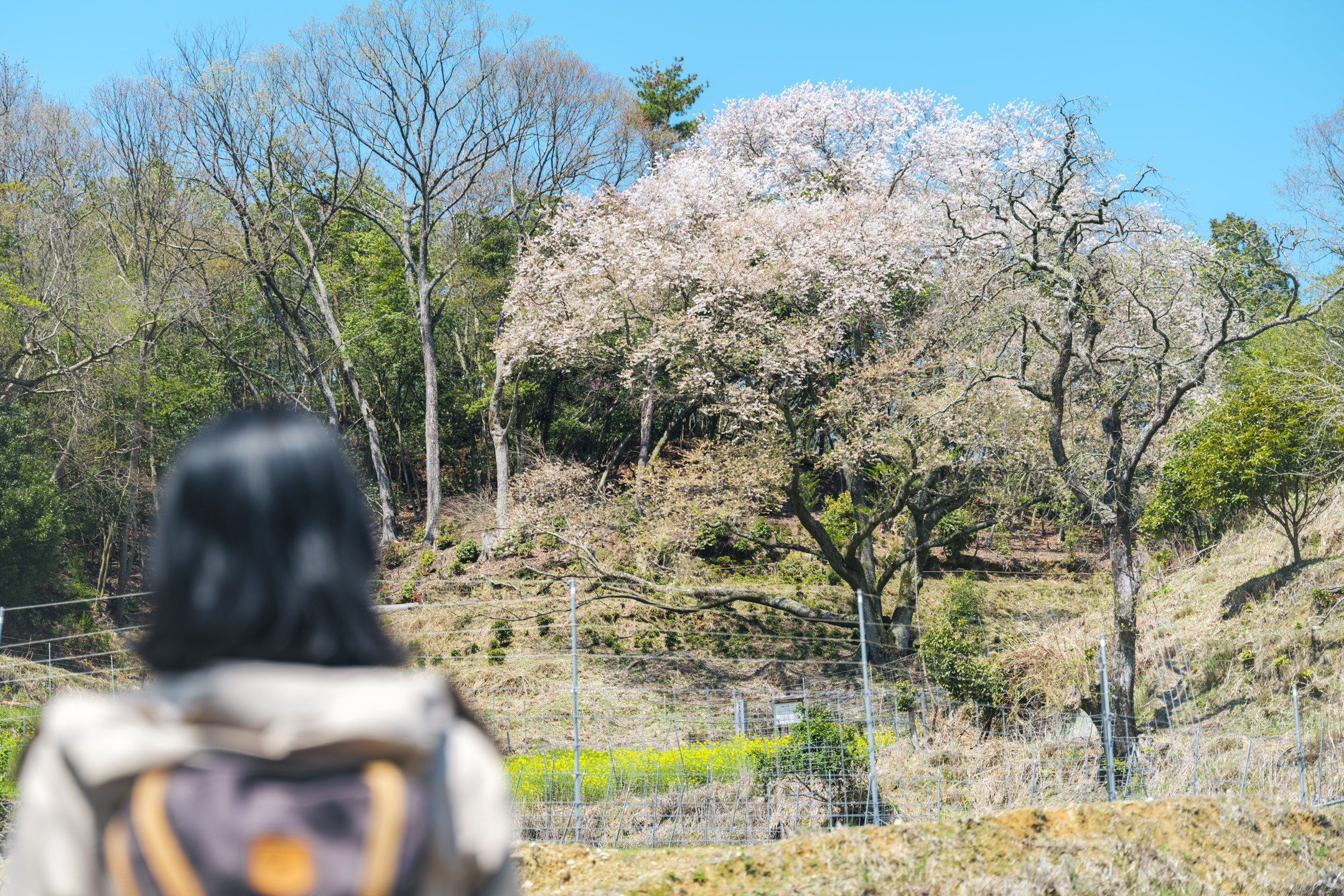
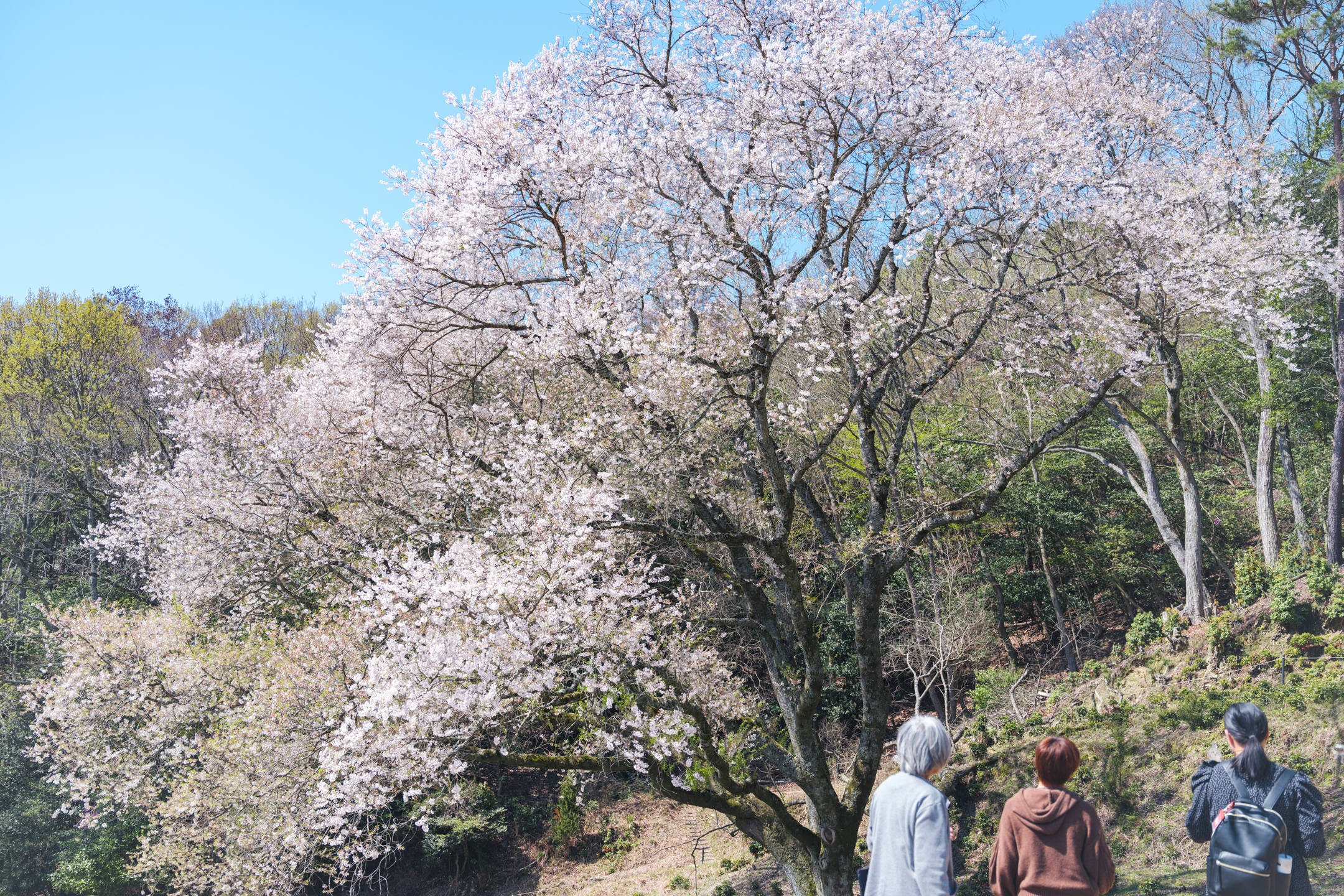
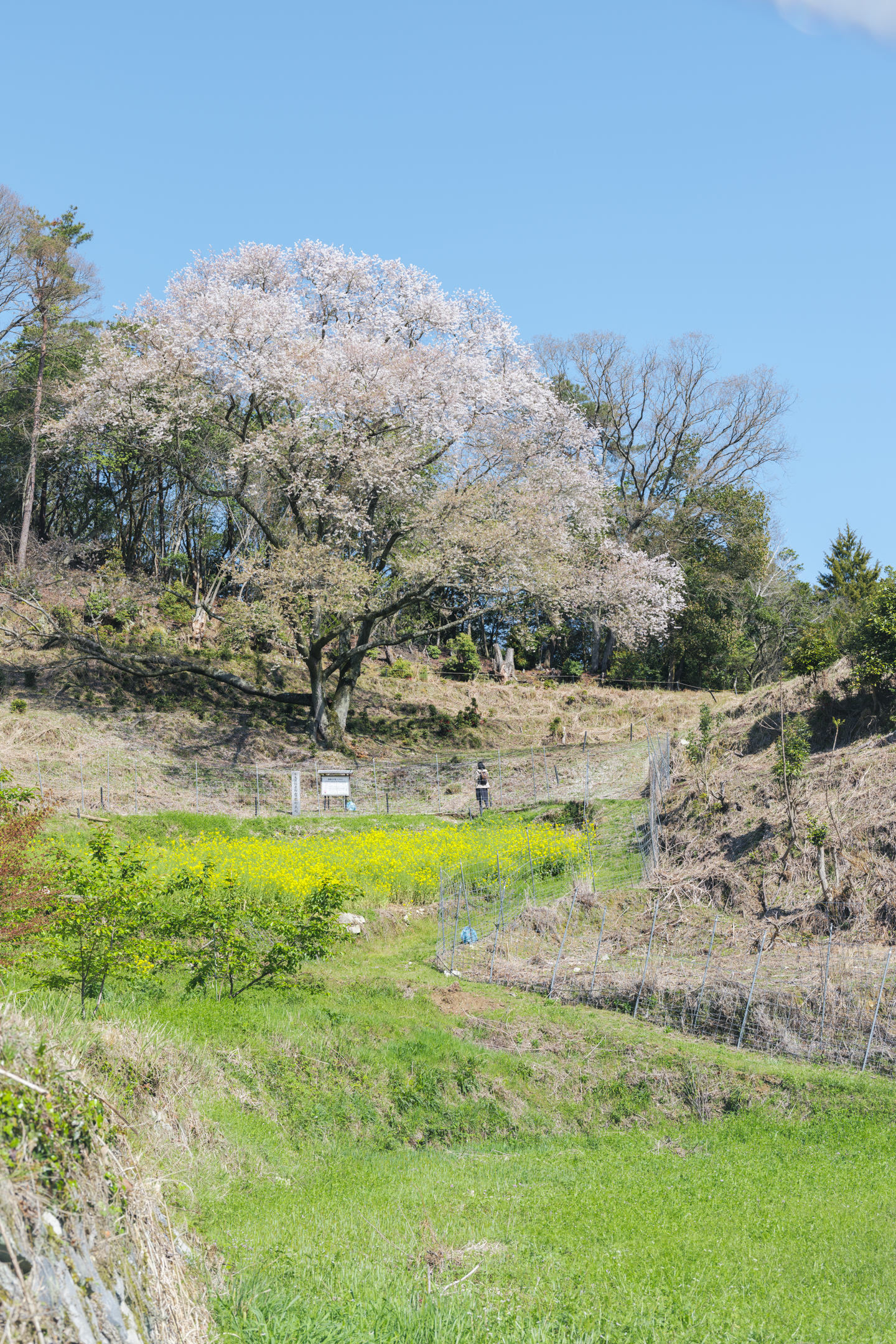
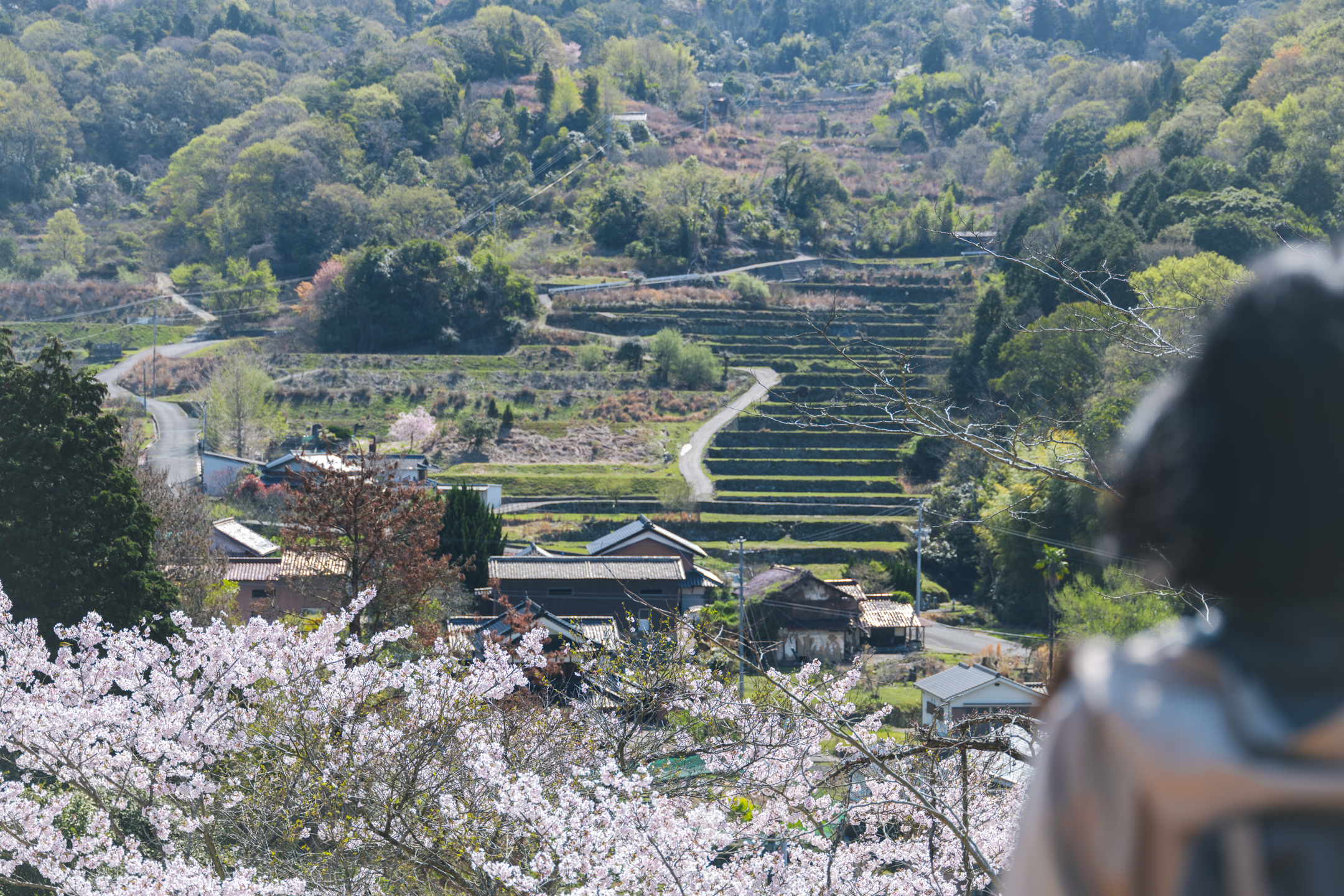
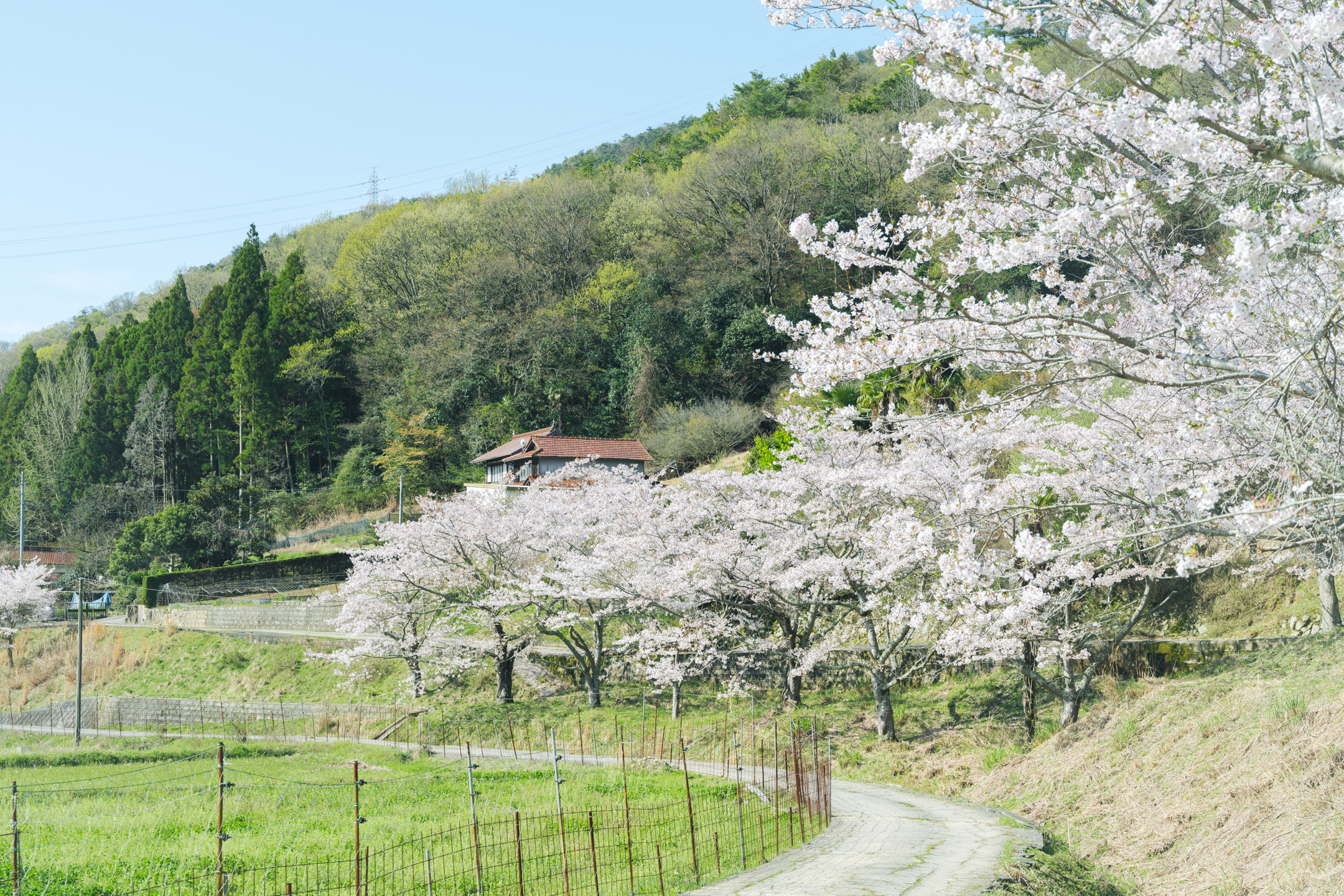
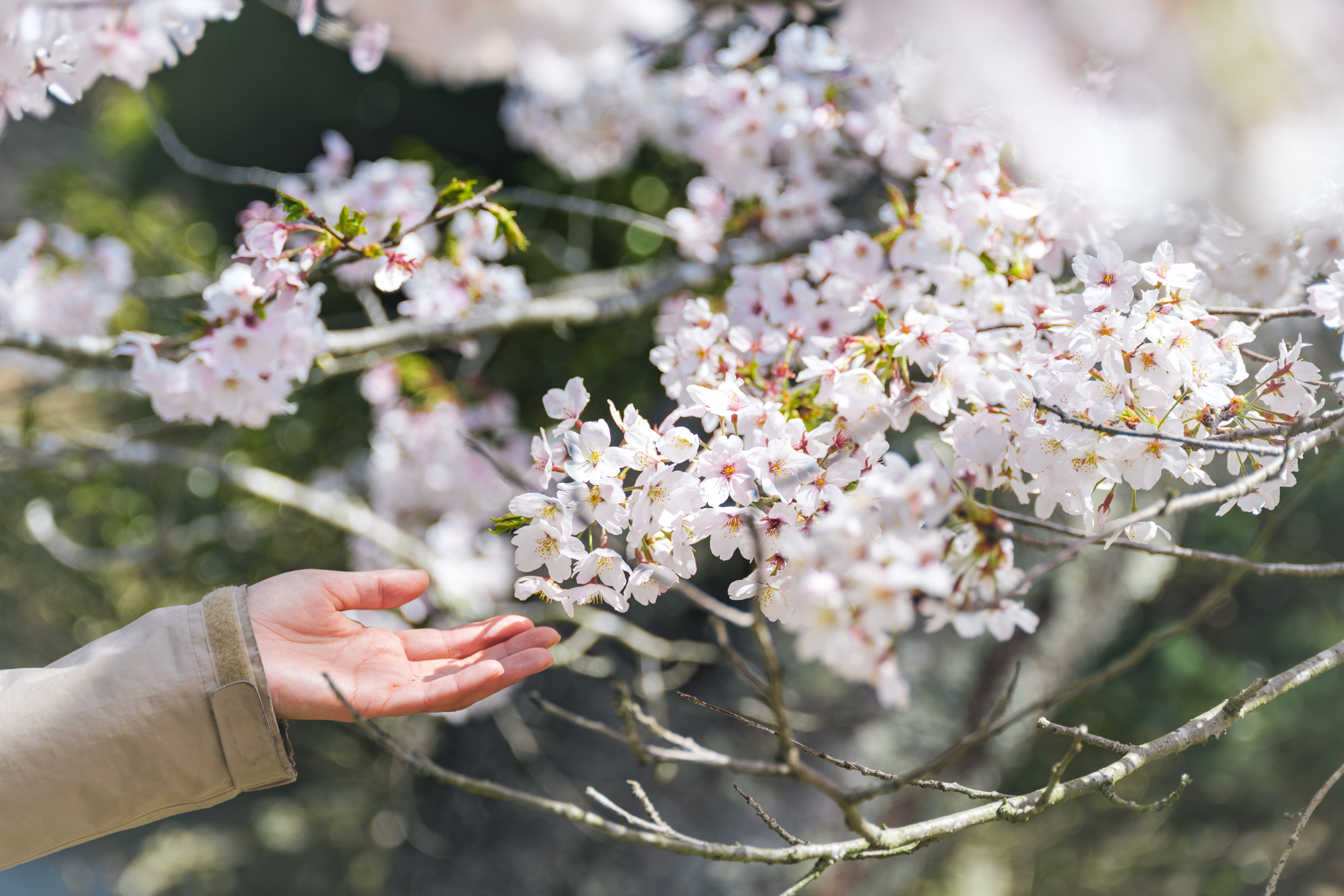
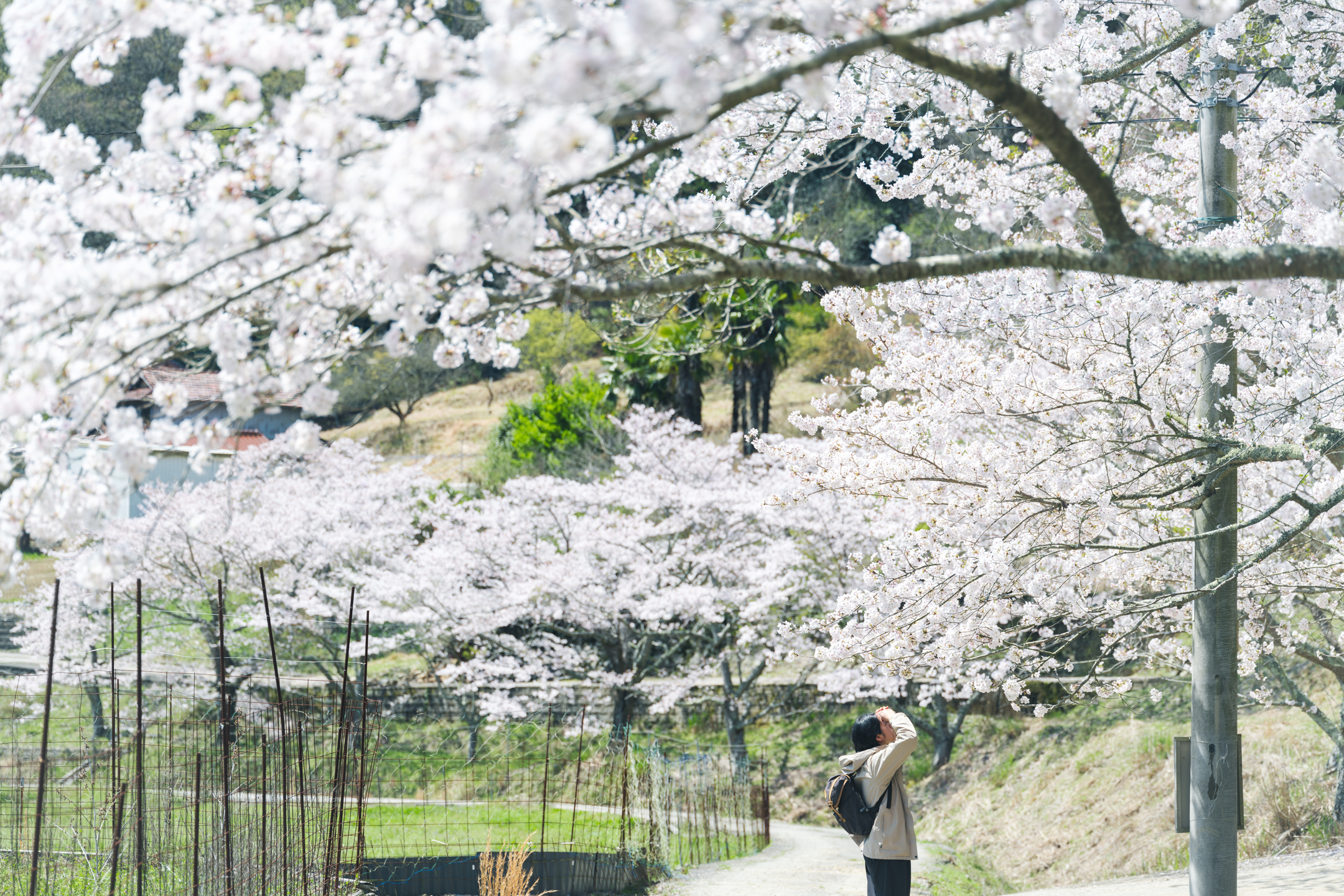
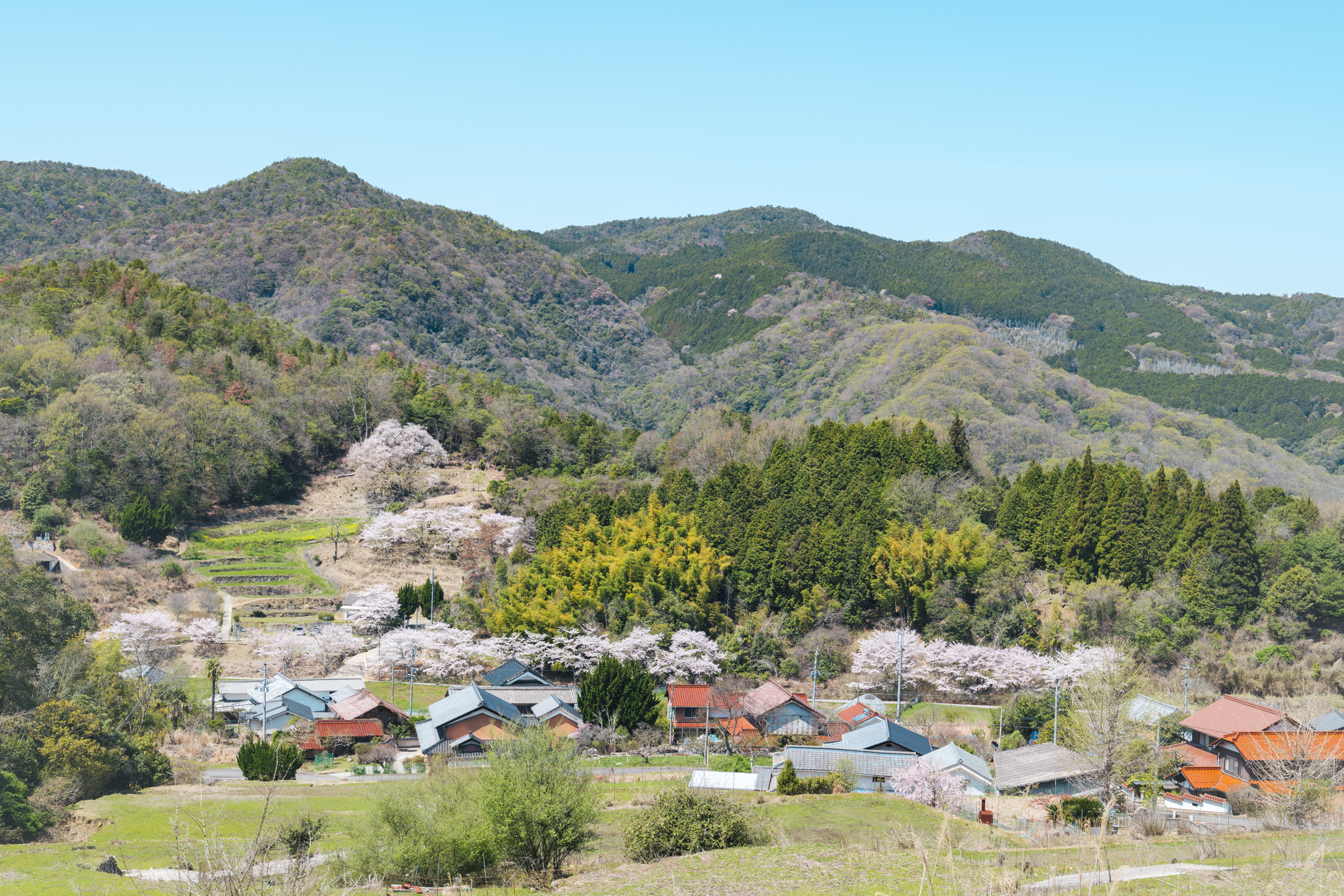
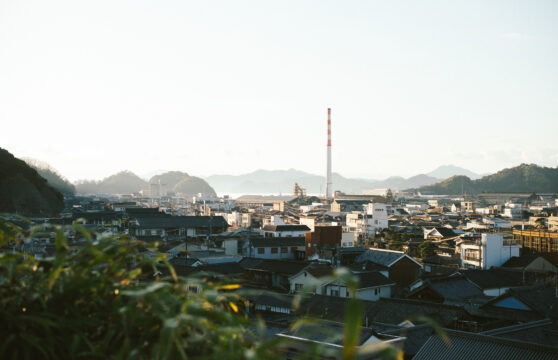
The route from National Route 185 to the giant cherry tree is a narrow mountain road—enough to make first-time visitors feel a bit uneasy. But don’t worry. Drive on for about 10 minutes, and you’ll arrive in the beautiful mountain village of Sukune. Park in the former schoolyard (now a parking lot) in front of the community hall—once an elementary school—then look up toward the mountain to find a magnificent cherry tree rising proudly, as if watching over the area. This “giant cherry tree” is carefully cared for, led by the Sukune Giant Cherry Tree Preservation Society formed by local residents, who handle tasks such as mowing, condition checks, and maintenance.
According to Ryutaro Hara, secretary-general of the preservation society, it was actually his ancestors who planted this cherry tree. “I’ve heard they received a sapling from a local temple called Hosen-ji and planted it in a corner of the field,” says Hara. This area used to be terraced fields where soybeans, azuki beans, and tobacco were grown. It’s easy to picture people finding comfort in these blossoms between their daily tasks. Around it, Somei-yoshino and Kawazu cherry trees, as well as rapeseed flowers, have been planted, making the area feel more vibrant with each passing year.
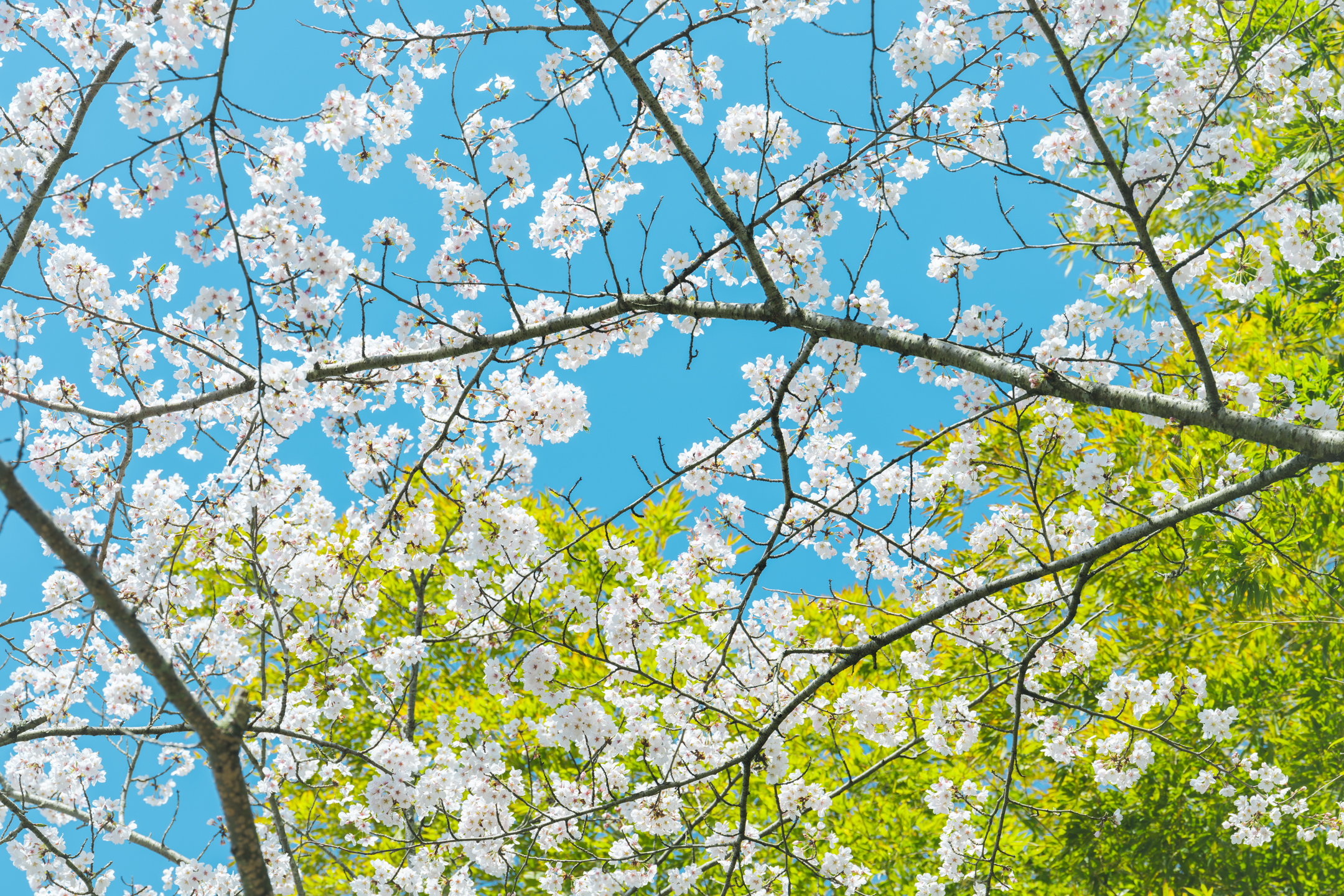
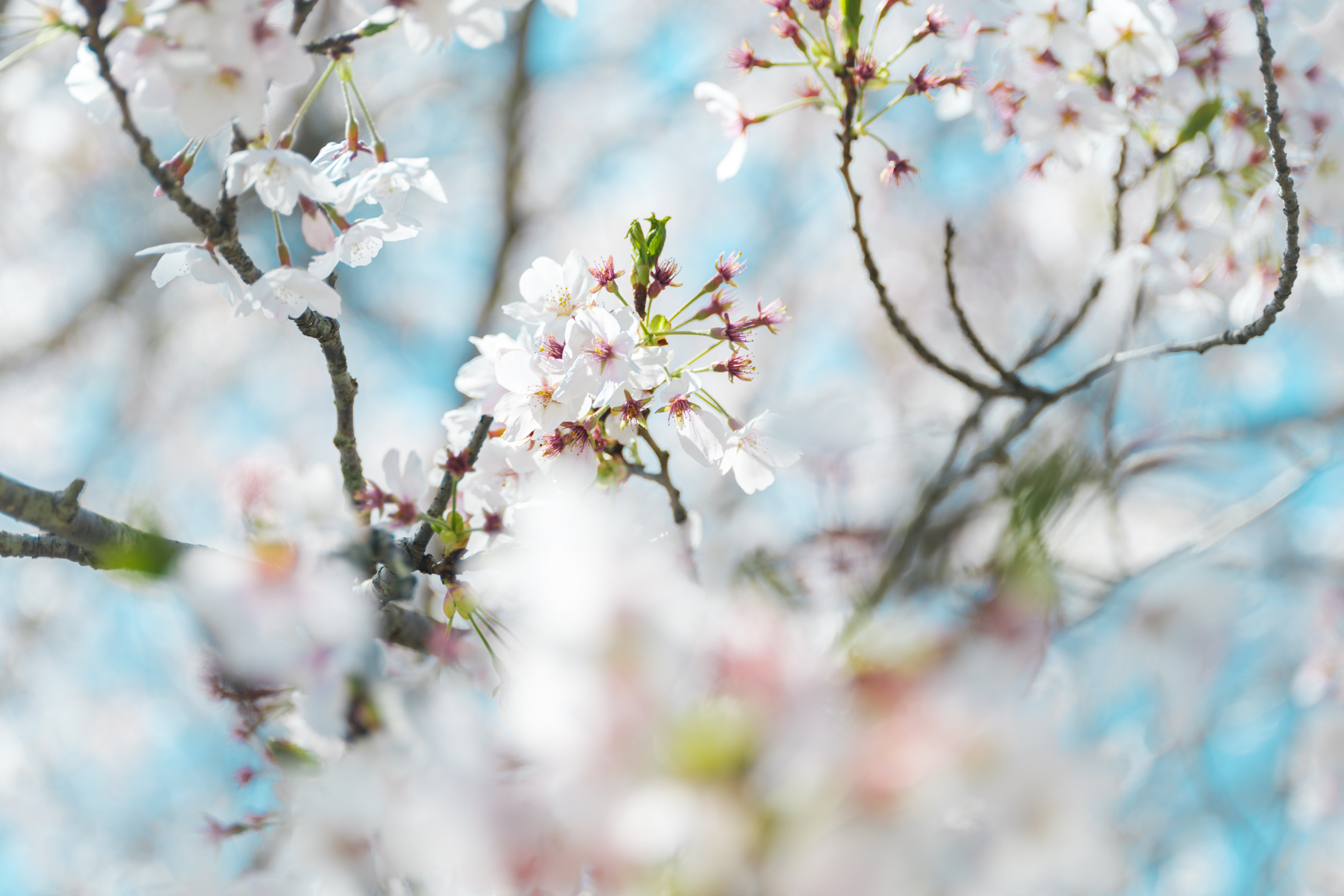
The Edo-higan is also known as a parent tree of the Somei-yoshino. Its blossoms are small and pale pink—delicate, yet with the presence of a wild species. Its clump-form growth with four main trunks, its age, the rarity of its coastal habitat, and the dedicated care by local residents all contributed to its designation as a city Important Cultural Property. One of its trunks reportedly fell in 2023 due to decay, but for the Edo-higan, that may simply be a way to survive. As it has in the past—and will continue to do—it will keep time together with the community as a lasting local symbol.