02 Okunoshima War Ruins
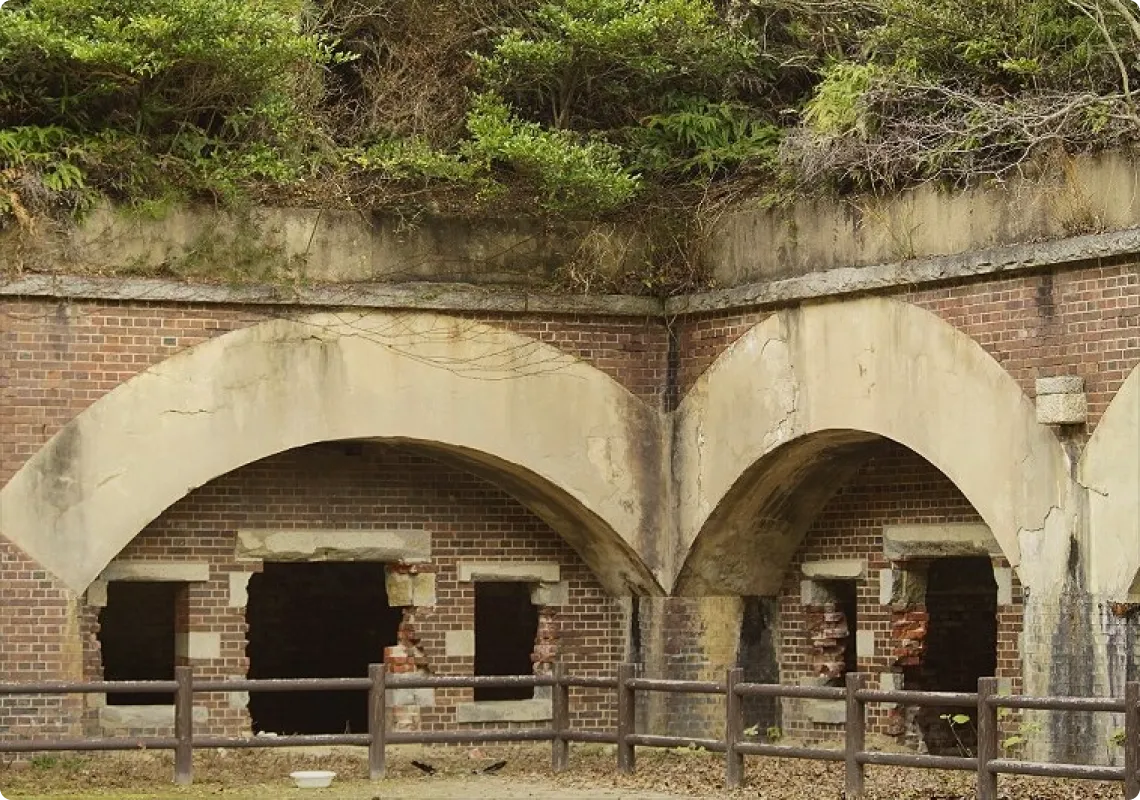
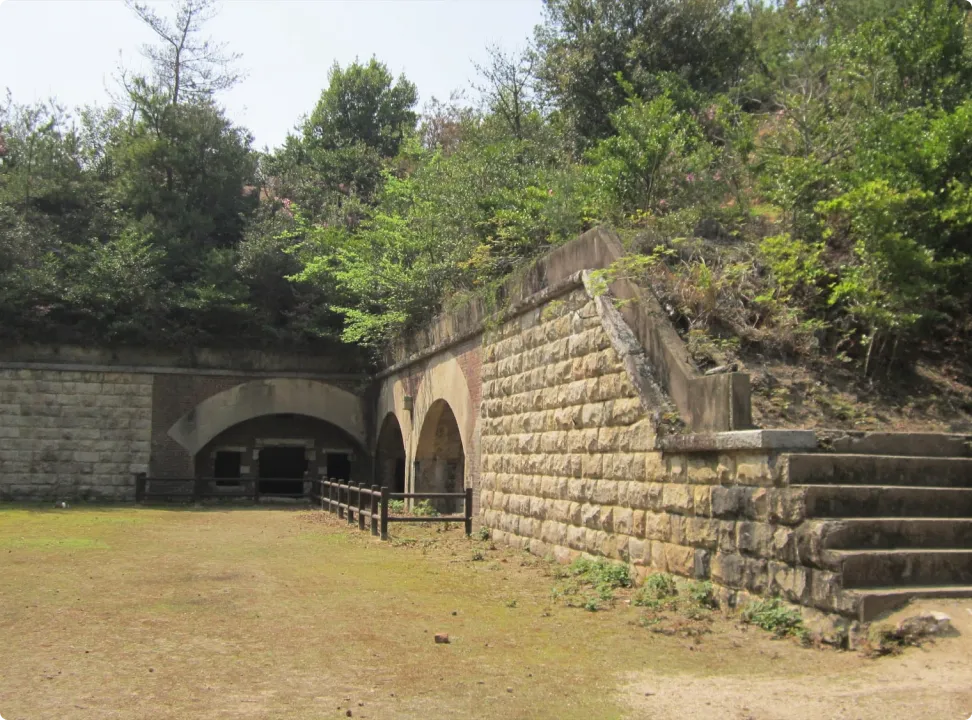
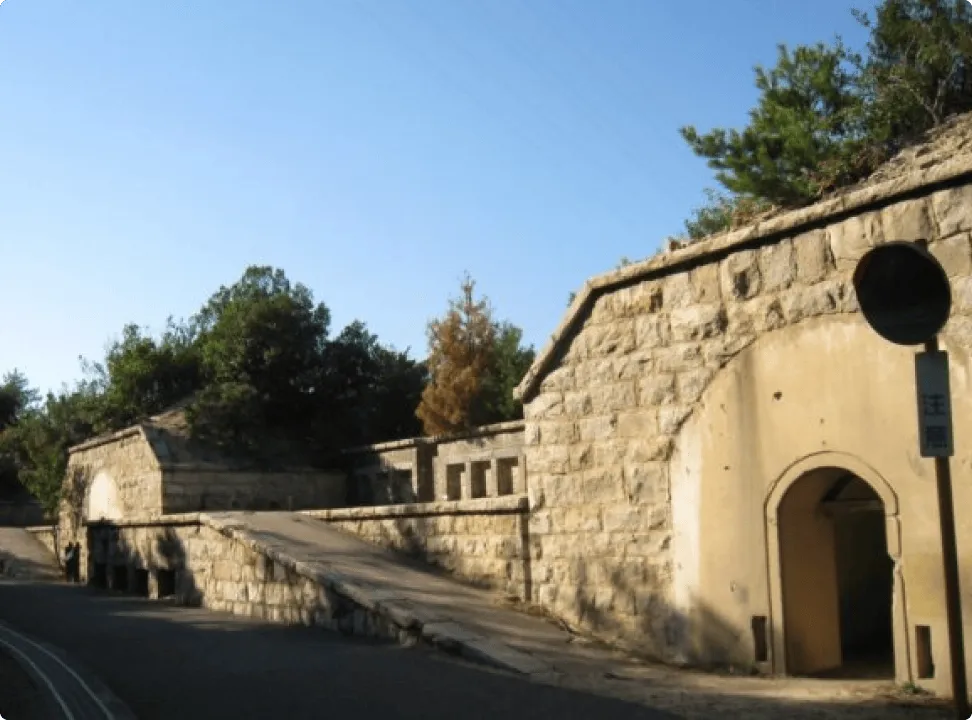
Old brick battery ruins remaining on Okunoshima.

Okunoshima War Ruins

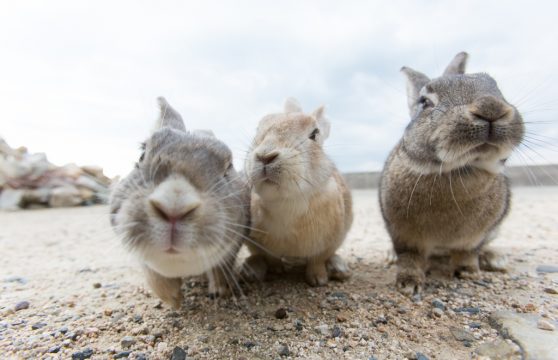
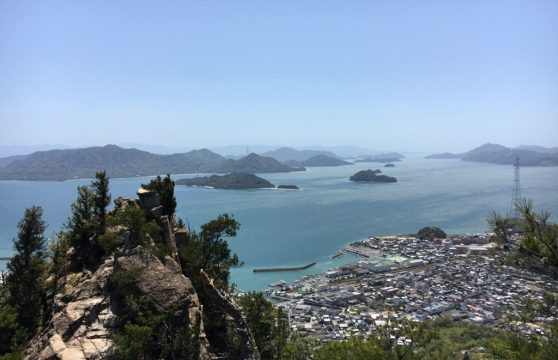
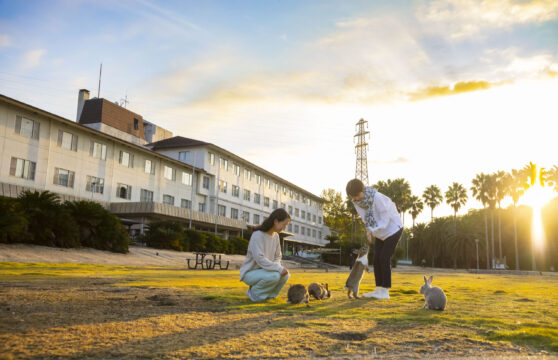
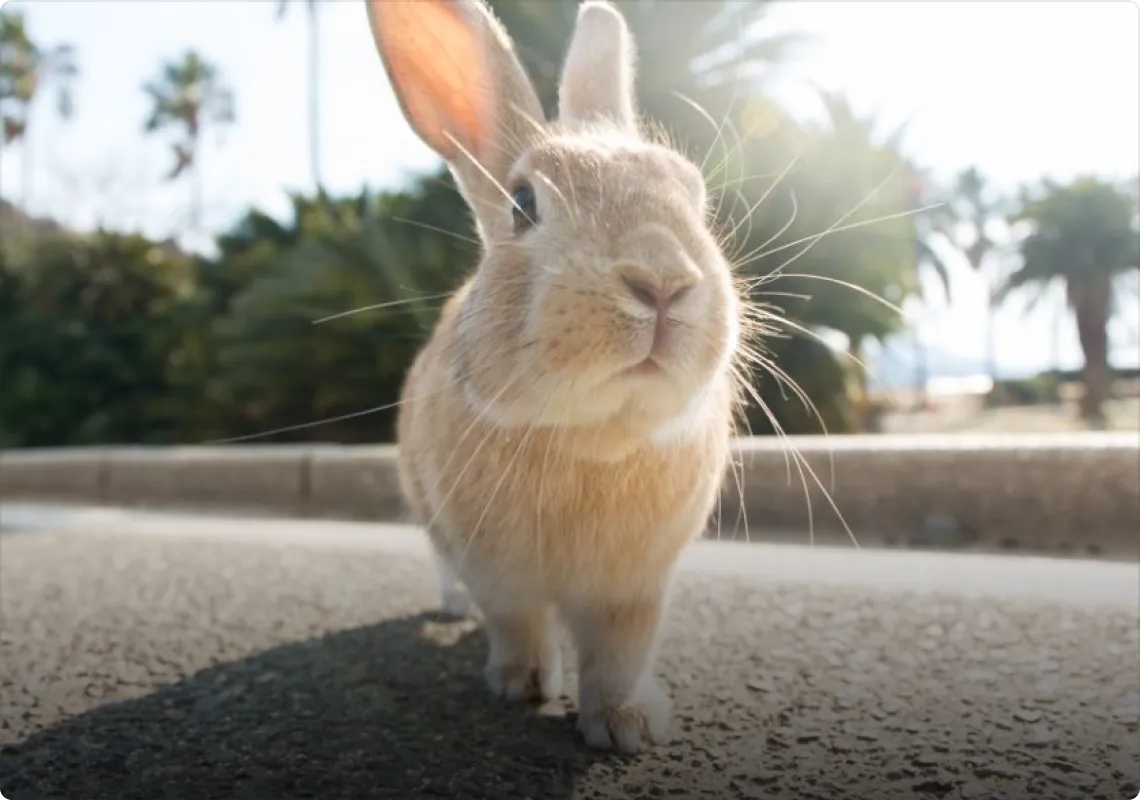
Floating in the calm Seto Inland Sea, Okunoshima is an island where many adorable rabbits welcome you.

However, behind its current appearance as a place of “light,” there is a deeply engraved history of “shadows” from a time when its very existence was erased from Japanese maps.

This was the era of war, when poison gas was manufactured in secret. Quietly standing brick buildings and moss-covered concrete structures remain today.

In between gentle moments spent with the rabbits, why not stop for a moment and listen to the story of the “shadows” this island has kept hidden?

Why Was It “Erased from the Map”?

From 1929 until the end of the war, Okunoshima served as a poison gas manufacturing base for the Imperial Japanese Army. Poison gases such as mustard gas (yperite) and lewisite were produced here in secret.

The reality of chemical warfare was strictly concealed, and the secrecy was so thorough that the island was even removed from maps. It is said that those working on the island at the time were not allowed to reveal the nature of their work even to their families.

A heavy history is engraved on this island, one that is unimaginable from the peaceful landscape seen today.

Exploring the “Shadows” Remaining on the Island – Major War Ruins

Ruins that vividly convey the memories of that time are still scattered throughout the island.

They are “historical witnesses” that we should visit to reaffirm the preciousness of peace.

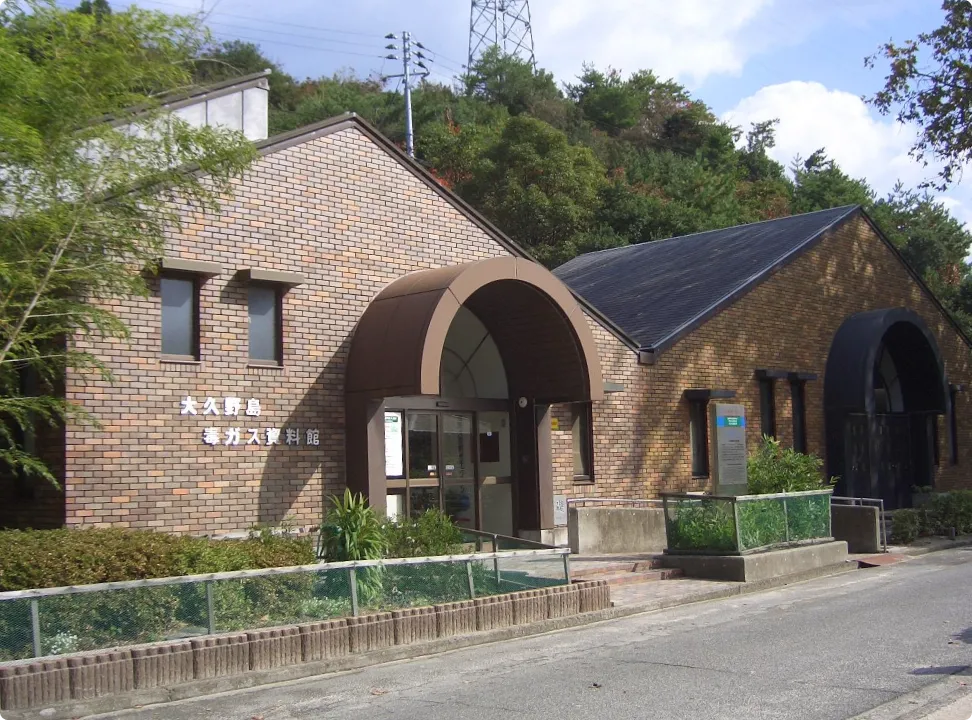
Exterior of the Okunoshima Poison Gas Museum
A massive piece of equipment used in poison gas production, on display inside the museum
01 / 02

1. Okunoshima Poison Gas Museum

Completed in 1988, this museum was built to pass down the tragic history of secret poison gas production on Okunoshima and the realities of the war to future generations. It displays valuable materials regarding the damage caused by gas production and the island’s past as a place erased from maps, serving as a place of learning that reaffirms the importance of peace. This is the first place you should visit when touring the ruins.

An arched concrete ruin covered in vegetation, set into the ground like a semi-basement, with a red information sign standing in front

2. Former Automatic Exchange Room (Former Communication Trench)

This was a sturdy, camouflaged trench built to prepare for enemy air raids. It housed an automatic telephone exchange for use in emergencies. The yellow and green concrete that remains today shows how the camouflage looked at the time.

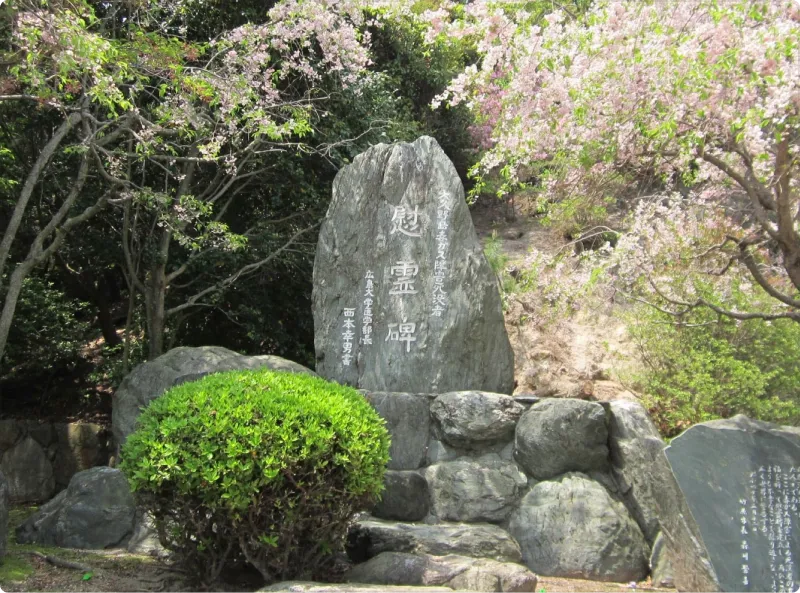
A stone monument engraved with

3. Cenotaph for the Victims of Poison Gas on Okunoshima

This monument contains a register of the names of people who died while engaged in the dangerous and harsh production of poison gas or post-war disposal. A memorial service is held every October to vow that such tragic damage will never be repeated. Next to the cenotaph is a declaration inscribed with the thoughts of those who passed away from poison gas-related illnesses.

An old Shinto shrine torii gate standing quietly in the forest
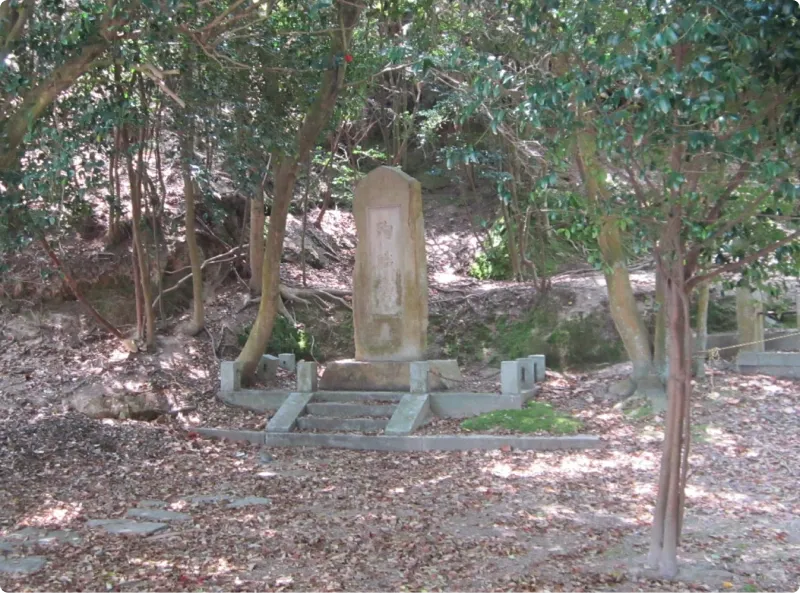
An old, mossy monument to those who died in the line of duty, surrounded by trees
01 / 02

4. Okunoshima Shrine, Plaza in front of the Shrine, and Monument to the Deceased

When the poison gas factory opened in 1929, employees restored a shrine that was located near the current Kyukamura lodging, renamed it “Okunoshima Shrine,” and moved it to its current location. Various events (such as Kigensetsu and Tenchosetsu) and ceremonies (such as entrance and graduation ceremonies) were held on the grounds. In 1937, a monument to those who died during poison gas production was erected within the shrine precincts.

  • Entry is prohibited for safety reasons.
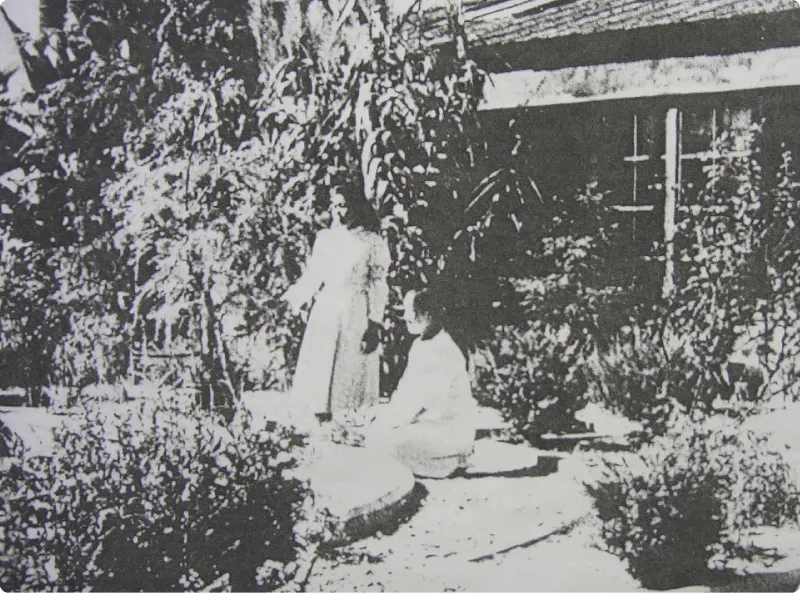
A display of black-and-white photographs showing people and scenes from the time, conveying the state of the medical room during the war
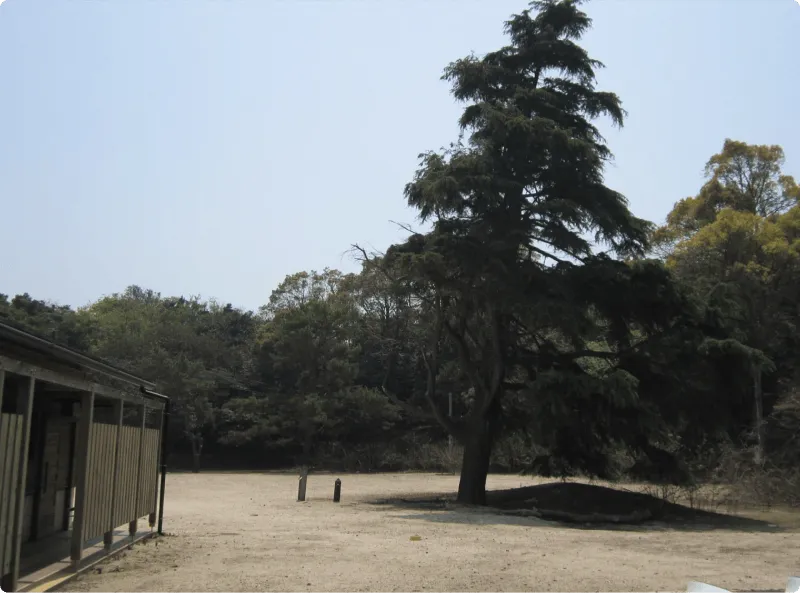
A large tree standing in the center of a plaza
01 / 02

5. Former Medical Room Site

Initially just a small clinic, an inpatient ward was built around 1937, and it became a full-scale hospital with departments for dentistry, internal medicine, surgery, ophthalmology, and otolaryngology, as well as an X-ray room, a poison gas treatment room, and wards (30 beds). Today, it is a plaza in front of the swimming beach, and water faucets used at the time still remain.

Wooden handrails and stairs installed along a slope, with an old stone boundary marker engraved with

6. Army Stone Pillars and Boundary Lines

Stone pillars inscribed with phrases like “Army Jurisdiction” remain near the stone steps leading to the lighthouse. These indicate that after the island became military land, the lighthouse and the poison gas factory grounds were strictly separated by barbed wire.

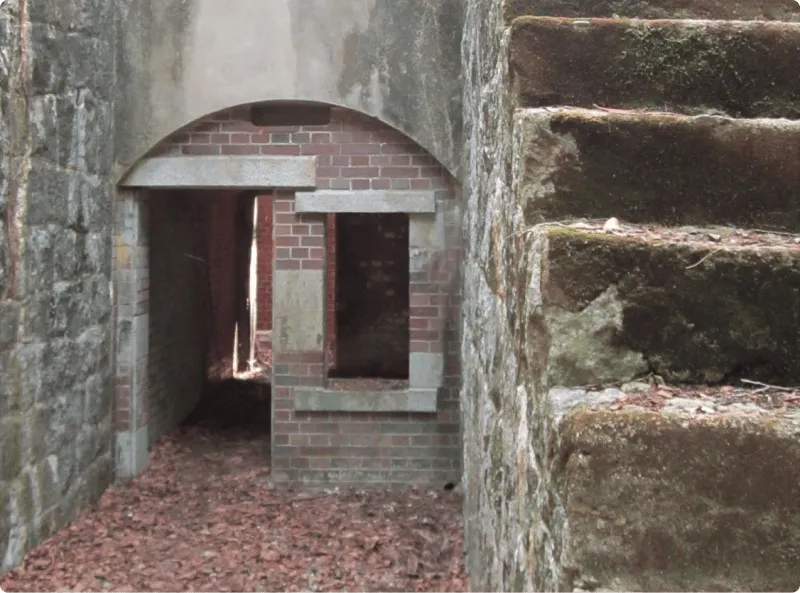
The entrance to the Southern Searchlight Site, resembling a narrow passage made of brick and concrete
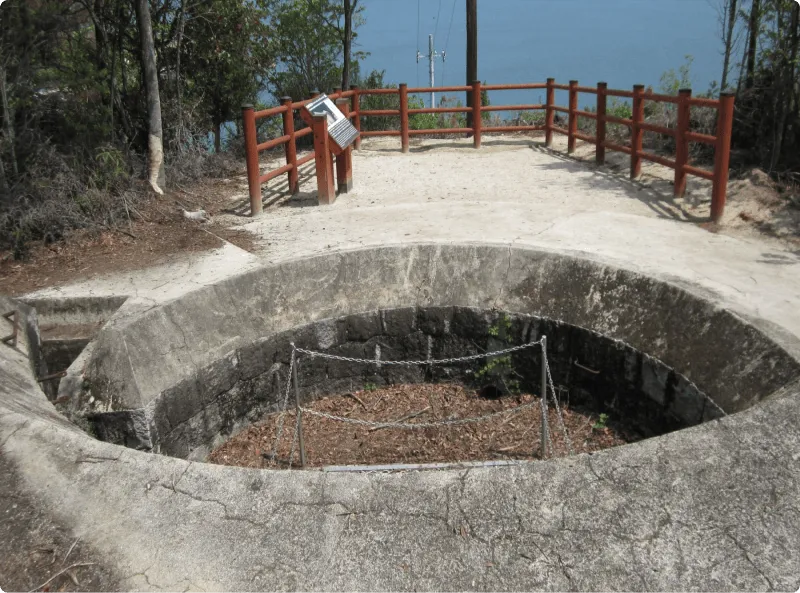
A circular concrete ruin of the Southern Searchlight Site with an open top (part of the former battery site)
01 / 02

7. Former Southern Searchlight Site

This is where a searchlight was placed during the Geiyo Fortress era (around 1904). Its role was to illuminate the sea surface at night to detect enemy ships. Today, the light well and the room below remain.

Multiple air-raid shelters dug into a steep mountainside. The entrances are reinforced with concrete or stone walls, surrounded by lush trees and some pink flowers in bloom.

8. Former Air-Raid Shelter Sites

During the war, about 50 air-raid shelters were dug on the island. They were created to store poison gas and related materials, and stone-lined entrances can still be seen in various places across the island today.

An old white single-story building (Laboratory/Inspection Room) standing against a mountain backdrop
An old black-and-white photograph showing the Laboratory and Inspection Room during the war
01 / 02

9. Laboratory and Inspection Room

The white building was the “Laboratory” where poison gas research and development took place, and the adjacent gray wing was the “Inspection Room” where tests were conducted to check the effectiveness of the gas. These two buildings can be seen in old photographs from the time.

  • Entry is prohibited for safety reasons.
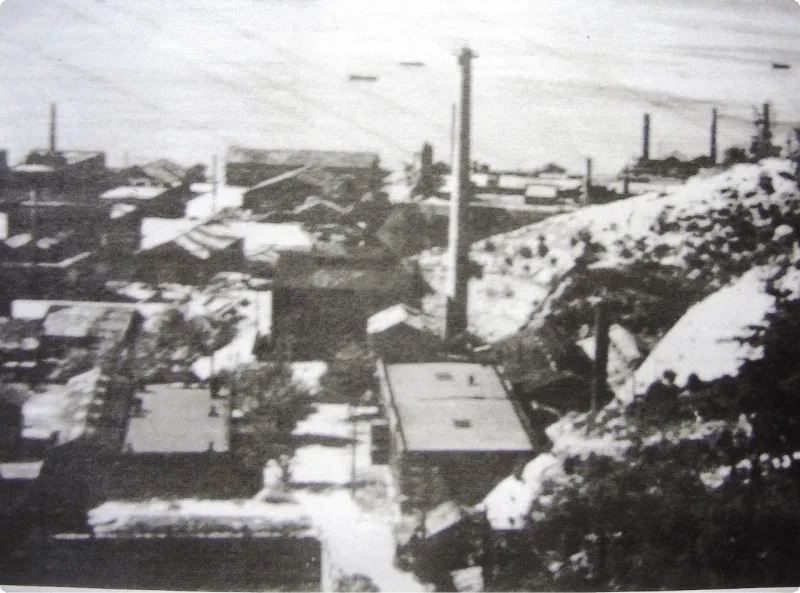
A black-and-white photograph of the factory complex that was a major hub for poison gas production during the war. Numerous chimneys and large buildings are lined up along the coast.

10. Former Sankenya Factory Complex Site

This is the site of the factory area that was the center of poison gas production. It was lined with buildings such as manufacturing plants for blister agents (mustard gas and lewisite), sneezing agents, and cyanide gas, as well as filling rooms, a boiler house, and repair shops. After the war, the factories were dismantled, and the area is now a plaza.

11. Former Poison Gas Storehouse Sites

These are poison gas storehouses scattered across the island. Many are covered with thick concrete walls and have a unique round, dome-like shape.

Standing in front of a storehouse where the air feels chilly, you may find yourself at a loss for words at the heavy reality of what took place here.

A brick poison gas storehouse ruin covered in plants, featuring two large arched openings
A close-up of a poison gas storehouse ruin with exposed concrete
01 / 05
Former Nagaura Poison Gas Storehouse Site
  • Former Nagaura Poison Gas Storehouse Site

    This was the largest storehouse on the island, and the ruins of massive storage tanks and concrete pedestals still remain. Six tanks, each capable of holding about 100 tons, were placed here. During post-war disposal, the walls were burned with flamethrowers to remove toxicity, and the blackened, scarred walls still tell the story of that grim time. After the war, the poison gas remaining here was dumped into the Pacific Ocean off the coast of Tosa.

  • Former Open-Air Storage Tank Site

    There are 32 pedestals where poison gas tanks were placed, indicating that a large amount of gas was stored here. The area is now a forest, but at the time it was a slightly elevated flat clearing. This storehouse was not a concrete room but a wooden building with a simple roof.

12. Former Battery Sites

The island also contains ruins of batteries built in the Meiji era as part of the Geiyo Fortress, prior to the production of poison gas.

Okunoshima first came into military focus in 1902, before the Russo-Japanese War, when the Geiyo Fortress was established and batteries were installed on the island. This shows that Okunoshima has been deeply involved with the military since long ago.

From a coastal defense base to a secret weapon manufacturing site—you can feel the layers of history as the island’s role transitioned over time.

A stone wall with a dark, tunnel-like entrance leading into the back
Ruins of a battery with multiple arched structures lined up at equal intervals along a stone wall
A passage with high stone walls where shadows and sunlight intersect
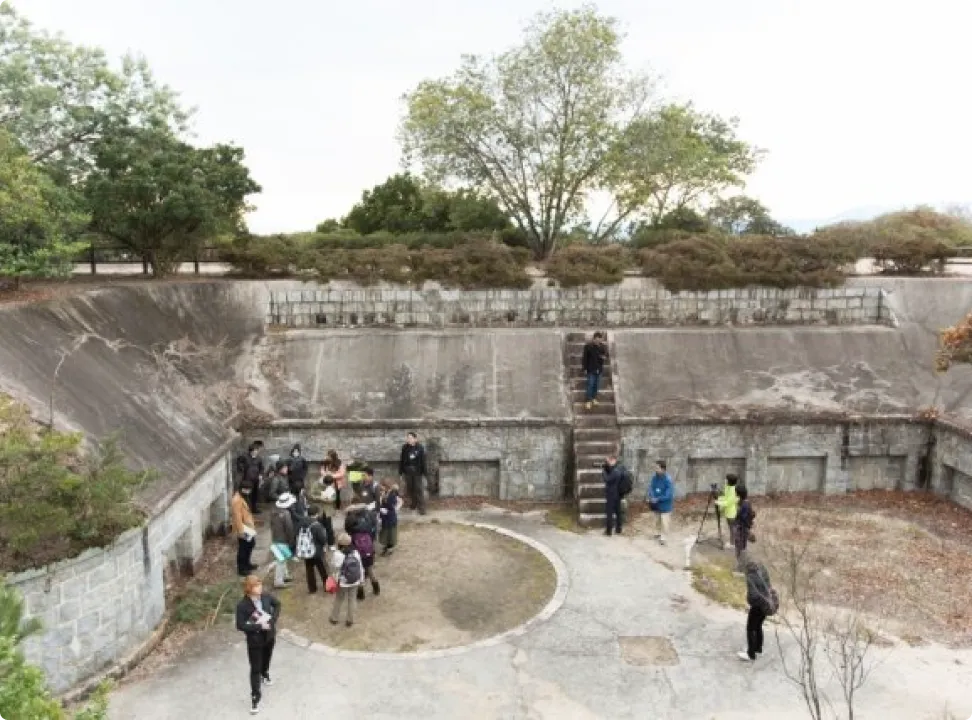
An overhead view of concrete wall ruins built to surround a circular plaza
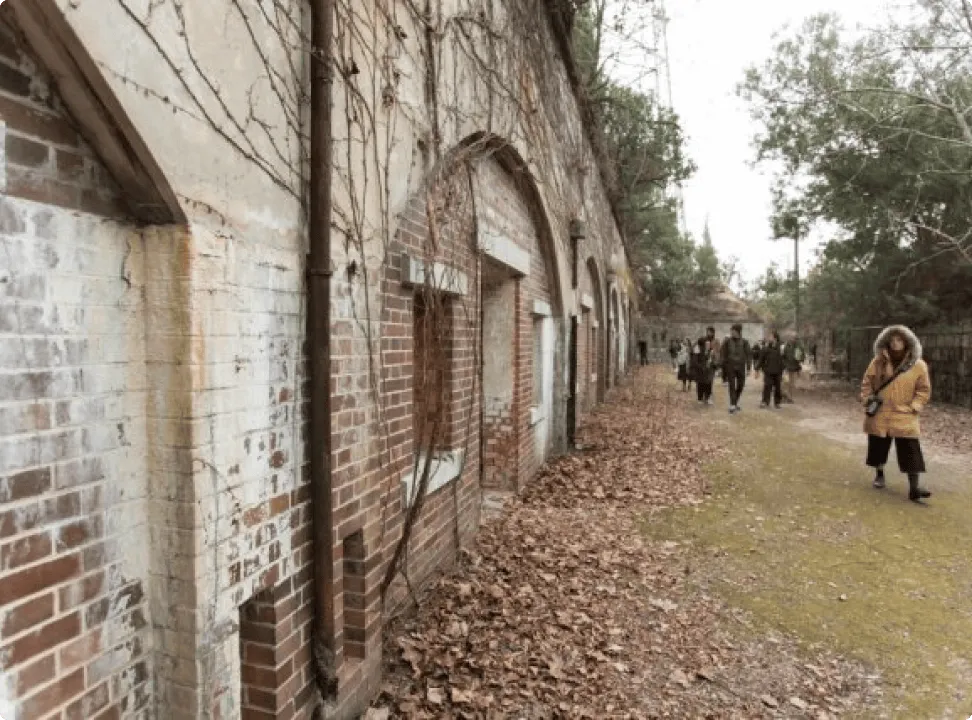
The exterior wall of a building where red brick and concrete discolored by age are mixed
01 / 05
Northern Battery Site
  • Northern Battery Site

    Eight cannons were installed at the Northern Battery. During the poison gas factory era, large poison gas tanks (lewisite made from arsenic) were placed here. Because the tanks were incinerated during post-war disposal, arsenic contamination was discovered in 1996, and the soil was cleaned in 1999.

  • Central Battery Ruins

    Six 28cm howitzers were placed at the Middle Battery during the Geiyo Fortress era. During the Russo-Japanese War, two of the six were transported to the Korean Peninsula and used in the attack on Port Arthur. There were also barracks where soldiers could nap. During the poison gas production period, these barracks were used to store poison gas products and raw materials. The ruins of the gun mounts and the barracks building still remain today.

13. Former Power Plant Site

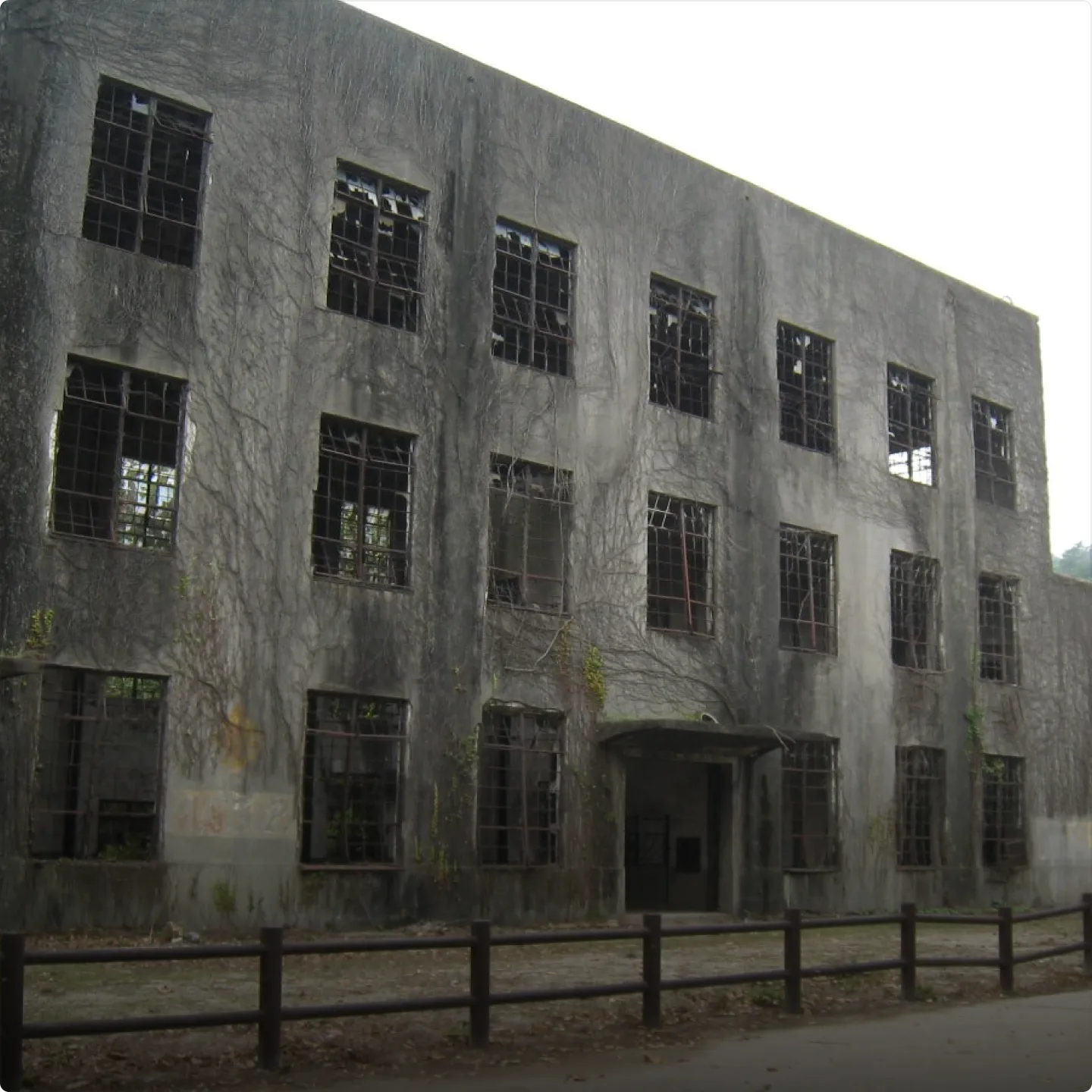
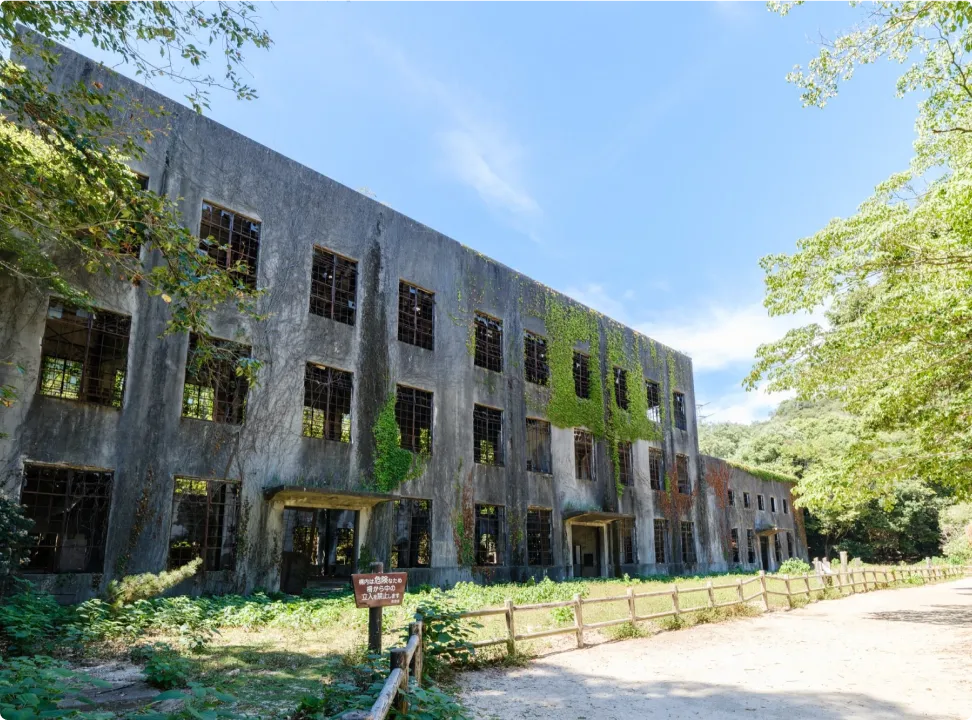
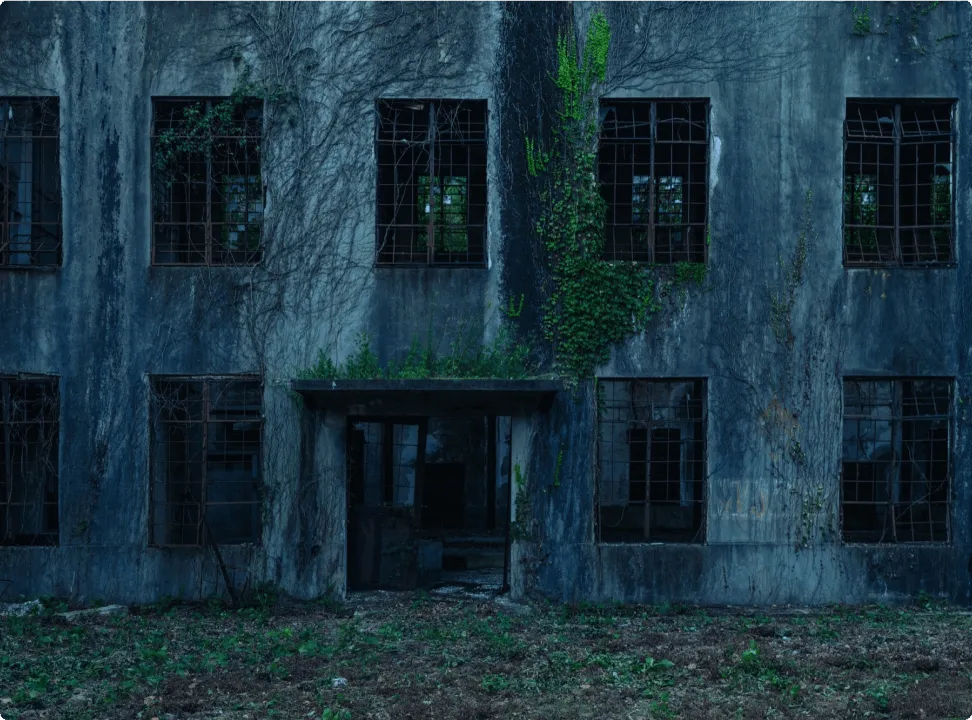
The ruins of a massive concrete power plant with only the window frames remaining (viewed from a low angle)
A full view of the ruined power plant surrounded by trees
The back of the three-story power plant ruins seen through a fence, with windows left wide open
01 / 03

Located near the Second Pier, this is a particularly large concrete building. It generated electricity using diesel generators powered by heavy oil. Initially, there were three 240V generators, but three more were added in 1933 and two more in 1934. Furthermore, in 1941, power was received from Tadanoumi via two 22KV submarine cables, supplementing the existing generation equipment. Before the end of the war, this building was also used by mobilized female students to test balloon bombs.

Entry to the interior is currently prohibited, but its powerful presence, standing tall even while covered in ivy, tells the story of how it was once the “heart” of the island.

A Journey to Know the Shadows and See the Light

Touring the war ruins of Okunoshima may not be an experience that is purely enjoyable.
However, not looking away from the “shadows” of the past and facing those facts with sincerity—
That is exactly what will make the “light” we enjoy today—our peaceful daily lives and the sparkling life of the rabbits hopping energetically around the island—feel deeper and more irreplaceable.

The story of light and shadow told by Okunoshima.

Please come and receive the message this island sends with your own eyes, ears, and heart.

This site is registered on wpml.org as a development site. Switch to a production site key to remove this banner.