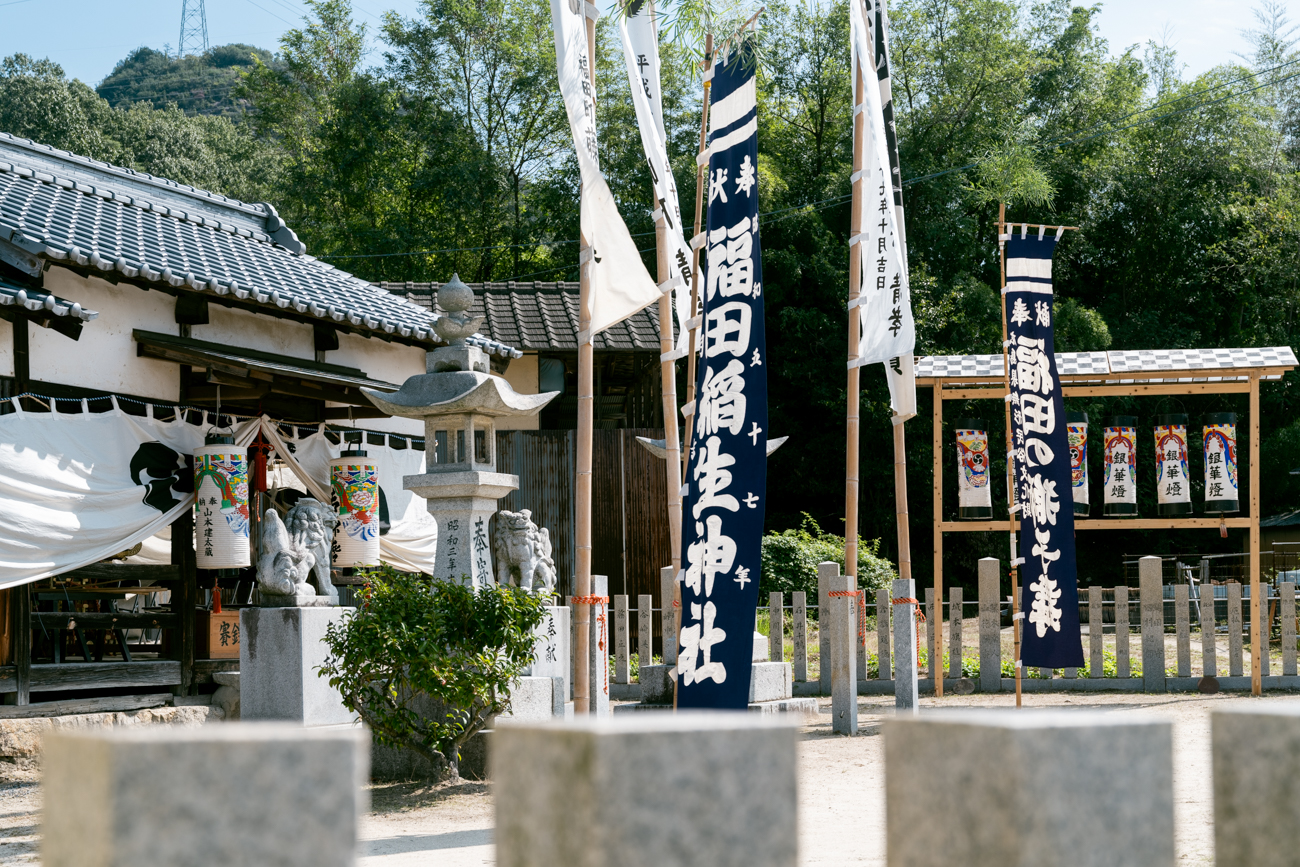
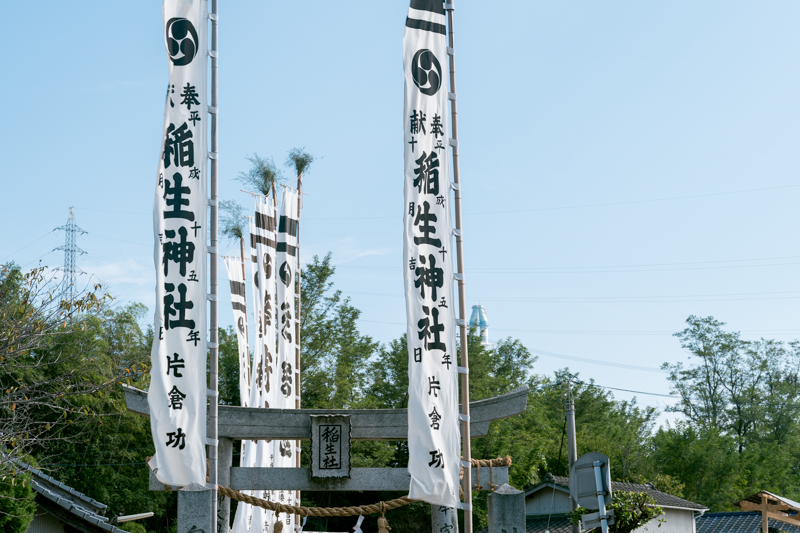
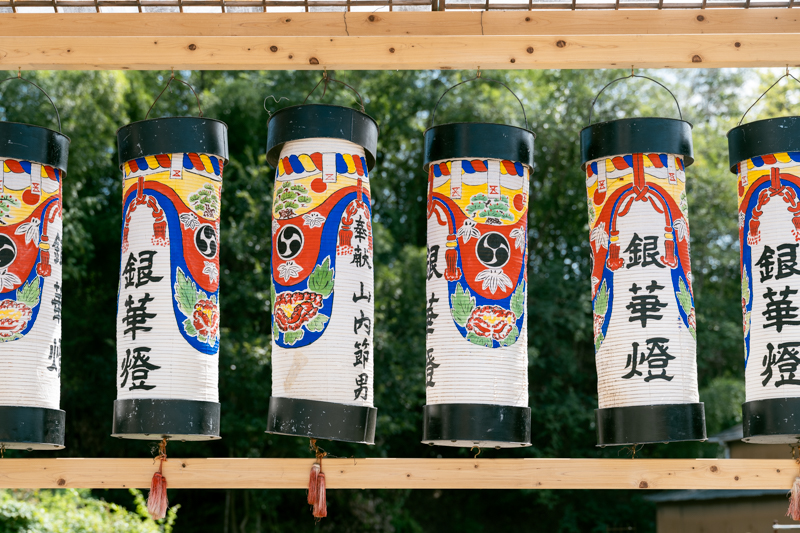
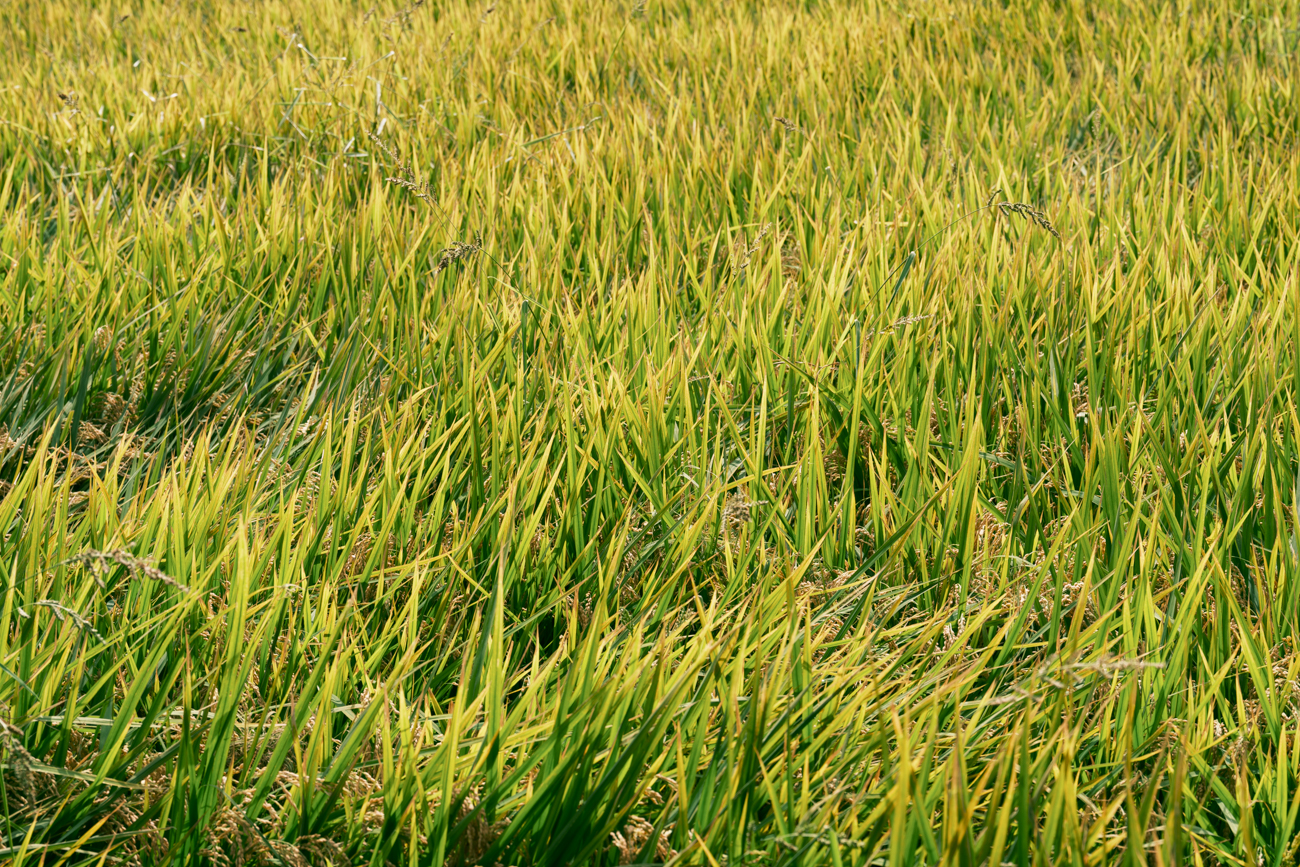
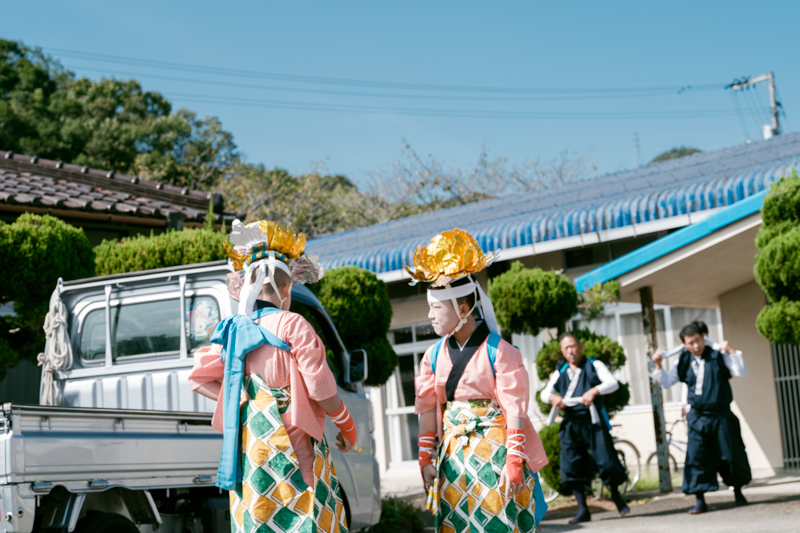
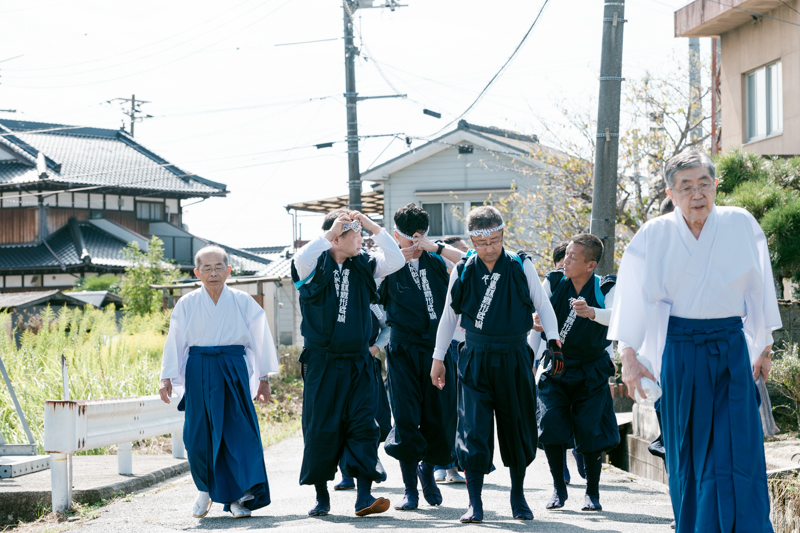
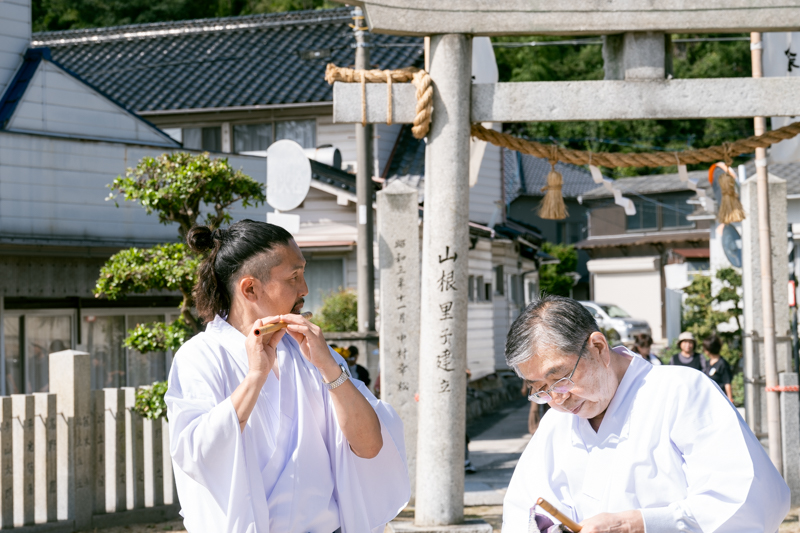
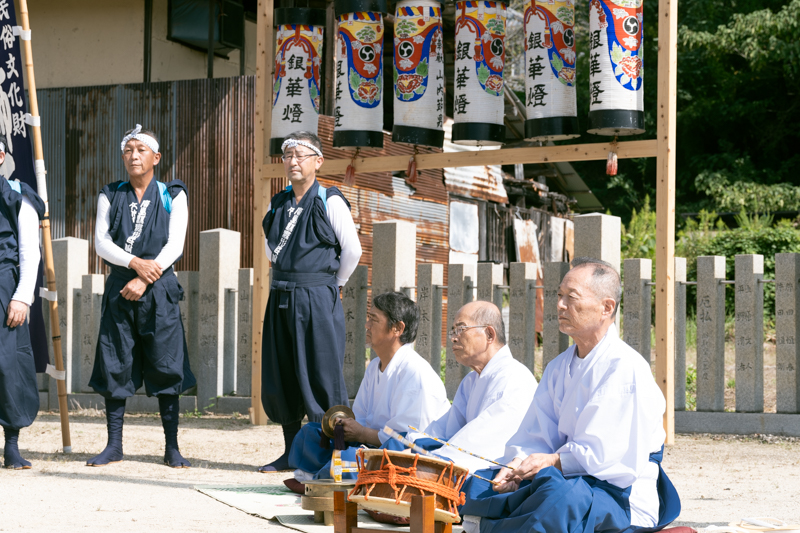
The first Sunday in October. As mornings and evenings turn chilly and the rice in the fields begins to glow golden, Fukuda Town’s Ino Shrine holds its autumn festival, where the “Fukuda Shishimai” is dedicated every year. Said to have been brought from Shikoku during the Edo period, this lion dance has been carefully preserved by the community for more than 300 years. It began, it’s said, when people troubled by natural disasters and epidemics dedicated the dance to pray for abundant harvests and the prosperity of the village. In 1981, it was designated an Intangible Folk Cultural Property of Hiroshima Prefecture, and today the tradition is carried on by the volunteer-based Fukuda Shishimai Preservation Society.
Boys play the drums in a wide range of styles
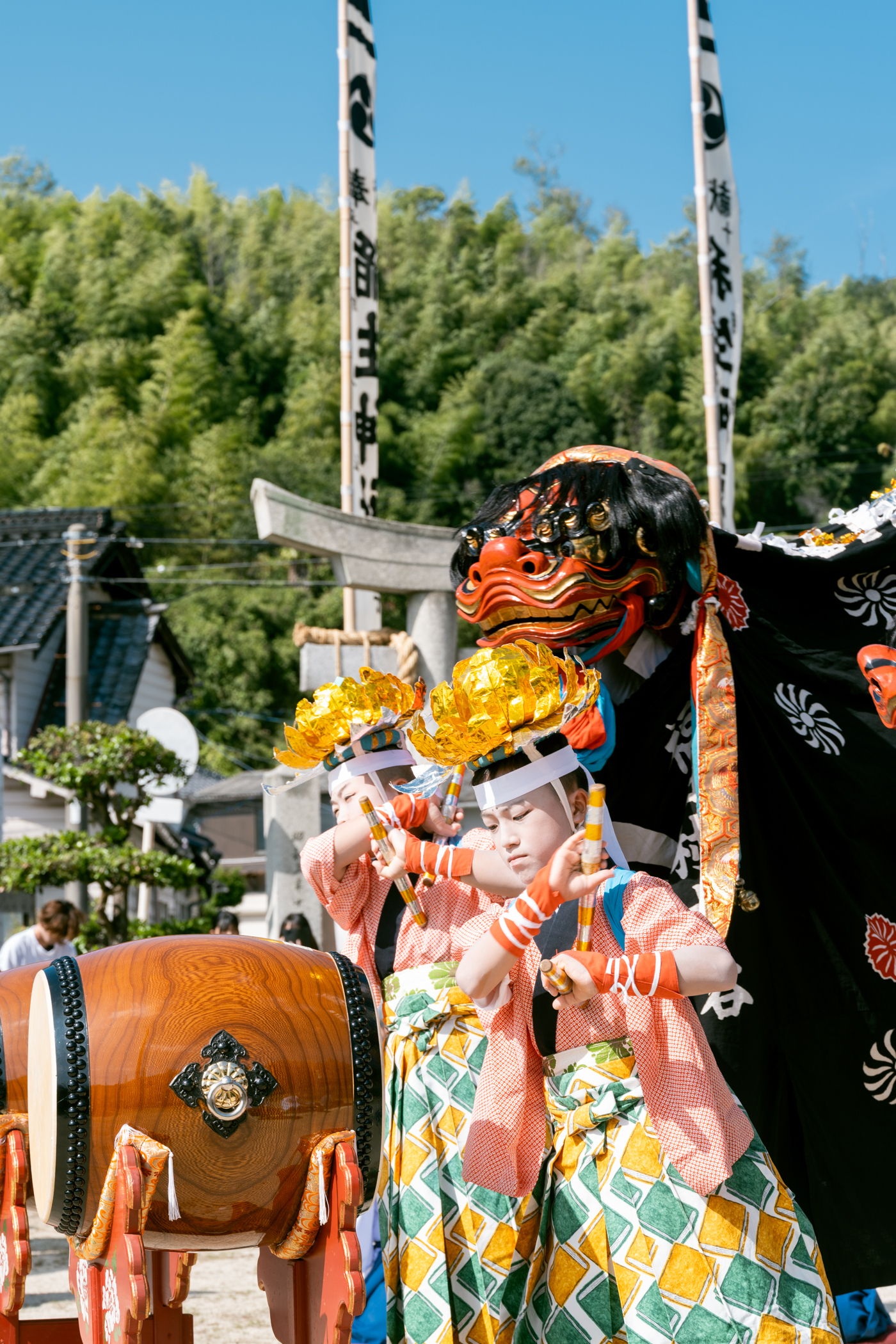
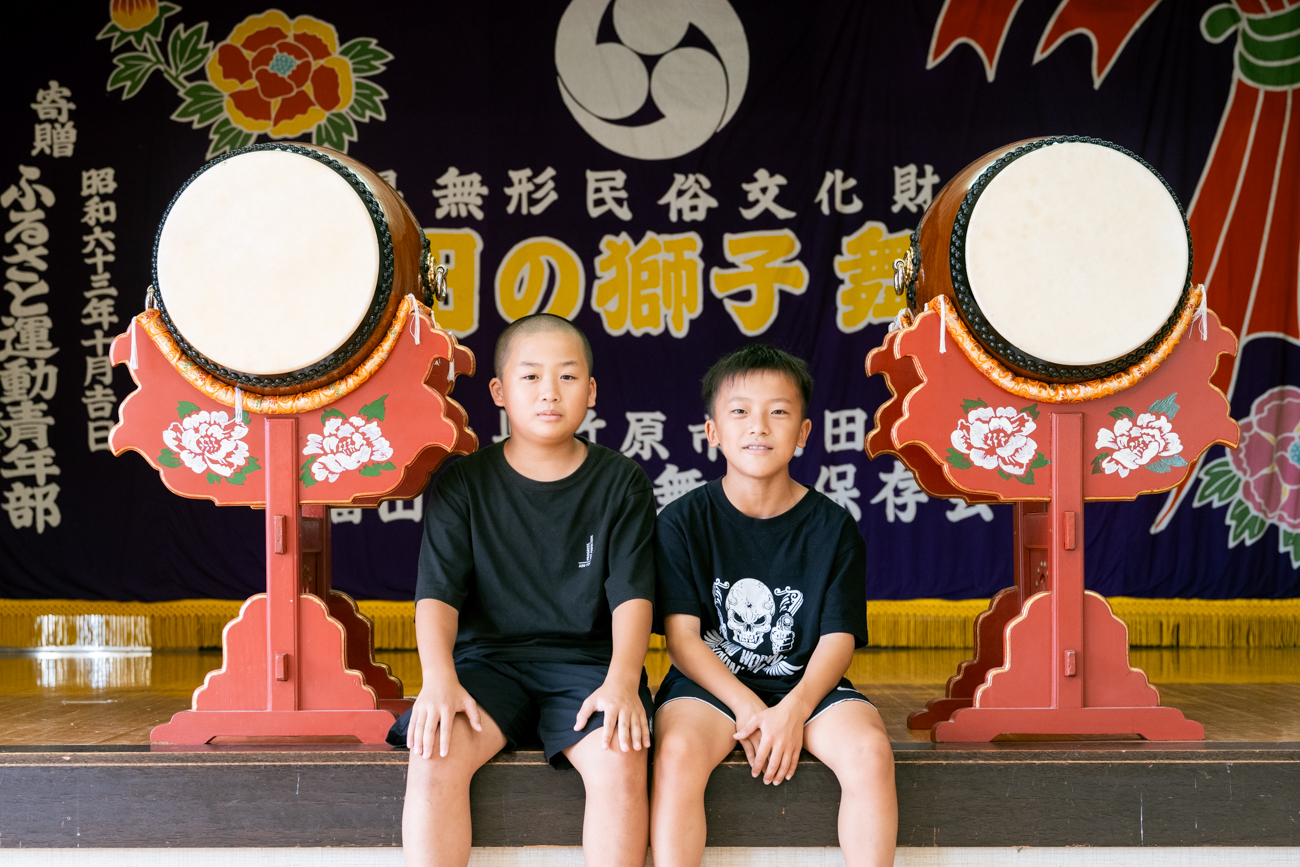
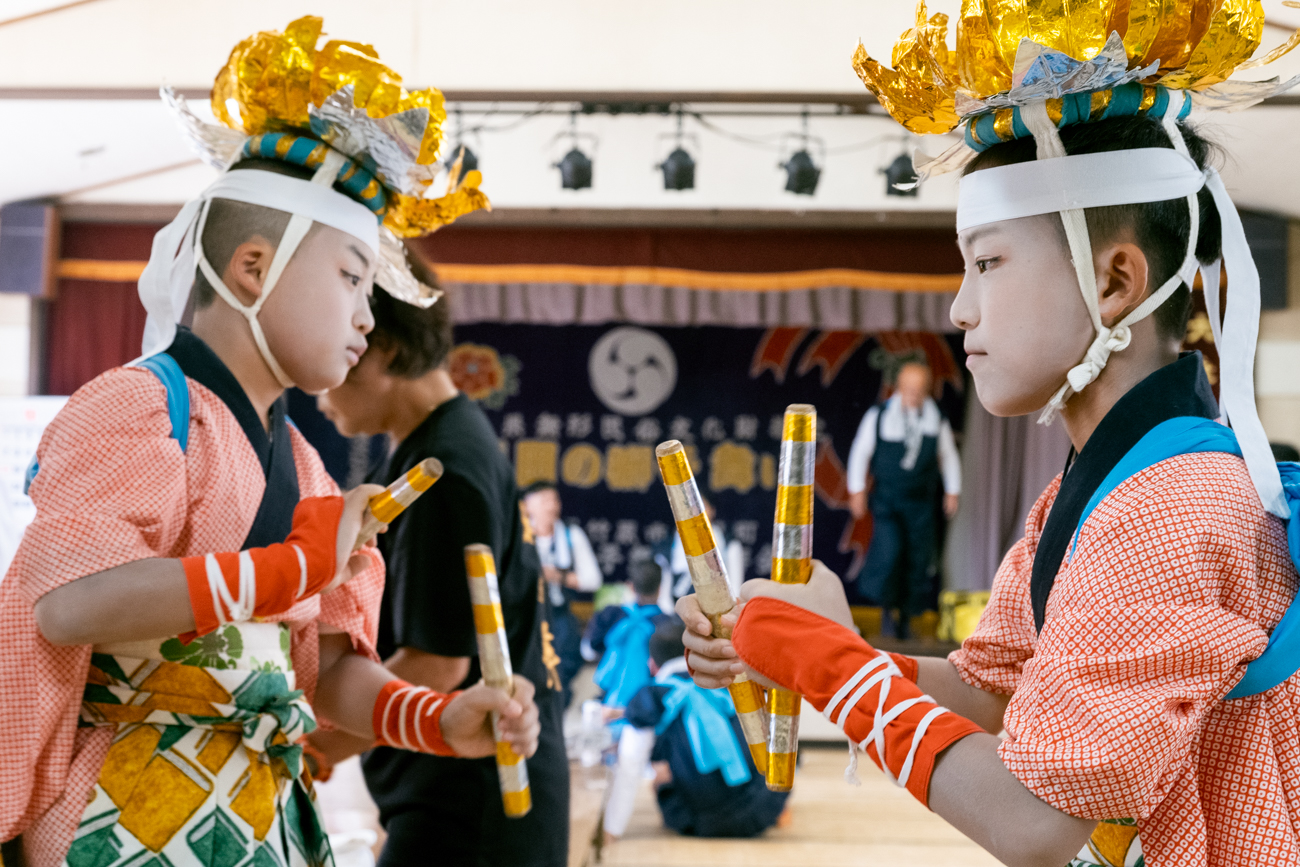
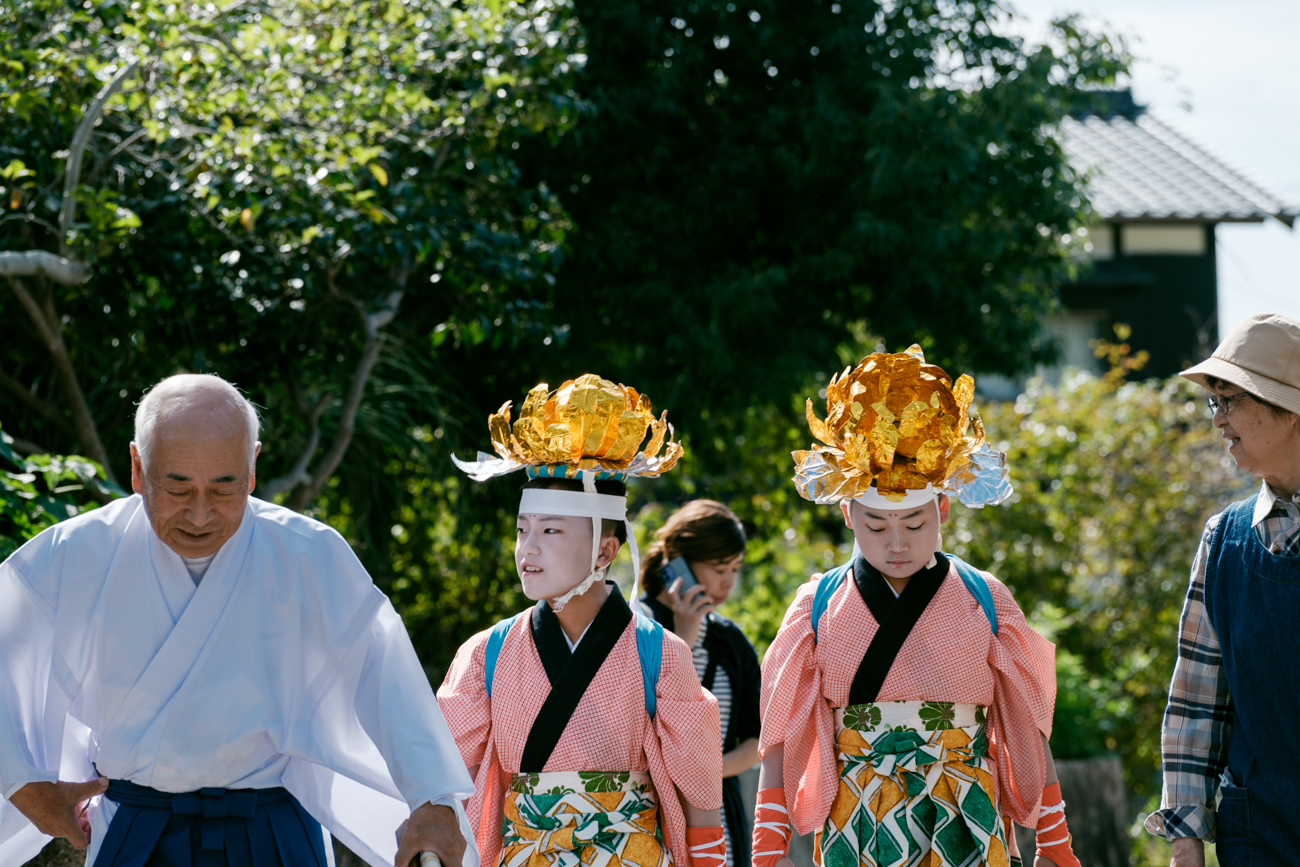
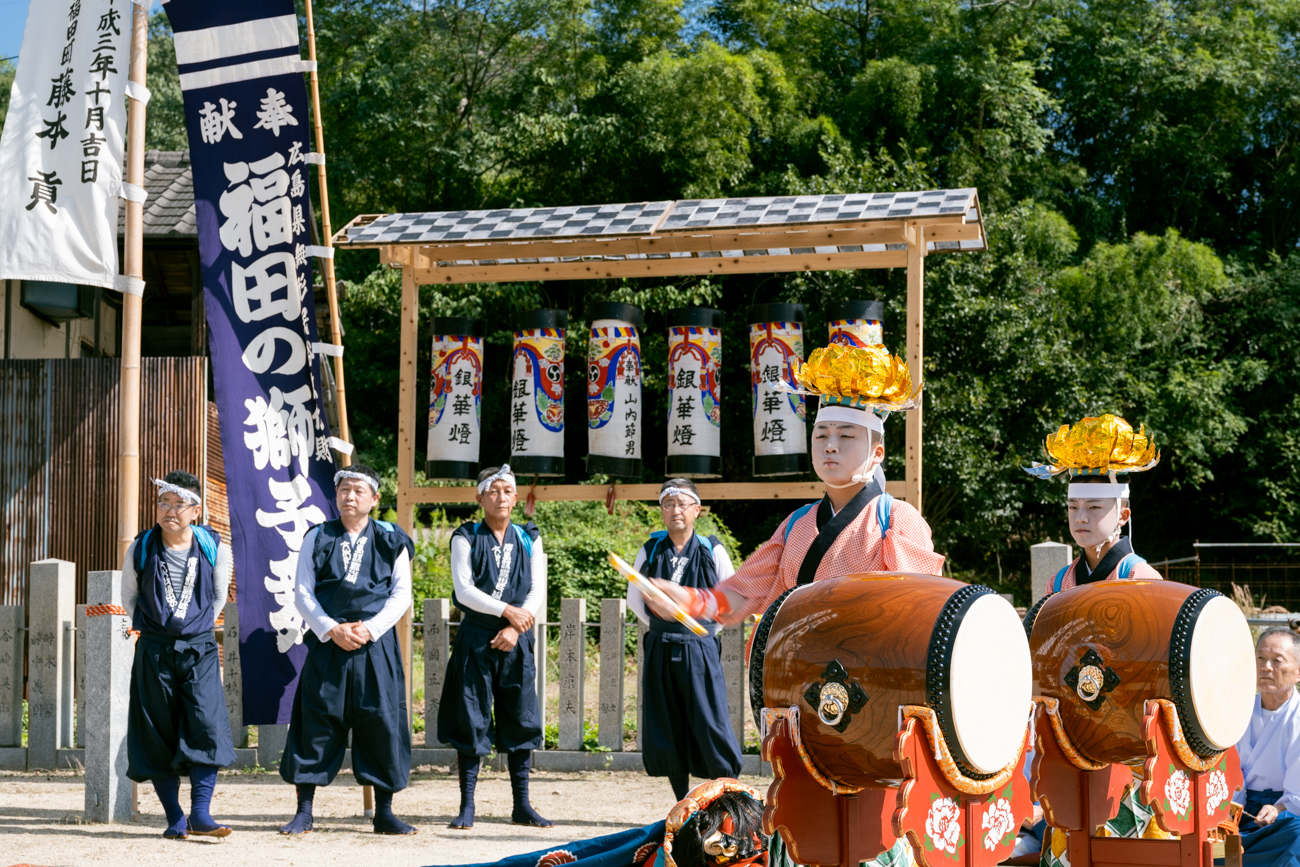
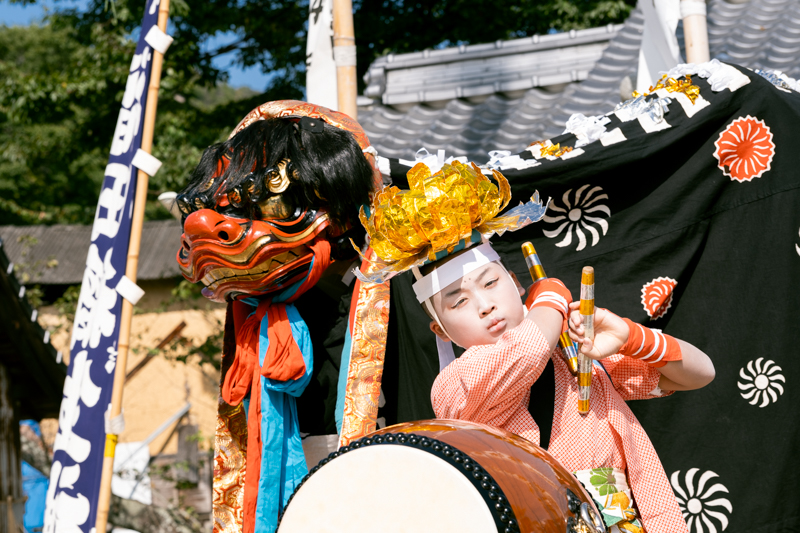
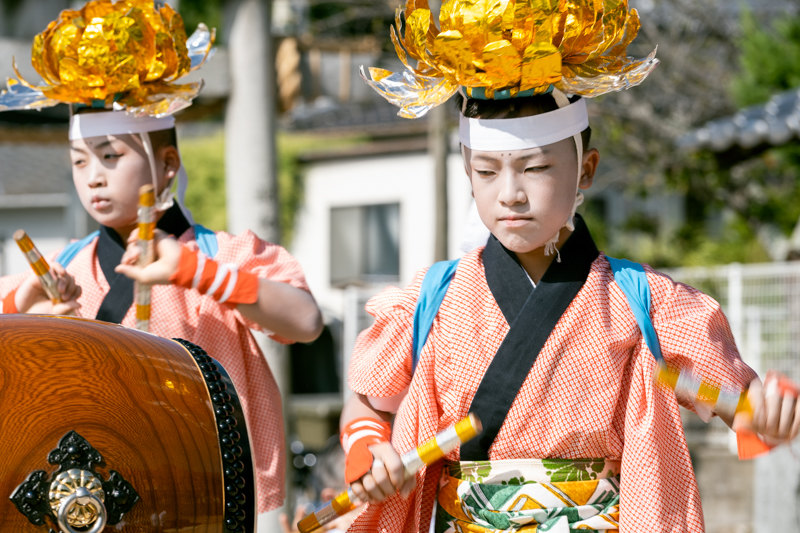
The stars of the “Fukuda Shishimai” are boys who turn 12 (by traditional counting) that year. This custom is also said to reflect a wish for children to overcome illness and grow up healthy, as many 12-year-olds fell sick during times when epidemics spread. There used to be four boys, but with declining birthrates and changing times, the age range has been broadened so it can be performed with fewer participants. In 2024, the two lead roles were taken by Yosuke Morishita (6th grade) and Koharu Tenma (5th grade), both students at Daijo Elementary School.
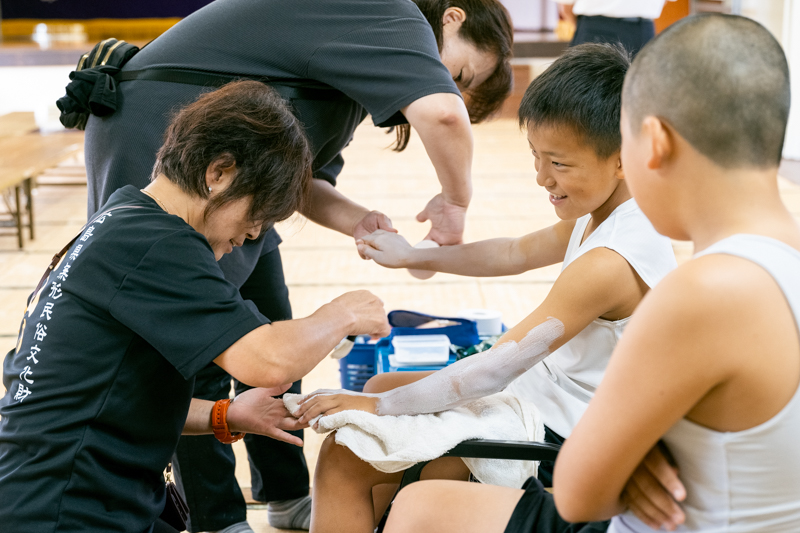
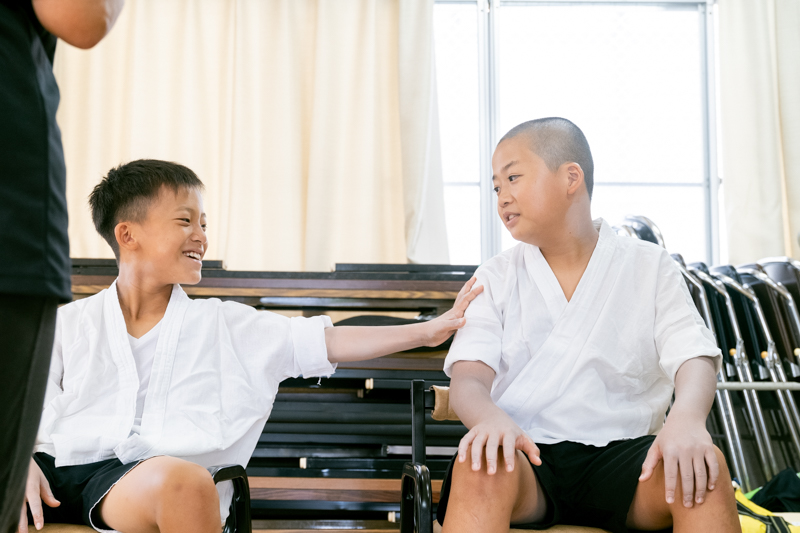
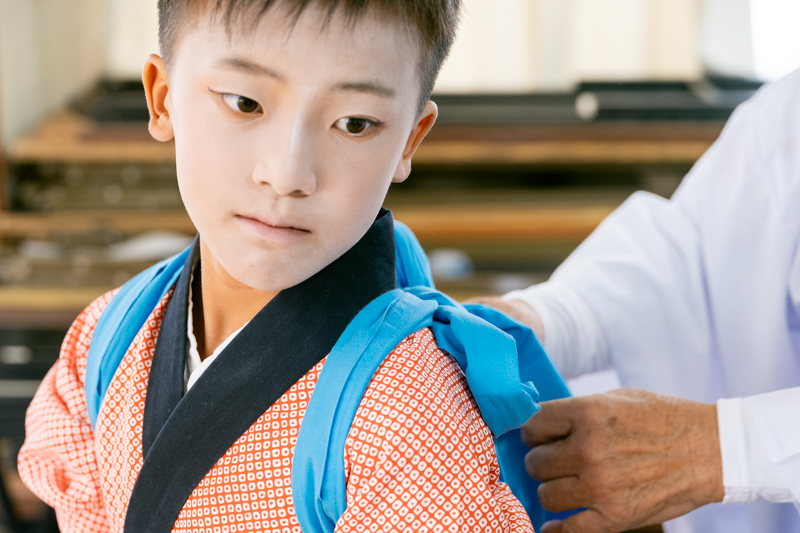
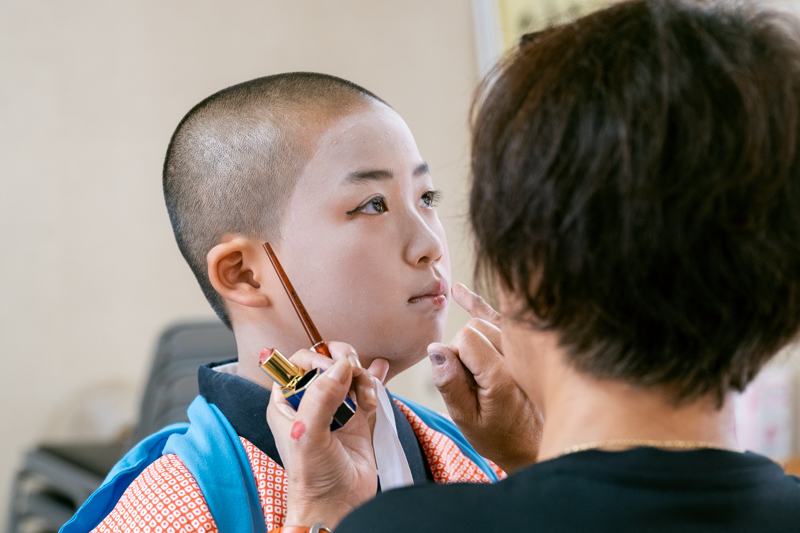
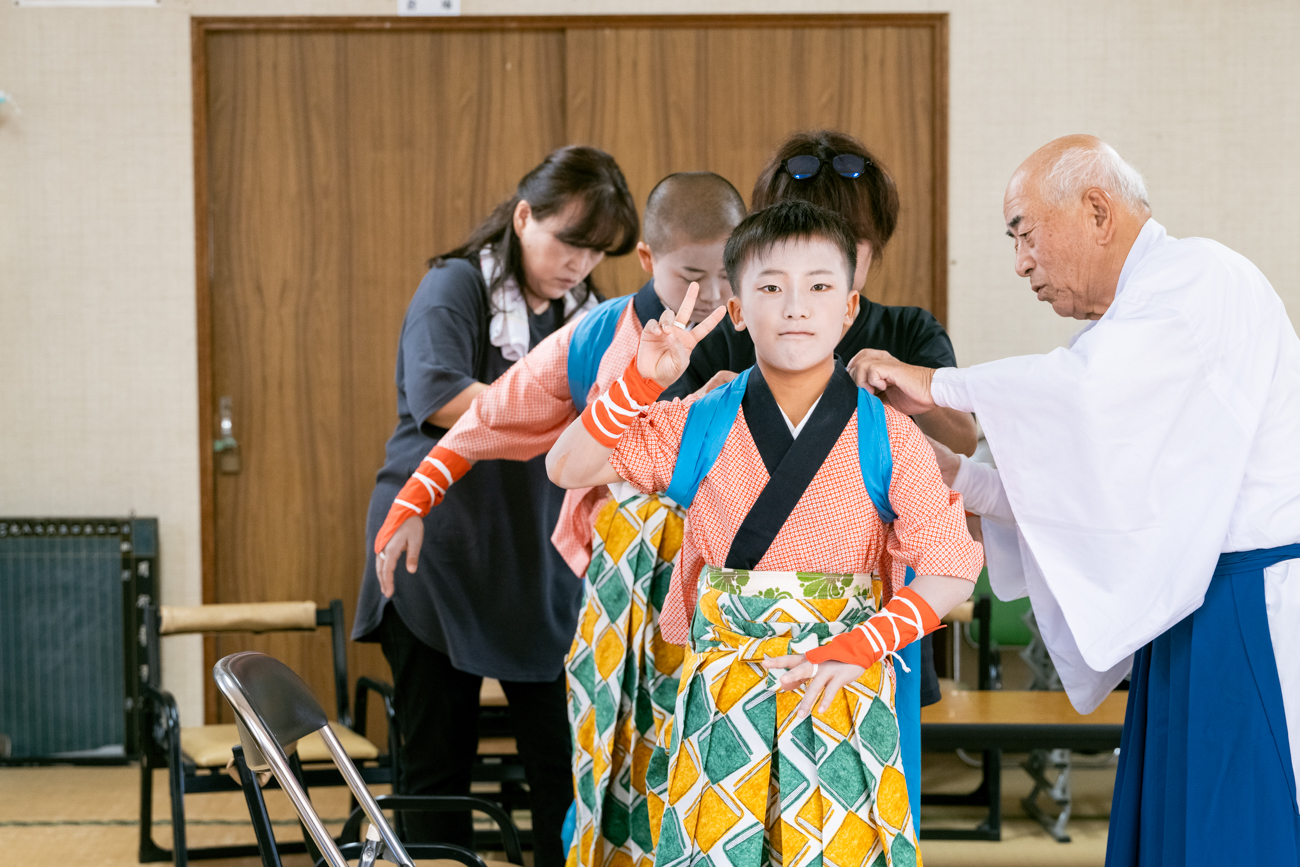
The two close friends, who call each other “Yo-chan” and “Mi-kun,” have experience—Yosuke for the third time and Koharu for the second. While saying, “It feels a bit lonely since there were four of us last year,” they kept practicing from summer vacation onward. Though they seemed calm at first, once they were dressed and made up as peony spirits, their expressions gradually turned completely serious. Nearby, adults in charge of the lions and festival music began gathering one after another, and the sense of tension grew.
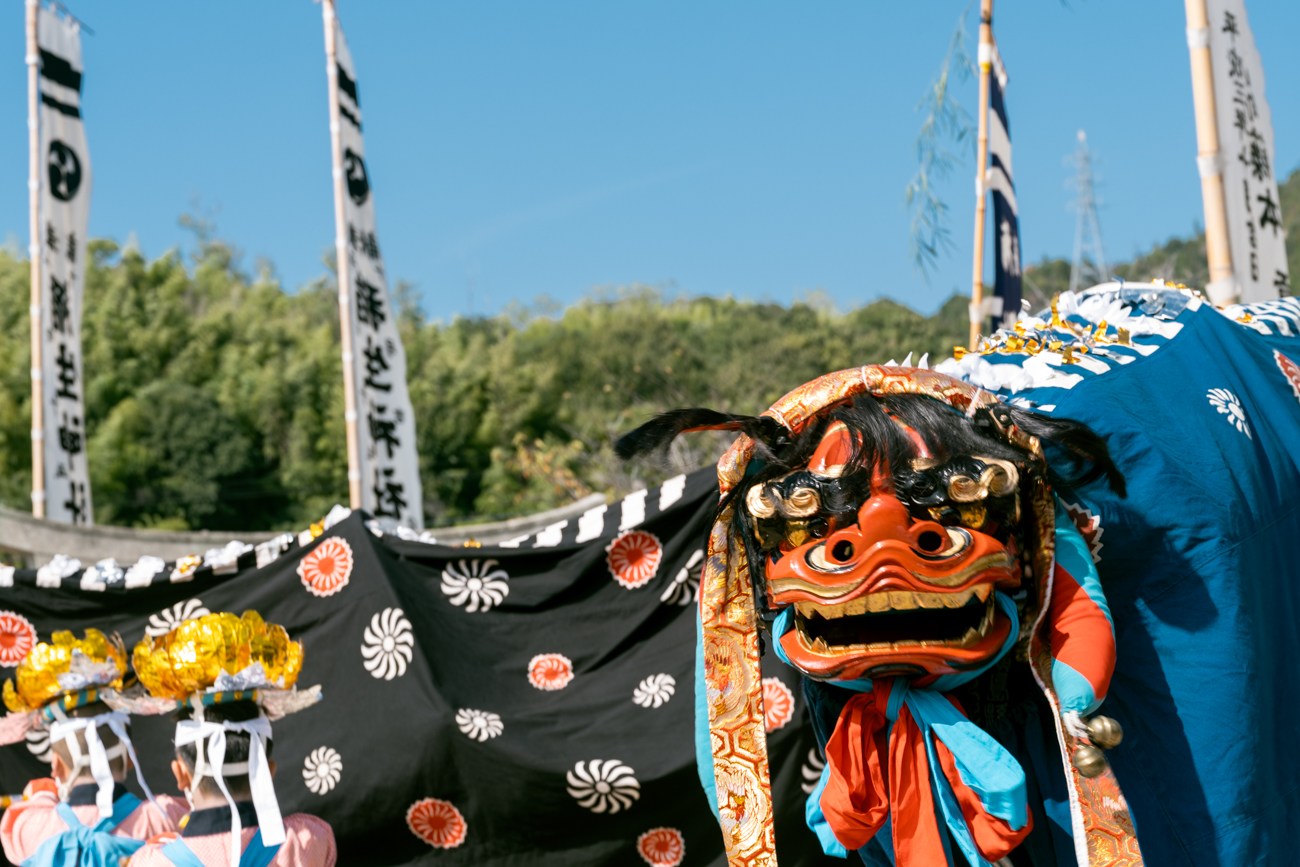
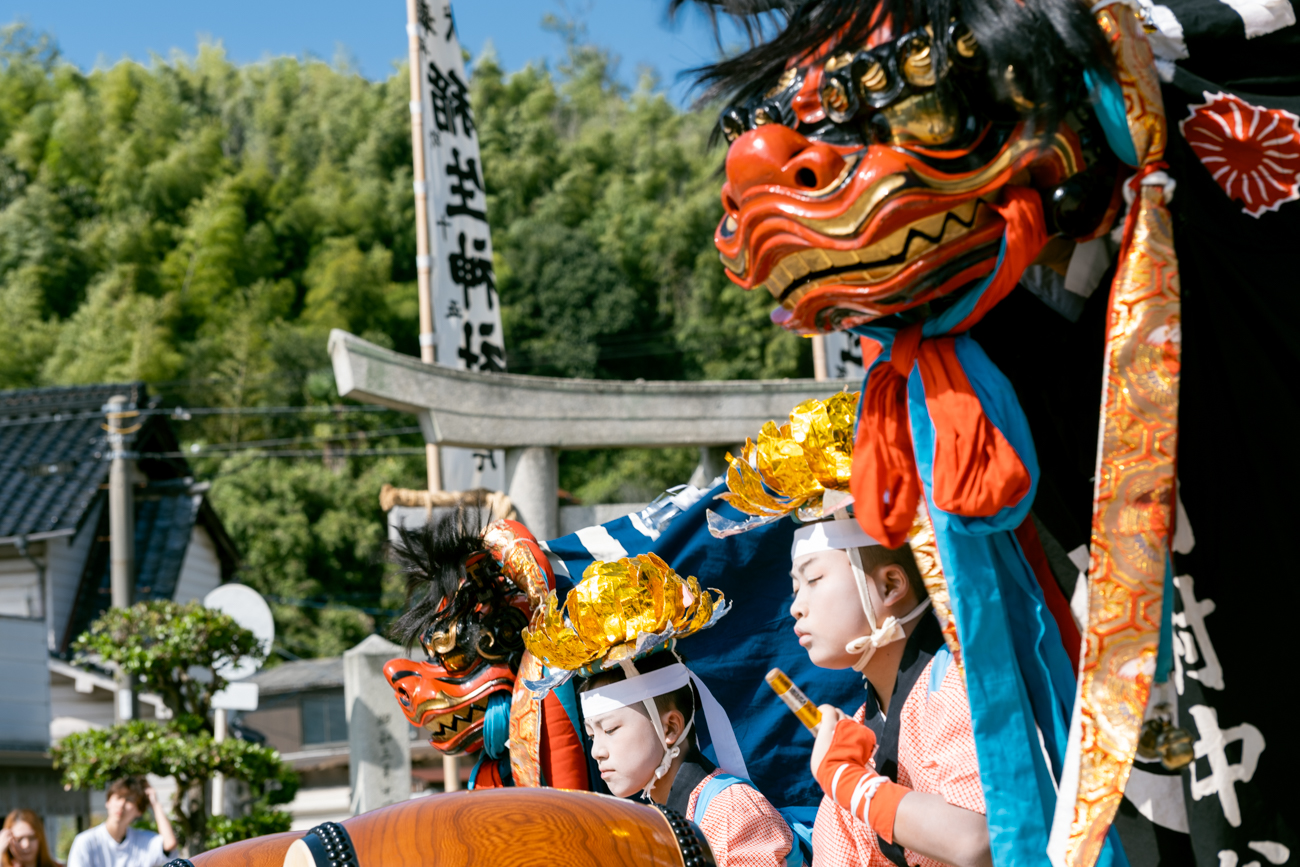
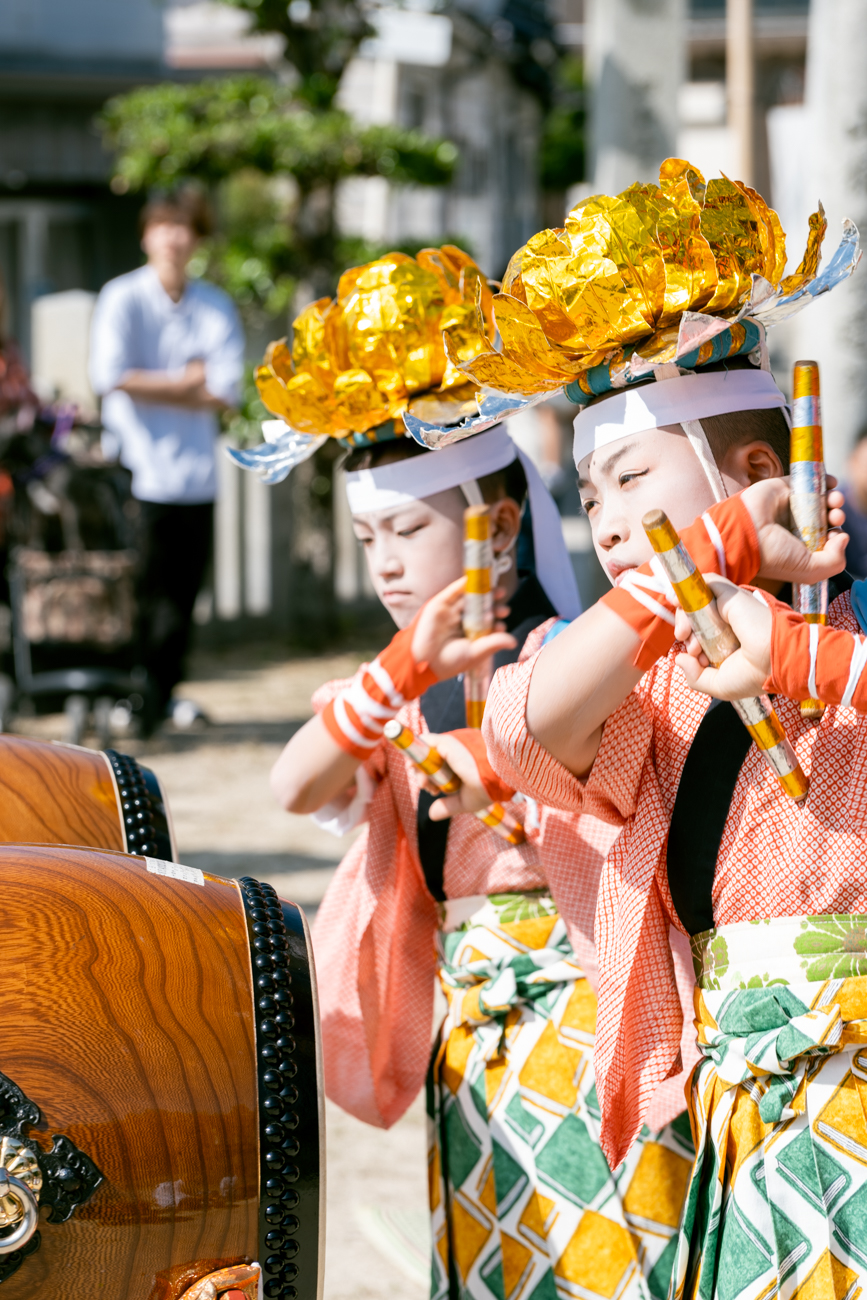
In the “Fukuda Shishimai,” boys wearing peony flower crowns play the drum in 32 patterns (now 16), while the lions move up, down, left, and right to the rhythm—biting and playfully interacting as they dance. It’s said that driving away the lions with the drumbeats and overcoming hardship leads to growth. Koharu will be performing alongside his father, who plays a lion—making it a parent-child performance. “When I grow up, I want to try being the lion like my dad,” he says. Yosuke’s grandfather is also taking part as festival music, too. That sense of connection across generations is something you can feel precisely because it’s a festival with such a long history.
From father to child, and child to grandchild
At Ino Shrine, not only neighbors but also many fans from farther away gather. Among them were older people who spoke nostalgically, saying things like, “I used to play the drum when I was little.” Many members of the Fukuda Shishimai Preservation Society took part in the festival as children, and for quite a few, those happy memories are “what drives our activities.” The group’s representative, Shuji Nakamura, is also one of them—he played the drum when he was in elementary school. He says, “I joined after a senior invited me,” but now he enthusiastically teaches the drums to children, sharing his hope that “they’ll come back and join again when they’re adults.” In fact, the children are surely taking in the sight of adults working together in a warm, friendly way to bring the festival to life.
At last, it’s time for the main performance of the “Fukuda Shishimai.” Behind the drums keeping the beat, two lions dance. Each lion is operated by four adults, and the lion head—about 5 kg—is handled in turns. The way the lion’s ears and mouth flap open and shut to the rhythm is irresistibly charming, and you can’t take your eyes off the exchanges with the peony spirits. Yosuke and Koharu showed the results of their practice. When asked, “If you had to score your performance?” they gave high marks—“99 points” and “92 points.” The reason they didn’t give a perfect score was an endearing one: “Because I was nervous.”
A festival that strengthens the bonds of Fukuda Town
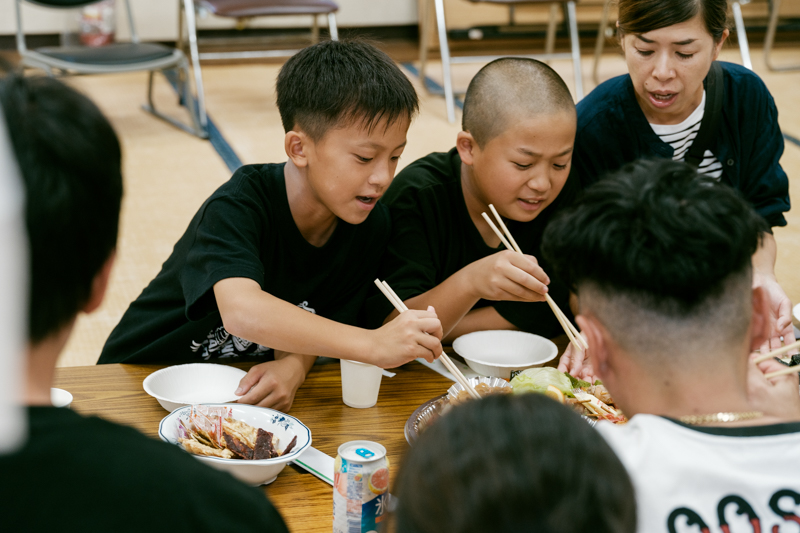
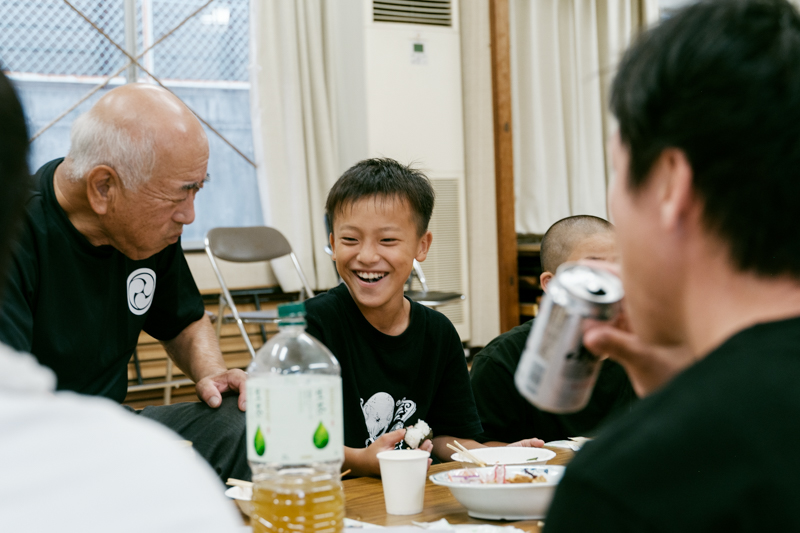
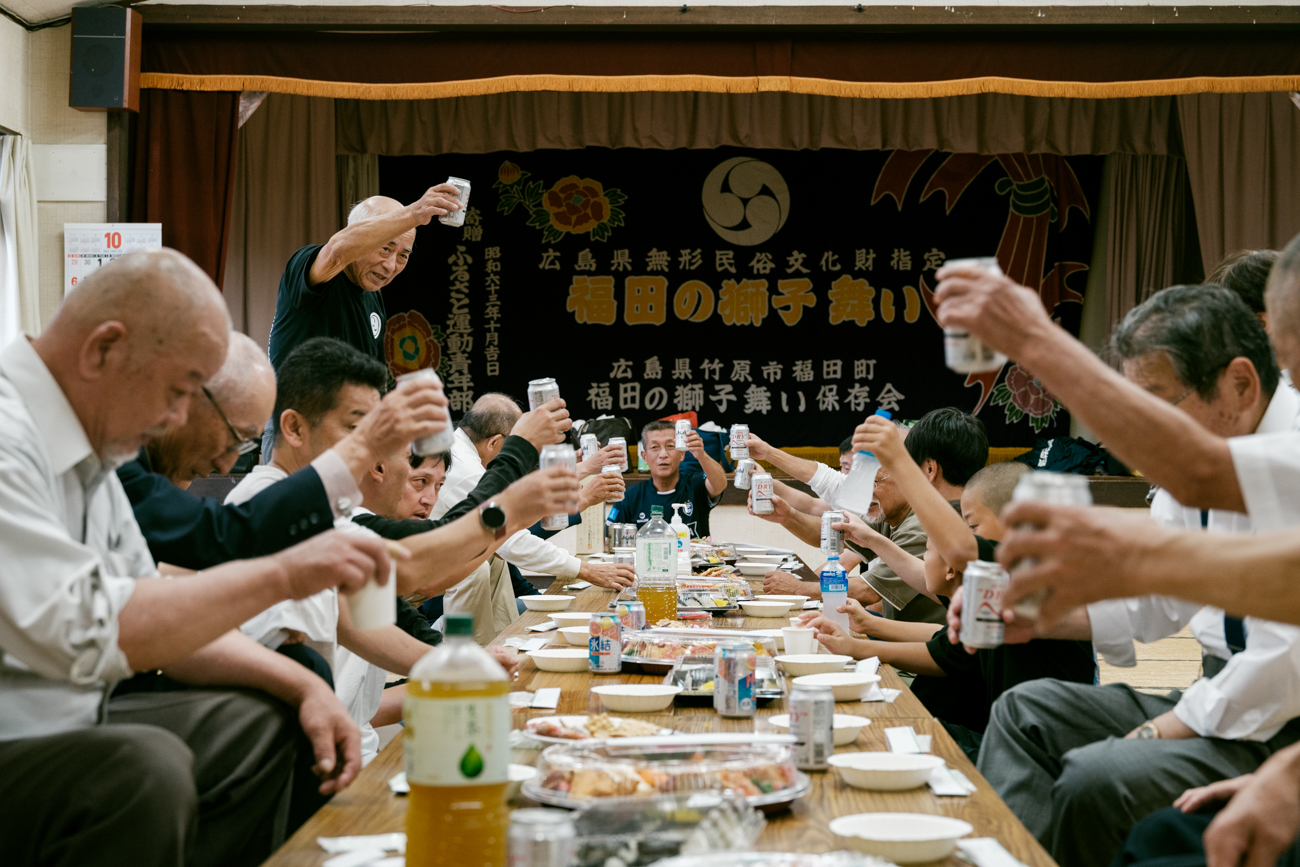
After dedicating the “Fukuda Shishimai,” a Shinto ritual was held at Ino Shrine, and finally the sacred object was carried by mikoshi to “Daijo Shrine,” bringing the autumn festival to a close. From evening, a banquet was held with the Fukuda Shishimai Preservation Society and the festival’s head representatives. For the participants, the banquet is also part of the festival. Voices of relief could be heard everywhere—“I’m glad we were able to hold it safely,” “I’m glad I could join again with my child this year”—and there was a real sense of accomplishment in the air. Festivals don’t just pass on culture; they also deepen community ties by sharing joy and strengthening unity. Perhaps what truly nurtures Fukuda’s local character is, in fact, the “Fukuda Shishimai.”