



Stroll around the town at the gateway to Rabbit Island♪
Recommended Season: Spring / Summer / Fall / Winter
An island floating in the Seto Inland Sea.
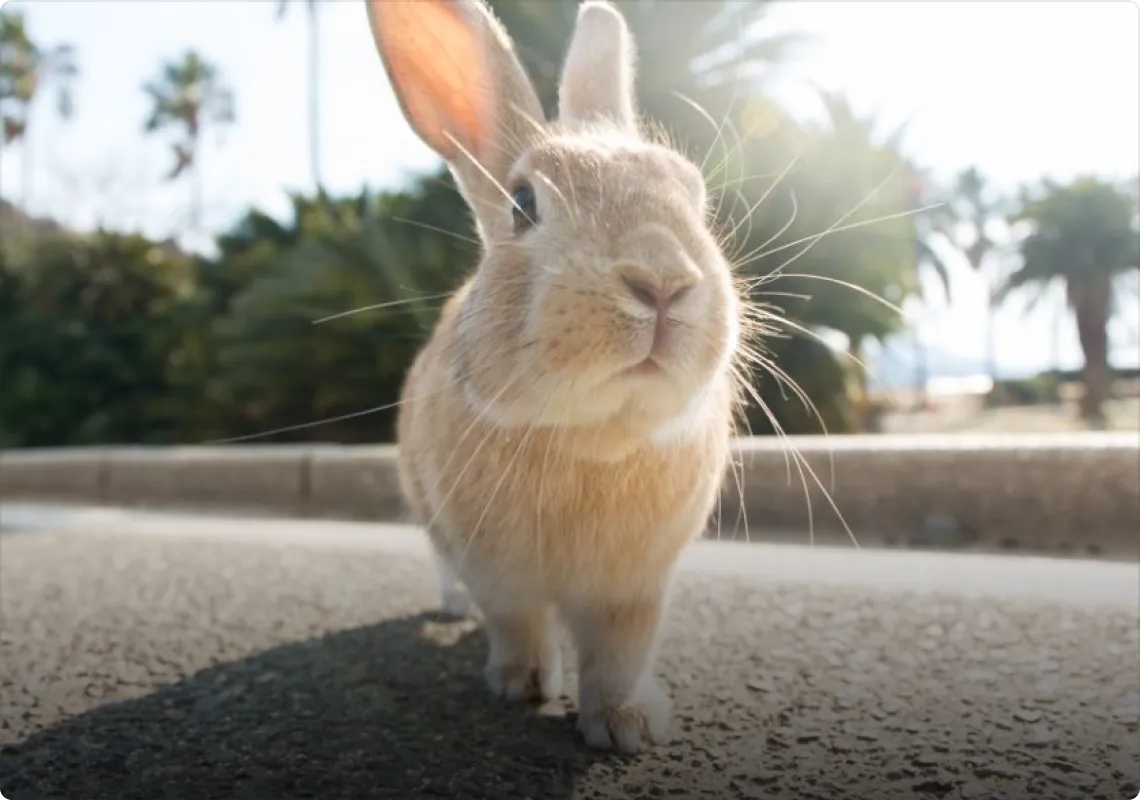
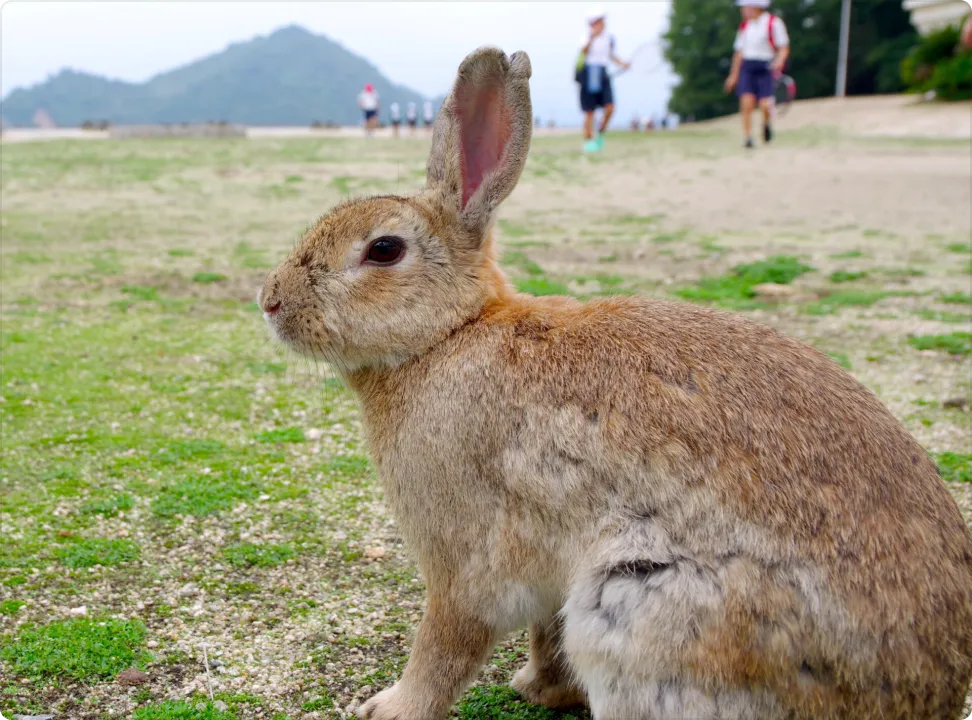
Okunoshima, a popular tourist destination in Hiroshima Prefecture, is also known as “Rabbit Island.”
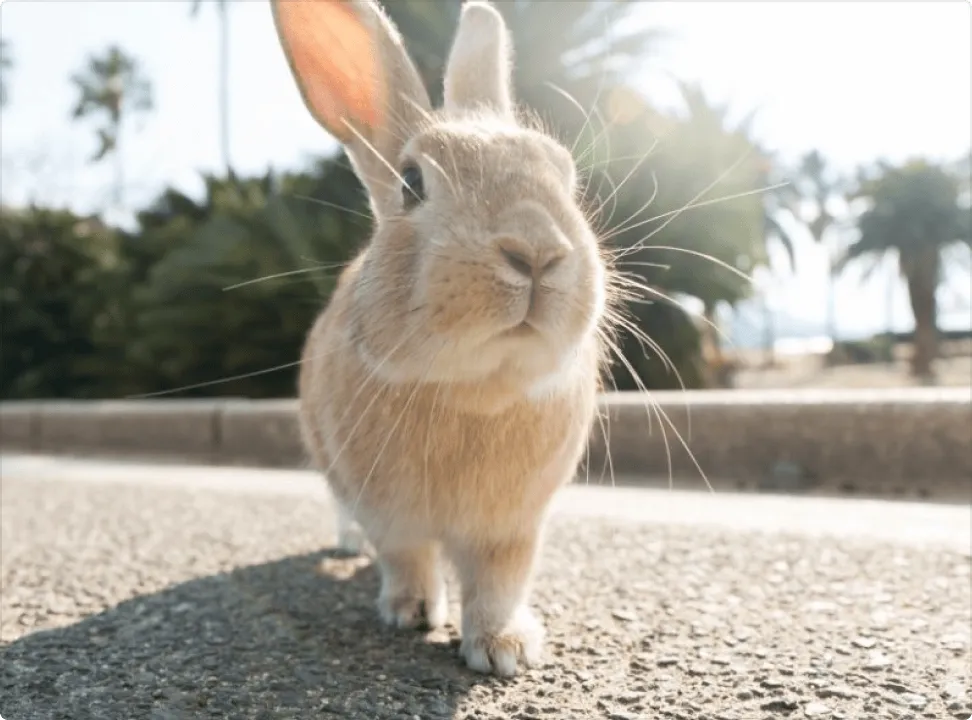
From the moment you step onto the island, adorable rabbits will greet you. Why not spend a special time away from the hustle and bustle of daily life, letting their charming presence soothe your heart?
About 15 minutes by ferry from Tadanoumi Port in Takehara City, Okunoshima is a small island with a circumference of approximately 4 km, located slightly west of the Shimanami Kaido that connects the islands of the Seto Inland Sea.
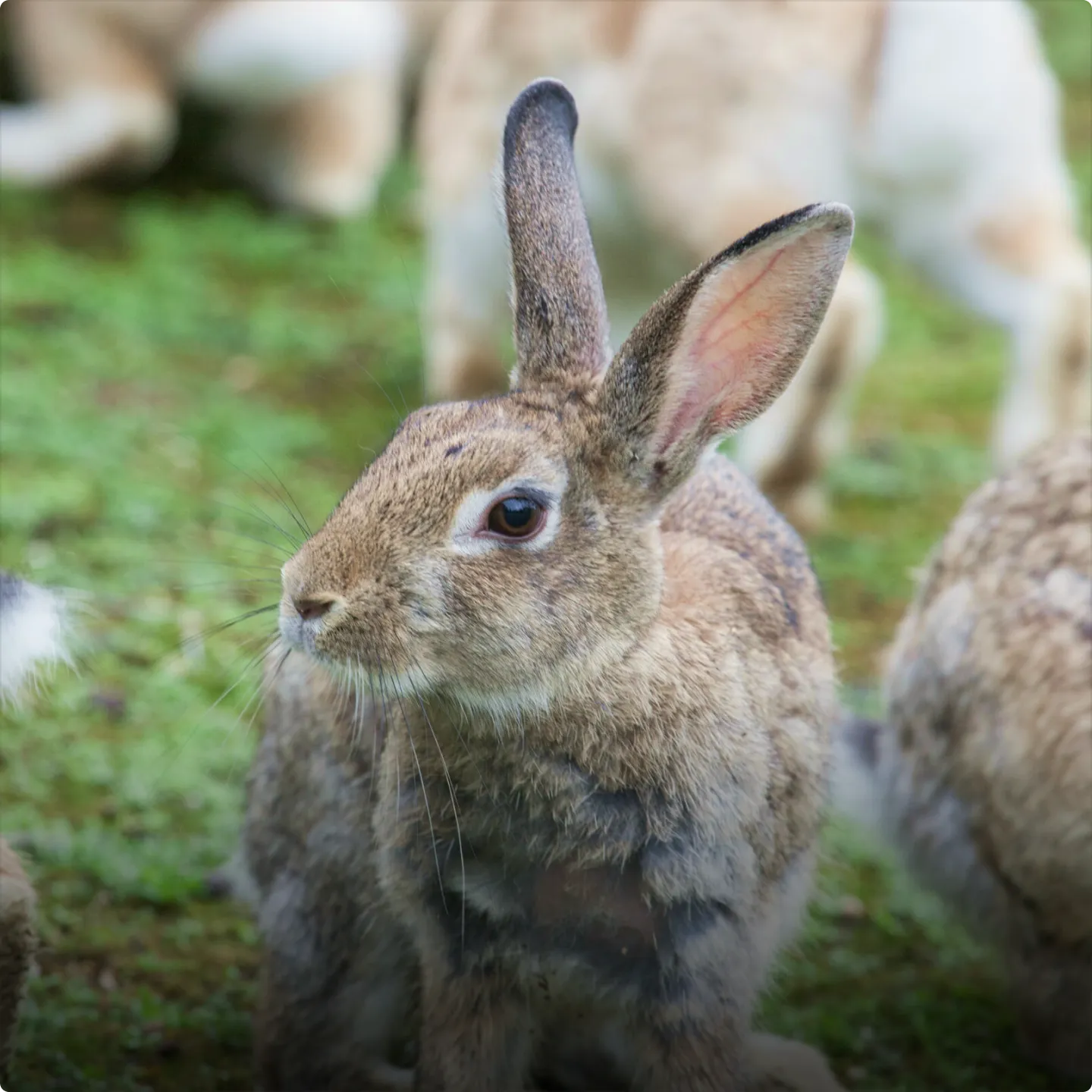
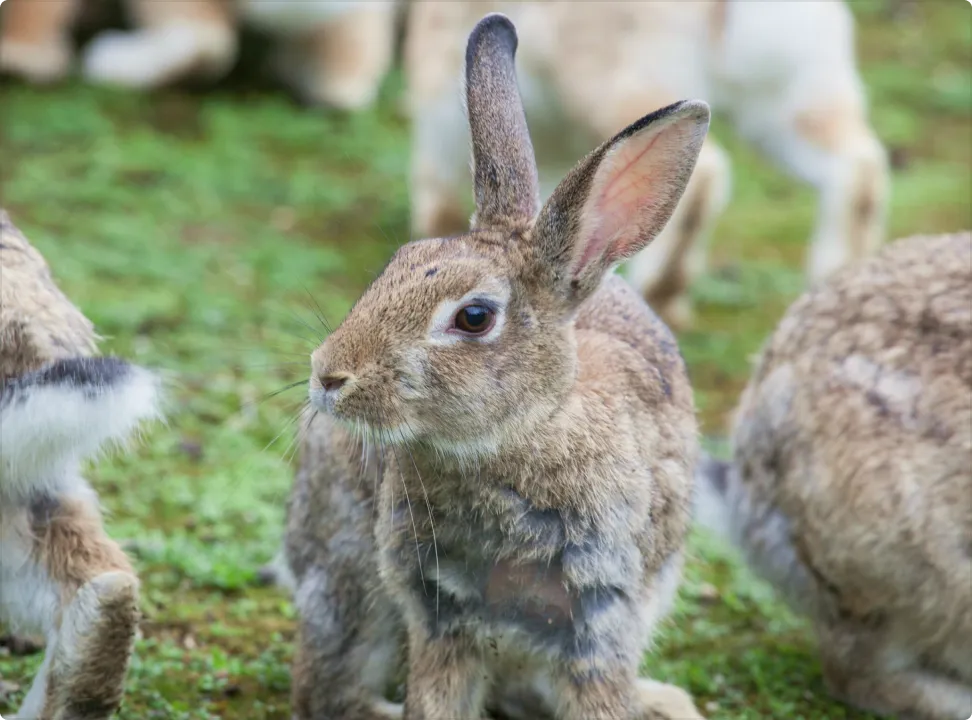
Part of the Setonaikai National Park, the island offers seasonal natural beauty and is home to many wild rabbits living freely.
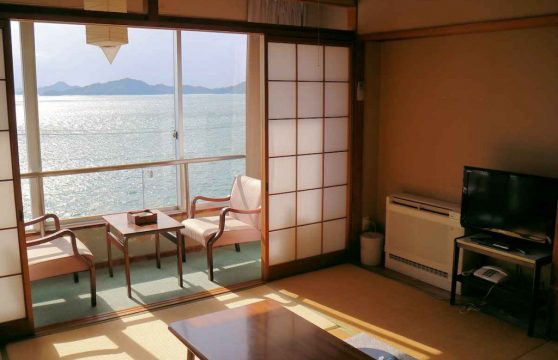
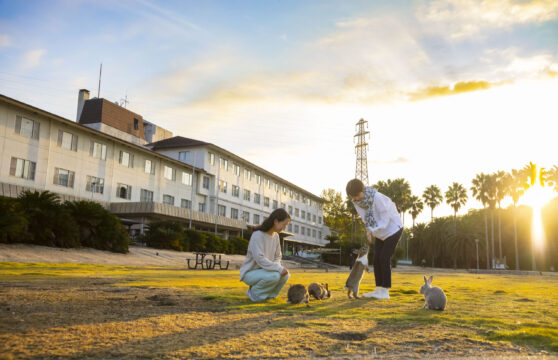
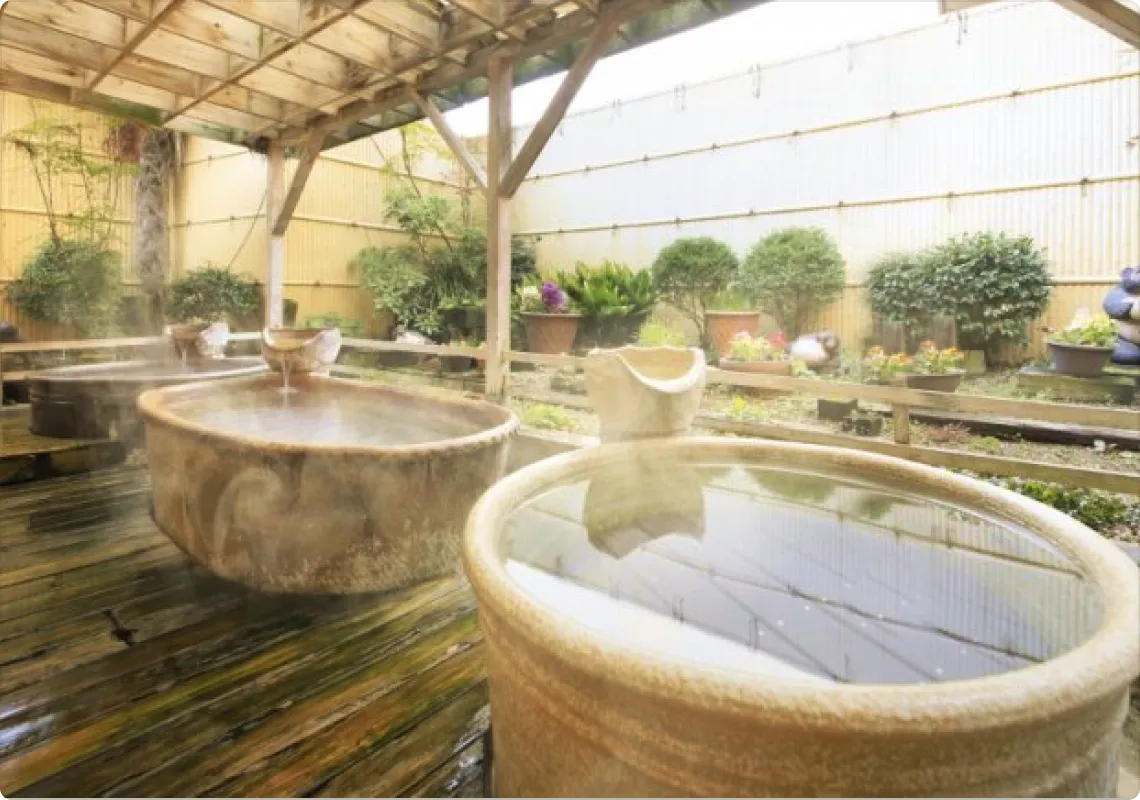
At Kyukamura Okunoshima, the island’s only accommodation facility, you can enjoy meals and hot springs, spending an entire day with the rabbits.
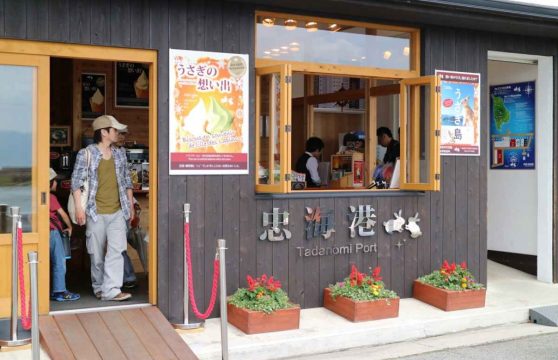
A ferry is essential to reach Okunoshima. The gateway is Tadanoumi Port in Takehara City.
To enjoy your time on the island to the fullest, preparation before boarding the ferry is important.
Tadanoumi Port is a 5-minute walk from JR Tadanoumi Station.
The port has a shop selling rabbit goods, rabbit treats, soft-serve ice cream, coffee, and more.
Store your luggage in coin lockers (500 yen per use) and explore the island hands-free.
Ferry fare: Tadanoumi–Okunoshima (one way) Adults 360 yen / Children 180 yen
While Kyukamura Okunoshima is on the island, it is essentially uninhabited, so it’s recommended to prepare before crossing over.
There are several rules to ensure both the rabbits and visitors can enjoy a safe and pleasant experience. Follow them carefully to create wonderful memories.
Rabbits are delicate creatures. Human snacks, bread, and vegetables like green onions and regular onions can make rabbits sick. Never give them these foods.
Rabbit food is not sold on the island. Buy it in advance at the shop in Tadanoumi Port or at convenience stores and supermarkets near the station.
Leftover food attracts crows and wild boars and can cause decay. Watch until the rabbits finish eating, and if any food remains, be sure to take it with you.
Rabbits are very timid animals with fragile bones. Chasing or trying to pick them up can cause stress and lead to injury. Watch them gently.
If rabbits run into the road seeking food, it can cause accidents. Interact with them in safe open areas.
Buses and bicycles on the island are dangerous for rabbits. For the safety of people and rabbits, drive carefully and watch out for both. Also be cautious of where you step when walking.
Rabbits have poor eyesight and may bite your fingers. Place food on the ground. Be especially careful with small children.
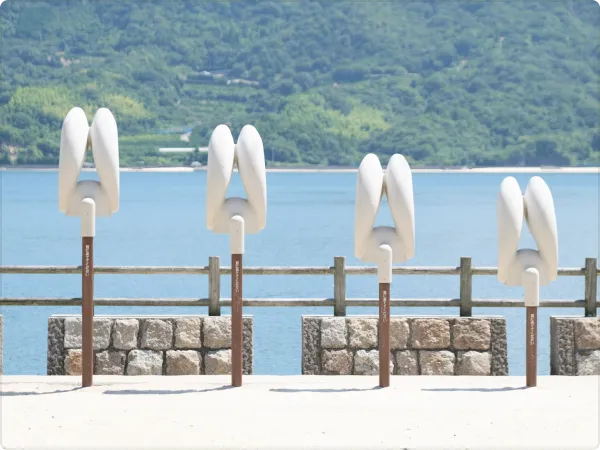
Rabbit ear-shaped objects of various sizes, like a rabbit family, are installed along the coastline. These are called sound collectors, and when you put your head inside, you can hear the sounds gathered by the device. Enjoy the feeling of being a rabbit while listening to the wind blowing through the island and the sound of waves.
Rabbits approach you from the moment you arrive on Okunoshima, so you can photograph them anywhere.
Here are some particularly recommended spots to capture photos with the rabbits.
The place on the island where the most rabbits gather. If you have rabbit treats, you might experience the delightful surprise of being surrounded by rabbits in no time.
Photos of nostalgic war ruins and adorable rabbits. You can capture unique and memorable shots that can only be taken on Okunoshima.
How about taking a photo with the Hyokkori Observatory at the 100-meter summit, the rabbits, and the beautiful island scenery of the Seto Inland Sea in the background?
Rabbits are crepuscular animals, meaning they are most active during dawn and dusk, rather than during the day or night. Their adorable eyes can see 355° around them with both eyes, but they cannot see well behind them or near their mouths, and their vision is weak.
Rabbits are also sensitive to heat. During hot summer days, they are less active, so if you want to see active rabbits, early morning or evening to night is recommended.
To see baby rabbits, spring to summer, when they give birth, is recommended. However, after spring, rabbits may hide in the mountains to give birth, so their numbers may temporarily decrease.
Created by students from Kure National College of Technology with the themes of “Solving Okunoshima’s Problems!” and “Anime Production.”
This picture book helps you learn about the rabbits of Okunoshima—what kind of rabbits they are, whether you can feed them, and the situation surrounding the island’s rabbits.
We highly recommend reading this book before visiting Okunoshima.